Tag Archives: American History

Donald’s Electoral Struggle

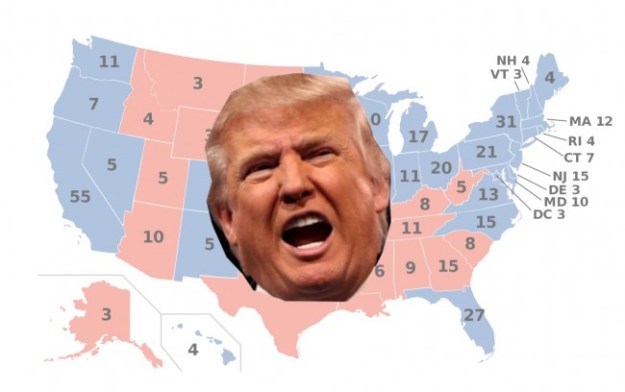
trump-map

After touting her pro-labor union record, the Wicked Witch of Chappaqua rhetorically asked, “why am I not 50 points ahead?”  Her chief rival bluntly responded: “because you’re terrible.”* No truer words have been uttered by any of the candidates about one of their opponents since the start of this extraordinary presidential campaign!

That Hillary Clinton is even remotely competitive in the race despite her flagrant and undeniable corruption, numerous breaches of national security, a long incompetent and bungling political career, and the utter lack of any personal charm or charisma, points to ominous trends within the American electorate that if not checked will mean political futility for future challengers of the status quo and continued economic deterioration.

Simply put: Killary is in contention despite a mountain of negatives because the “dependency class” of the electorate has mushroomed to such an extent that anyone who seeks its reform is automatically at a disadvantage, while candidates, no matter how vile, who promise to keep the gravy train rolling or expand it, will remain viable.  This is the dilemma that Donald Trump faces.

Most of the data in this regard is quite telling.  To show how far the US has fallen as an economic power, government workers outnumber manufacturing workers by 9,932,000!  The three levels of government – federal, state, local – employ some 22,213,000 people while the manufacturing sector employs 12,281,000.**   Parasitical bureaucrats outnumber those who actually create wealth by almost double.  Not only is this a recipe for economic stagnation and decline, but it creates an entrenched voting bloc and contingency for government-friendly office seeking politicians.  There have been few if any more government-friendly figures over the past century than Hillary Rotten Clinton!

Those who are dependent on the State goes far beyond mere government employees: 46 million receive food assistance, 66 million people are “Social Security” recipients, 8 million people receive “unemployment insurance.”  Federal government spending on for-profit firms comes to some $500 billion, which Charles Murray has estimated is about 22% of the workforce or about 36 million people.  Non-profit organizations and NGOs with income of $2 trillion and 12 million employees receive about one third of their funding from the government which accounts for another 3 million dependents.  This brings the total American State-dependency class to a staggering 181 million members!***

Summing up this disturbing data, the eminent economist and philosopher, Hans-Hermann Hoppe wrote:

                   . . . only 79 million people or about one third

of the adult (above 18) US population of 260 million

(or about 25 percent of the total population of 320

million) can be said to be financially wholly or largely

independent of the State, whereas close to 70 percent of

the US adult population and 57% of the total population

are to be counted as State-dependents.****

These trends will be accentuated, to say the least, if Donald Trump is defeated, which will give Hillary and the Republican-amnesty crowd free reign.  After grants of amnesty for the millions of illegals already in the country are given and opening of the nation’s borders to even more, any hope of true reform of the welfare state will be extinguished.  Moreover, it will further burden those of the productive, non-dependency sectors of society who will have to support even larger groups of parasites and free loaders.

The Left clearly understands what is at stake, which is why they see Trump’s anti-immigration stance, his talk of closing agencies (Department of Education), and grappling with federal spending as a direct threat to their power base.  This is why they are apoplectic in their opposition to the billionaire businessman turned presidential contender.  He and his constituency are, for the most part, outside of the dependency class.

A population that is increasingly tied to government largesse is obviously not conducive for economic growth.  For Donald Trump to make America great again, the nation’s burgeoning dependency class must be halted.  Not only will this mean that the “Trump Movement” will not be a passing political fad, but will have a necessary and lasting impact.

That Hillary Clinton is not significantly ahead despite her enormous advantages must be cause for a lot of sleepless nights among the power elite.  A Clinton Presidency would secure the Left’s electoral dominance for years to come.

One man stands in their way.

* Guy Benson, “Question From Hilary Clinton” ‘Why Aren’t I 50 Points Ahead?'”  Townhall.  22 September 2016.  http://townhall.com/tipsheet/guybenson/2016/09/22/question-from-hillary-clinton-why-arent-i-ahead-by-50-points-n2222202

**Terence P. Jeffrey.  “Government Workers Now Outnumber Manufacturing Workers by 9,932,000.  CNS News.  2 September 2016.  http://www.cnsnews.com/news/article/terence-p-jeffrey/government-workers-now-outnumber-manufacturing-workers-9932000#disqus_thread

***Hans-Hermann Hoppe.  “Democracy, De-Civilization , and Counterculture.”  HansHoppe.com.  26 September 2015.  http://www.hanshoppe.com/2015/09/democracy-de-civilization-and-counterculture-pfs-2015/

****Ibid.

Antonius Aquinas@AntoniusAquinas

https://antoniusaquinas.com/


The Donald Versus Killary: War or Peace?

trump-vs-clinton

Although history does not exactly repeat itself, it does provide parallels and sometimes quite ominous ones.  Such is the case with the current U.S. Presidential election and the one which occurred one hundred years earlier.

The dominating question which hung over the 1916 campaign was whether the country would remain neutral in regard to the horrific slaughter which was taking place on the European battlefields in probably the greatest act of mass insanity ever recorded, World War I.

President Wilson had maintained that the U.S. would continue a policy of strict neutrality.  By all indications, the nation wanted no part of the war, with the President’s own party at his nomination delivering an emphatic “No” to any foreign intervention.

Although Wilson maintained a neutral policy through the election and briefly afterwards, his advisors and Cabinet had been lobbying for war and continued to do so even more vehemently after the President’s re-election was secured.  Nearly all of them, including Wilson himself, had deep financial, family, and political ties to J.P. Morgan.  Wilson received considerable Morgan financial backing for his two presidential runs.

The Morgan operatives within the Administration were pushing for war because the House of Morgan had “invested” heavily in the “Allied” cause and a defeat or a negotiated settlement with any favorable concessions to Germany would be a catastrophe for Morgan financial interests.

Germany understood the cozy Morgan relationship with the Wilson Administration and the Allied powers as Morgan representatives, especially the sinister Colonel House, had repeatedly rebuffed peace proposals from the Central Powers.  The Allies and their opponents understood that Wilson’s re-election would mean U.S. entry into the conflict.

Tragically, for the U.S. and for the course of war-ridden 20th century history, Wilson capitulated and brought the U.S. into the battle despite the campaign promise of neutrality and no real German threat.  The House of Morgan’s financial bacon was saved at the cost of a devastated Western world.

One hundred years later, the U.S. and the world stand at another critical juncture and face a similar choice: the election of a known war criminal who has not only shown no remorse for her murderous policies, but promises, if elected, to continue them; or the election of a candidate who has spoken of negotiating with America’s supposed principle enemy, a possible pull back in the nation’s unsustainable global empire, and the enactment of a legitimate use of federal authority – protection of the country’s borders.

It is difficult to believe that Donald Trump is not sincere in seeking accommodation and friendly relations with Russia.  It would be far easier for the billionaire businessman and would most likely secure his election if he followed the bellicose policy of the Democrat and Republican Presidents of the recent past who have continued to antagonize and threaten Russia.  The most hopeful sign for peace coming from the U.S. in quite a while has been Trump’s talk of de-escalation of tensions and a pledge to place American interests first in foreign policy, instead of mouthing the global domination designs of the crazed neocons.

Some of the things he has said about Vladimir Putin and Russia have been, to say the least, quite encouraging:

I think I would get along with Vladimir Putin.

I just think so.*

It is always a great honor to be so nicely

complimented by a man [Putin] so highly respected

within his own country and beyond.**

I have always felt that Russia and the United States

should be able to work well with each other towards

defeating terrorism and restoring world peace, not

to mention trade and all of the other benefits derived from

mutual respect.***

Although not a non-interventionist, a President Trump is unlikely to provoke Russia or China into a civilization-ending conflagration and has displayed the instincts of a true peace maker.

There is, however, little hope for a reduction of global tensions if his sociopathic opponent becomes Commander-in-Chief.  Killary has repeatedly demonstrated that she is a willing tool of the neocons and the global financial forces that will profit mightily from continued U.S.- instigated conflicts.  If she makes it past the finish line, either legitimately or more likely through fraud, she will surely do their bidding.

For once, politicians and pundits who routinely call every election “the most crucial of a generation” are right.  This year’s Presidential election is the most significant one since at least the fall of the Soviet Union and Eastern Bloc.  If the U.S. electorate wants to avoid the disaster not only to its own land and the world that followed in the wake of the 1916 election, there can be only one choice in November of 2016.

* , “Trump Says he Would ‘Get Along Very Well’ With Putin.”  NBCNews.com 30 July 2015.

**Maxwell Tani, “Vladimir Putin’s Praise is ‘A Great Honor.'”  Business Insider.  17 December 2015.

***Ibid.

Antonius Aquinas@AntoniusAquinas
https://antoniusaquinas.com/


John Maynard Keynes’ “General Theory” Eighty Years Later

Keynes Gen Theory

To the economic and political detriment of the Western world and those economies beyond which have adopted its precepts, 2016 marks the eightieth anniversary of the publication of one of, if not, the most influential economics books ever penned, John Maynard Keynes’ The General Theory of Employment, Interest and Money.  Sadly, even to this day, despite its thorough refutation by lights such as Henry Hazlitt and other eminent scholars, The General Theory, which spawned “Keynesianism” and its later variants, remains supreme in academics, financial markets, and public policy.

Despite its outlandish theoretical flaws and nonsensical economic jargon and the catastrophic empirical evidence of its failure to prevent financial downturns or “stimulate” sustainable growth, Keynesianism remains the ruling paradigm of economic thought.

Why?

A number of trenchant reasons have been given for the General Theory’s continued dominance, however, one stands above all else: Keynesian economics provides the intellectual justification for economists, statisticians, technocrats, bureaucrats, and policy wonks in their exalted positions as “fine tuners” of economies the world over.  Since markets are to Keynes and his disciples inherently unstable from erratic investment spending and aggregate demand, it is up to these theoreticians steeped in the knowledge of their master’s teachings to ameliorate any economic fluctuations.

The General Theory came on the scene at a propitious time during the height (or more accurately the depth) of  the Great Depression, which in 1936, despite Roosevelt’s New Deal and other Western nation states’ initiatives, had not improved conditions.  Keynesianism was actually a “middle way” between all out Soviet-style central planning and that of laissez-faire capitalism.  Primarily through fiscal policy, the economy would be kept on an even keel under the astute management of Keynesian-trained economists.  Naturally, this appealed to academics and intellectuals the world over who correctly envisioned positions of power and influence in expanded state apparatuses.

As history has shown, Keynesianism was to become more than a remedy for the Depression, but would be applicable after the crisis dissipated.  The General Theory was based, in part, on the (false) notion that the capitalist system is inherently unstable and is, therefore, in need of state intervention.  Keynes  deliberately ignored the scholarship at the time, which demonstrated that the instability was not a “market failure,” but a monetary disorder caused by artificial credit expansion generated by the central banks, especially the Federal Reserve.

The enthusiasm for The General Theory came at first from younger economists while it was (rightly) dismissed by many of their elders as incomprehensible.  Yet, its lack of clarity was appealing to the novices, since they would become the Creed’s interpreters.

Not all, however, were entirely overwhelmed by their mentor’s magnum opus as Paul Samuelson candidly admitted:

[The General Theory] is a badly written book:

poorly organized. . . . It abounds in mares’ nests

of confusions. . . .  I think I am giving away no

secrets when I solemnly aver – upon the basis of

vivid personal recollection – that no one else in

Cambridge, Massachusetts, really knew what it

was all about for some twelve to eighteen months

after publication.*

Despite such an assessment, Keynesianism was never seriously challenged by its adherents, it opened too many lucrative policy making doors to be refuted.

That Keynesianism continues to reign supreme, despite its theoretical and empirical bankruptcy, speaks volumes of the state of Western intellectual and academic life.  Instead of the pursuit of truth and the refutation of error, Western intelligentsia is primarily concerned with securing privilege and power for itself.  At one time such status was gained by honest inquiry into social questions and issues, now it is obtained in the justification of the expansion of state power.  Very few turn down such enticements!

Societies are the product of ideas.  Since the release of The General Theory, the Western world has been under the destructive sway of Keynesianism, which has resulted in stagnation, financial turmoil, and eventual collapse.  Until Keynes and his nutty theories have been refuted, the economic malaise will continue.

Quoted in Murray N. Rothbard, “Keynes, the Man.” In Mark Skousen, ed., Dissent on Keynes: A Critical Appraisal of Keynesian Economics.  New York: Praeger Publishers, 1992, p.184

Antonius Aquinas@AntoniusAquinas

https://antoniusaquinas.com/

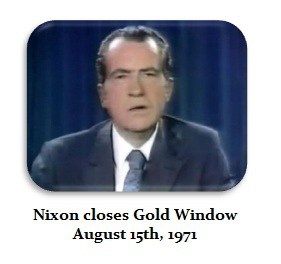
“A Date Which Will Live in Infamy:” President Nixon’s Decision to Abandon the Gold Standard

Nixon-Gold

Franklin Delano Roosevelt called the Japanese “surprise” attack on the U.S. occupied territory of Hawaii and its naval base Pearl Harbor, “A Date Which Will Live in Infamy.”  Similar words should be used for President Nixon’s draconian decision 45 years ago this month that removed America from the last vestiges of the gold standard.

On August 15, 1971 in a televised address to the nation outlining a new economic policy entitled, “The Challenge of Peace,” Nixon instructed the Treasury Department “to take the action necessary to defend the dollar against the speculators.”*

Nixon continued:

I have directed Secretary Connally to suspend temporarily the convertibility of the dollar into gold or other reserve assets, except in amounts and conditions determined to be in the interests of monetary stability and in the best interests of the United States.**

Of course, any objective student of history knows that this was a lie and that it was not “speculators” which were causing monetary instability, but the U.S.’s own crazed inflationary policy which attempted to fund its imperialistic endeavor in Vietnam while expanding the welfare state at home.  This resulted in the Treasury losing an alarmingly amount of gold reserves to other central banks who rightly sought real value in exchange for depreciated American greenbacks.

In essence, Nixon’s decision ended gold redemption and placed the U.S. and the rest of the world on a purely fiat paper standard for the first time in recorded time.  By doing so, the U.S., in effect, became a deadbeat nation which no longer honored its obligations and was set on the road to its current banana republic status.

Instead of impeachment proceedings and his ultimate resignation for the juvenile break in at the headquarters of the nation’s other ruling crime syndicate, Nixon should have been imprisoned for this deliberate and destructive act which has led, in large measure, to the nation’s crushing and insurmountable debt burden, reoccurring booms and busts, and now economic stagnation.

Nixon’s disastrous decision had precedent.  FDR had his own day of monetary infamy in 1933 when, by Executive Order 6102, he outlawed the private ownership of the precious metal while eliminating  gold redemption by banks for dollars.  Ostensibly, the order was instituted as an emergency measure to combat the Depression, but in reality, it was done to allow the Federal Reserve greater “flexibility” in inflating the money supply.

While Roosevelt and Nixon’s decisions would backfire economically, their actions highlighted the totalitarian direction that the federal government and its executive branch were heading throughout the 20th century.  Moreover, the lack of opposition or protest to blatant executive dictatorial decrees by either the legislative or judicial wings of the federal government demonstrates again the flawed and frankly naive argument put forth by Constitutionalists of every ideological persuasion on how the celebrated “separation of powers” theory checks tyranny.

Nixon’s final abandonment of the gold standard had far greater ramifications than simply bad economics.  Without the discipline of hard money, central banks could, and did, create massive quantities of paper money and credit, which enriched the politically connected financial elites and the governments which they were aligned.  Such power was used, in time, to control, spy on, and regulate the subject populations to a degree never seen before.  The power of the state has swelled mostly through bank credit expansion without worry of gold redemption.

Despite what is taught in social science courses, a true gold standard is a greater protector of individuals’ economic well being and, ultimately, their political liberty than any legislation or “rights” document ever penned.  Hard money limits state power!

While it is painful to quote from an ardent opponent of sound money, the international bankster Baron Rothschild said it best when he described the relationship of money and power: “Permit me to issue and control the money of a nation, and I care not who makes its laws.”

Richard Nixon’s elimination of the last remnant of the gold standard over four decades ago combined with FDR’s earlier decree has fulfilled to the detriment of the American and world economies Baron Rothschild’s adage to a tee.  The return of prosperity and individual liberty will only come about when these two heinous acts are eradicated.

*Richard M. Nixon.  “Address to the Nation Outlining a New Economic Policy: ‘The Challenge of Peace.’”  The American Presidency Project.  15 August 1971. http://www.presidency.ucsb.edu/ws/?pid=3115

**Ibid.

Antonius Aquinas@AntoniusAquinas
https://antoniusaquinas.com/


Presidential Dictatorship

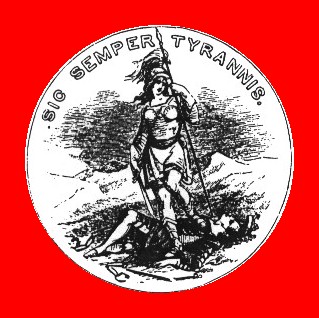
Sic Semper tyrannis II

Executive orders, undeclared wars, drone hits, assassination of citizens and non-citizens alike, the overthrow of foreign regimes, domestic spying, the abetting of known criminal activities through pardons, economic planning, opening borders, monetary manipulations are just some of the nefarious activities that routinely emanate from the most dangerous political office that the world has ever painfully come to know – the United States Presidency!

The U.S. presidents can and have created a veritable “hell on earth” for their opponents, perceived enemies, and the innocent not only in the country in which they reign, but over the lives and fortunes of peoples and places where they have absolutely no authority to interfere.  While other chiefs of state have theoretically had such power, U.S. presidents have been able to inflict their destruction and chaos because, paradoxically, the nation’s free-market system, for a long time, created immense wealth which could be tapped into.

The tyrannical nature of the presidency was recognized long ago by those politically perspicacious men who opposed both the office and the draconian document which created it.  Few groups in history have been so vindicated for their foreboding as those who vainly argued against the ratification of the United States Constitution than the Antifederalists.

“An Old Whig”* aptly sums up the damage that would come about if the Constitution was ratified and the office of president would come into being:

. . . the office of President of the United States appears to me

to be clothed with such powers as are dangerous.  To be the

fountain of all honors in the United States, commander in chief

of the army, navy and militia, with the power of making treaties

and of granting pardons, and to be vested with an authority to

put a negative upon all laws, unless two thirds of both houses

shall persist in enacting it, . . . .**

An Old Whig saw that the president would become a “king” but without the natural and binding checks that even the most absolutist of monarchs were restrained by:

[The president] is in reality to be a KING as much a King

as the King of Great Britain, and a King too of the worst

kind; – an elective King. . . . The election of a King

whether it be in America or Poland, will be a scene of

horror and confusion; and I am perfectly serious when

I declare that, as a friend to my country, I shall despair

of any happiness in the United States until this office

is either reduced to a lower pitch of power or made

perpetual and hereditary.***

One of the Federalists’ counterarguments to the Antifederalists’ concern over the presidential office was the widely held assumption that George Washington would become the new Republic’s first chief executive and the general knowledge of his impeccable character would assuage those worried of potential executive overreach.  Such a lame response neglected to look into the future when the office’s huge potentiality for despotism would be sought after and won by those who had less upstanding personal traits than the father of the country.

The growing decentralized political movements throughout the world with, for instance, the hopefully upcoming British exit from the European Union, can only be enhanced if the office of the president and, for that matter, all other nation state’s chief executives are exposed as tyrannical institutions which are anathema to individual liberty and collective self-determination.  Presidents, premiers, chancellors, prime ministers, and their like along with central banking are the two nefarious pillars of power of the modern nation state whose continued existence guarantees perpetual war and economic regression.

In this seemingly interminable presidential election cycle, populist, libertarians, conservatives, and all sorts of anti-Establishment types are delusional if they believe the totalitarian direction in which the country is now headed will be reversed through elections or choosing the “right” candidate.  “Making American Great Again” will only come about when the chief executive office and the statist document that created it have been repudiated.

Prior to the presidency’s abolition, its ideological justification must be first debunked.  There is no finer place to start for this most necessary task to take place than in the dissemination of the perceptive and enduring words of the much neglected Antifederalists.


*Probably penned by a group of Philadelphia Antifederalists – George Bryan, John Smilie, James Hutchinson and maybe others.  See, John P. Kaminski & Richard Leffler, eds., Federalists and Antifederalists: The Debate Over the Ratification of the Constitution.  Madison, Wisconsin: Madison House Publishers, 1989, p. 18.

**Ibid., p. 86.

***Ibid.

Antonius Aquinas@AntoniusAquinas
https://antoniusaquinas.com/

Long Live the Flags of Dixie!

Confederat Flag

On May 19, the House of Reprehensibles passed a proposal that would essentially ban the display of Confederate flags from national cemeteries.  The amendment was added to a Veteran Affairs spending bill.

Not surprisingly, House Speaker Paul Ryan allowed the measure to be voted upon in hopes of not disrupting the appropriations process.  Yes, by all means Paul, the redistribution of taxpayers’ confiscated wealth should take precedent over a draconian attempt to eradicate a heroic symbol of the country’s past.  Hopefully, Ryan will be ousted this November as both Speaker and Congressman for not only his consistent sell out to Obummer and the Democrats on the budget, but his lack of understanding and appreciation of what is arguably the most important period of American history.

In a certain sense, the Confederate flag should not be displayed in national cemeteries or for that matter flown alongside those of the Union.  The two are representations of dramatically opposed political ideologies.  Liberals and political opportunists of all sorts have deliberately smeared the South’s attempt at secession as being entirely over the issue of slavery.  The “Civil War” (which that struggle has become known by) is now seen through Politically Correct hindsight.

A civil war, in the truest sense, is a conflict between factions attempting to gain control of a government typically for their own aggrandizement.  The bloody conflict between the North and South was not that, nor was it solely over slavery although the institution played a role in it.

The Confederacy wanted no part of the Washington establishment at the time, which it believed had become too tyrannical, and attempted to secede from it.  The remaining states of the North, under the “leadership” of Abraham Lincoln, prevented this at the cost of more than 600,000 lives, the vast destruction of property, and the impoverishment of a people who simply sought to rule themselves.

The South’s action was nearly identical to what the colonies, North and South, did some 80 years previously in breaking away from the British Empire and becoming free and independent states under the benign rule of the Articles of Confederation.

As America’s Founding Fathers saw their liberties violated by King and Parliament, Southerners witnessed similar tyrannies and wisely anticipated more federal oppression with the election of Lincoln.

This interpretation has been ably supported by scholarship, though the view is rarely acknowledged in academia or in the mainstream media.  In an essay from an insightful collection titled Secession, State and Liberty, Donald Livingston persuasively describes the ideological content of the Declaration of Independence, the revolution it inspired, and its influence on the South’s leadership.

He writes: “Overall, the Declaration is an argument designed to justify the secession of the new self-proclaimed American states from the British state. . .  [It] is a document justifying the territorial dismemberment of a modern state in the name of the moral right of a people to self-government.”*

The South, imbued with such logic and the example of the Revolutionary generation’s break with Great Britain, attempted to separate from the Union on similar grounds and, in Livingston’s view, had a much stronger claim than the Founding Fathers had for independence:

[T]he colonies were not and never had been recognized as sovereign states, either by others or even by themselves.  At the time of the Civil War, however, the southern states had been and still were sovereign states, and so they could mount not only a moral argument but a legal one as well.  And it was the legal argument they primarily insisted upon.  Each state used the same legal form to secede from the Union that it has used to enter, namely, ratification in a convention of people.**

Although slavery was a part of the South’s final break with the North, the Confederacy could never have been built on such a narrow foundation.  Those who seek to paint Southern secession as a movement solely designed to protect their “peculiar institution” have either misunderstood the genesis of that struggle or do so for political gain.

While Southern secession is mercilessly condemned by the Establishment, scholars like Professor Livingston see it and the War for Southern Independence in a much different and far nobler light: “With the orderly, legal secession of the southern states, the American genius for self-government reached its highest moral expression.”***

The Northern and Southern flags which fly in national cemeteries across the land are indeed representative of different traditions, but not what the Politically Correct crowd would have everyone to believe.

The defenders of Dixie and the flags that commemorate their courageous actions have long since been morally justified.  The Union flag, on the other hand, has been one of aggression and domination, at first, brutally directed at its fellow countrymen who simply sought self-determination, and afterwards against millions of peoples from Vietnam to Iraq.

Hopefully, in the not too distant future as economic conditions worsen and American hegemony can no longer be maintained, the Union flag and the empire in which it represents will receive greater vitriol than the Confederate flag has gotten for its innumerable mass murders, destruction, crimes, and chaos which it has wantonly brought to every corner of the planet.

*David Gordon, ed., Secession, State & Liberty. Donald W. Livingston, “The Secession Tradition in America.” New Brunswick (U.S.A.), Transaction Publishers, 1997, p. 7

** Ibid., 18.

*** Ibid., 19.

Antonius Aquinas@AntoniusAquinas

https://antoniusaquinas.com/

A Morally Sound Tax Reform Proposal

US Taxpayer

The Oppressed U.S. Taxpayer

This year, Americans’ day of tribute to their federal overlords falls on April 18.  As calculated by the Tax Foundation, the average American will work from January 1 to April 24 (Tax Freedom Day) to pay his share of taxes to all levels of government with some $3.3 trillion to be forked over to the federal government and $1.6 trillion to state and local jurisdictions.*

While any talk of tax cuts are verboten on the Democratic side of the presidential campaign, the remaining Republican contenders have offered their views on the matter suggesting a flat tax, reduction in corporate tax rates, and a call for the consolidation of the current tax bracket from seven to four.*  Most of these and their variations have been trumpeted before and even if enacted would not permanently undo the crushing tax burden or prevent rates from escalating to even more confiscatory heights.

If real and lasting tax relief is ever going to come, a more fundamental alteration of tax policy needs to be taken, which has not been suggested by any of the presidential contenders, but had once been an integral part of the nation’s political thought.

One of America’s most neglected political theorists of the 19th century was South Carolina statesman John C. Calhoun, who wrote the important treatise, A Disquisition on Government.  Calhoun perceptively saw that politically, society is divided between two distinct groups: taxpayers and taxconsumers.  Obviously, taxpayers are the ones who “pay” taxes while taxconsumers, such as government employees, welfare recipients, state contractors, and all others that receive income from the public trough, “consume” or live off taxation.

Naturally, when it comes to the issue of taxation, taxconsumers will be in favor, or, at least, want to maintain the status quo and, more than likely, would support notions of tax increases.  Taxpayers, on the other hand, would oppose increases or enlargement of the tax base, since they are the ones “footing the bill.”

Of course, politicians of all stripes and colors try to blur this distinction that Calhoun so brilliantly made, especially on tax day by declaring how “they paid their taxes.”  This, however, is sophistry.

In reality, politicians are just returning some of the loot that they coercively took from their fellow citizens.  Federal government employees in essence do not pay federal taxes!  Nor do individual state employees pay state taxes.  This is merely an accounting gimmick to bamboozle the public. And, this is one of the reasons that, for the longest time (and wisely so), citizens of the District of Columbia could not vote in federal elections since most of them were government employees and would, in their self interest, oppose tax cuts or public spending reductions.

When government was limited and the welfare state effected only a small group, voting and levels of taxation did not have a significant correlation.  However, with the number of people working for the government in the millions and those dependent on state largesse in the tens of millions, who votes, and in what numbers is extremely important.

It has been recently estimated that of the total U.S. adult population of some 260 million, only one third (some 79 million) can be said not to be dependent on state support for their existence while 70% of the adult population or 57% of the total population is dependent on some form of state aid.  And, unfortunately, all indicators point to more and more headed for the dependency category, primarily due to the destructive economic policies of the Obama Administration.

All of those who seek to lower the oppressive levels of taxation not only in America but throughout the Western world are foolish if they allow those who parasitically live off others to have a voice in choosing candidates or initiatives in regard to taxation.  Democracy does not trump human nature.  State dependents will vote for those they perceive will continue their subsidies.

Instead of lobbying for the redress of phony grievances against Politically Correct victims and groups, social justice warriors should direct their energies to the long suffering U.S. taxpayers and demand that those who live off them should have no say in either how much taxpayers are to pay or how their confiscated wealth is to be dispersed.

*”No Emancipation This Year.”  The Washington Times.  Friday, April 15, 2016, B2.

**Ibid.

Antonius Aquinas@AntoniusAquinas

Another Constitutional Convention: An Idea Whose Time Has Not Come

const conven

In the midst of the seemingly indeterminable presidential electoral campaign, some of the candidates have been asked about the possibility of convening a constitutional convention in the hope of addressing the nation’s most pressing issues, most ominously the gargantuan federal deficit now in excess of $18 trillion.

Governor John Kasich supports such a notion with the explicit purpose of passing a balanced budget amendment.

Mark Meckler, president of Citizens for Self Governance, a leading group pushing the idea, believes that “If it starts to become a serious presidential issue, we could get it done in 2016.”*

Not all presidential contenders are on board with the idea. Senator Marco Rubio has expressed trepidation over the possibility of a convention for amending the current document fearful that it would lead to a total rewrite:

Just make sure that we know how it is going to turn out
because if you open up the Constitution, you are also
opening it up to people that want to re-examine the First
Amendment, people that want to re-examine the Second
Amendment, people that want to re-examine some other
fundamental protect[ions] that are built into the Constitution.”**

Unlike most issues on which he pontificates, Senator Rubio is this time right in his analysis, but most likely for the wrong reasons.

The original Constitutional convention was called to “revise” the supposedly defective Articles of Confederation, but by the time the deliberations (more like arm twisting, threats, and bribes) were over, the Articles had been replaced by a brand spanking new document. The Constitution granted the central government far more power than it had before while the individual states had, in effect, lost their cherished sovereignty and had become mere appendages within the new “federal” union.

Under the current ideological climate, the convocation of another constitutional convention would not return the nation to its halcyon days as a confederation of independent states, but would more than likely increase the central government’s power at the expense of what is left of state and individual rights. The idea of amending the current document is naïve at best, but more importantly a gigantic waste of time.

Groups like Citizens for Self Government do not grasp the essential problem of American political, social and economic life. It is the Constitution itself that is the cause of the myriad of problems which besiege the land. The adoption of the Constitution despite what its sycophantic champions of today and yesteryear have erroneously argued, created a highly centralized national state which is virtually limitless in its power.

The Articles of Confederation, on the other hand, were just that – a system where the national government was dependent for its existence on the individual states’ benevolence. American constitutional history can be seen as the systematic destruction of state, regional, local and, eventually, individual sovereignty from the aggrandizement of federal power, all achieved under Constitutional rule.

The Constitution negates one of the great safeguards of individual liberty – “voting with one’s feet.” Under a confederation of states, tyranny can be avoided, to an extent, by simply relocating to another political jurisdiction. If a state becomes too confiscatory in its taxing policies, its subjects can move to a less tax burdensome district. Thus, the more political jurisdictions there are the better.

Under the Constitution, there is no escape from its dictates unless one expatriates. The ability of populations to move and the greater number of political units provides a far superior check on tyranny than the supposed “checks and balances” and “separation of powers” so celebrated in American federalism.

Amendments, conventions, “strict interpretation” of the Constitution, and all other reforms of the federal system will do nothing to limit or eventually slay the American Leviathan. Decentralization is the key which means secession and a dismantling of the Union.

Secession should not be limited to the Union, but allow for the breakup of the existing states along political, economic and cultural lines. States as geographically, culturally, and economically diverse as California should be broken down into numerous smaller entities. The overriding principle in regard to liberty and prosperity is the greater number of political configurations the better.

Until the Constitution is seen for what it truly is, the rapacious federal state will continue to gorge itself on the ever dwindling productive efforts of its citizenry. Once this is recognized and efforts are taken to disembowel the beast, will the lives, liberties, and property of Americans and a great many around the globe be secured.

*David Sherfinski, “GOP Hopefuls’ Support Boosts Constitutional Convention Idea.” The Washington Times. 24 December 2015.
**Ibid.

Antonius Aquinas@AntoniusAquinas

The Constitution’s Big Lie

Rossiter II

One of the greatest hoaxes ever perpetrated upon Americans at the time of its telling and which is still trumpeted to this very day is the notion that the U.S. Constitution contains within its framework mechanisms which limit its power. The “separation of powers,” where power is distributed among the three branches – legislative, executive, judicial – is supposedly the primary check on the federal government’s aggrandizement.

This sacred held tenet of American political history has once again been disproved.

Last Friday (October 23), the Attorney General’s office announced that it was “closing our investigation and will not seek any criminal charges” against former Internal Revenue Service’s director of Exempt Organizations, Lois Lerner, or, for that matter, anyone else from the agency over whether they improperly targeted Tea Party members, populists, or any other groups, which voiced anti-government sentiments or views.

The Department of Justice statement read:

The probe found ‘substantial evidence of mismanagement,
poor judgment and institutional inertia leading to the
belief by many tax-exempt applicants that the IRS targeted
them based on their political viewpoints. But poor
management is not a crime.’ (My emphasis)

Incredibly, it added:

We found no evidence that any IRS official acted based on
political, discriminatory, corrupt, or other inappropriate
motives that would support a criminal prosecution.*

That the DOJ will take no action against one of its rogue departments demonstrates the utter lawlessness and totalitarian nature of the federal government. The DOJ’s refusal to punish documented wrongdoing by the nation’s tax collection agency shows the blatant hypocrisy of Obummer, who promised that his presidency would be one of “transparency.”

It can be safely assumed that Congress will not follow up on the matter, as Darrell Issa (R-Ca.), who chaired a committee to investigate the bureau’s wrong doings, admitted that its crimes may never be known.** The DOJ and Issa’s responses are quite predictable once the nature of the federal government and, for that matter, all governments are understood.

Basic political theory has shown that any state is extremely reluctant to police itself or reform unless threatened with destruction, take over, or dismemberment (secession). The Constitution has given to the federal government monopoly power where its taxing and judicial authority are supreme. It will not relinquish such a hold nor will it seek to minimize such power until it is faced with one of these threats.

While it was called a federated system at the time of its enactment and ever since by its apologists, the reality of the matter is quite different. As the Constitution explicitly states in Art. VI, Sect. 2, the central government is “the supreme law of the land.” The individual states are inferior and mere appendages to the national government – ultimate control rests in Washington.

In fact, it was the Constitution’s opponents, the much derided Antifederalists, who were the true champions of a decentralized system of government while their more celebrated opponents such as Madison, Hamilton and Jay wanted an omnipotent national state.

Thus, in the American context, the only method for those oppressed by the federal government is to either threaten or actually go through with secession. Attempts to alter its dictatorial rule through the ballot box or public protests are futile. While there will naturally be outrage at letting the IRS off the hook, focus and anger must be redirected away from participation within the current political system to that of fundamental change.

Congress’ refusal to prosecute an executive bureau that has deliberately used (and is still using) state power to oppress and harass opponents of the Obama regime demonstrates the bankruptcy of the idea that separation of power limits tyranny. Federal power and the corresponding tyranny and corruption which it has bred has never been countered by the checks and balances and separation of powers of the supposed “federal republic” created a little over two centuries ago.

Until the “big lie” of the Constitution is realized, agencies like the IRS will continue to target and tyrannize anti-government organizations, groups, and individuals. The Constitution provides no real mechanism for the redress of grievances from the subjects which it rules. Only when the breakup of the federal Union has taken place, will American liberties and freedoms be secured.

*Tyler Durden, “DOJ Closes Lois Lerner Investigation Without Charges.” Zero Hedge http://www.zerohedge.com/news/2015-10-23/doj-closes-lois-lerner-investigation-without-charges
October 23, 2015.
**Melanie Batley, “Issa on IRS Scandal: May Never Get the Truth.” Newsmax http://www.newsmax.com/US/issa-scandal-irs-investigation/2014/07/09/id/581638/ July 9, 2014.

Antonius Aquinas@AntoniusAquinas
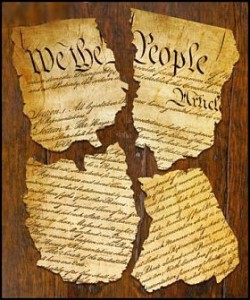
Down with the Constitution!

constitution burning


It has been quite an eventful and productive couple of weeks for the forces of statism in the former “land of the free, and home of the brave.”

The federal government’s highest court has enshrined “perversity” into law, guaranteeing untold amounts of future litigation while infringing on the right of freedom of association and, just as important, “disassociation” for those who rightly consider sodomy an abomination which wantonly mocks the Author of the natural law.

Prior to its cultural wrecking decision on “gay marriage,” the Court ensured that socialized medicine would become a permanent feature of American life upholding a key provision of Obamacare.

While the Supreme Court was issuing its heinous decisions, the two other federal branches of government were also actively augmenting the American Leviathan. After considerable arm twisting, threats, payoffs, and a large dose of GOP support, President Obummer was able to secure passage of the TPA fast-track legislation one of, if not, the greatest piece of “crony capitalism” ever conceived. Of course, in the current statist era, the exact details of this monstrous law has, as of yet, been made public, however, what has been made known is quite chilling.

While these liberty-defying acts were being committed, a prior provision of the American police state was renewed by Big Brother Barack and his Congressional Commissars. The National Defense Authorization Act (NDAA) which outlines the budget and expenditures of the U.S. Defense Offense Department has since 2012 contained the provision (section 1021) “which allows the Federal government, through military force, to arrest anyone, including American citizens, without a warrant, and hold them indefinitely without charges or due process – habeas corpus.”

Naturally, there was considerable outrage among freedom groups and those within the alternative media over the latest expansion of federal power. The responses, however, were typical with calls for “taking back the country from the globalists,” “restoring the Constitution,” “electing liberty-loving candidates to office.” The latter cry was spoken about the most with the Presidential election around the corner with some commentators speculating on which candidate could best “turn things around.”

Such talk and the tactics promoted to combat totalitarian America have been trumpeted so many times that they have long ago lost their appeal. They are not only worn out, but they would not work even if successfully implemented, simply because they are not directed at the source of the problem.

The recent judicial decisions, the many wars, the debasement of the currency, spying, the fomentation of racial violence, and the ruination of the economy are the result of a single institution – the United States federal government – which was surreptitious created with the “ratification” of the Constitution in 1789 against, as most historians agree, the will of the American majority for which it would tyrannically rule over ever since.

“The Miracle at Philadelphia” was a “miracle” only in the sense that the event has been viewed as some sort of liberty defining watershed where individual rights would be safeguarded and state power held in check by the Constitution. Few historical fantasies have been believed for so long!

Instead of a federated system where power is decentralized between national and local governments, the Constitution created a highly centralized state through the document’s often vague terminology “for the general welfare,” and its explicit grants of power, “federal statute is the supreme law of the land.”* The highly lauded system of “checks and balances” between the three branches of government have rarely, if ever, stemmed the growth of state power.

Yet, despite the suzerainty of the federal state, “patriots” and all those opposed to the regime still believe the system can be “reformed.” Even when the national government is controlled by those supposedly sympathetic to liberty, government power continues to expand while any previous welfare or draconian measure enacted are never curtailed, much less abolished.

Attempts at reform or working within the “political process” is a gigantic waste of time. Instead, such efforts should be directed at secession the goal of which is the dismemberment of the Federal Union into sovereign, independent entities, the greater in number the better.

Until the Constitution is recognized for what it is, the chances of ending the American police state, economic recovery, and the cessation of the myriad of global conflicts, wars, and hostilities in which the U.S. is actively fomenting, are next to nil.

The dissolution of the U.S. “federated” Republic is not only necessary for the well being of Americans, but for the peoples of the globe, millions of which have been murdered, intimidated, plundered, and spied upon by the Leviathan residing on the shores of the Potomac. Likewise, as the Constitution has served as a model in the development of nation states throughout the last three centuries, so its demise will provide an example for the rest of the world to hopefully emulate.

* Kenneth W. Royce, Hologram of Liberty: The Constitution’s Shocking Alliance with Big Government.  Javelin Press, 2nd ed., 2012, pp. 105-106.

Antonius Aquinas@AntoniusAquinas