Tag Archives: Economics

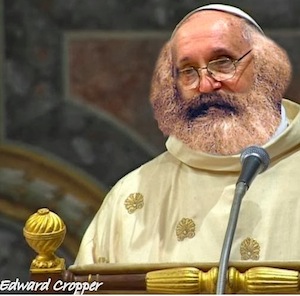
Pope Francis Now International Monetary Guru

pope-francis-marx

Neo-Marxist Pope Francis

As the new year dawns, it seems the current occupant of St. Peter’s Chair will take on a new function which is outside the purview of the office that the Divine Founder of his institution had clearly mandated.  Besides being a self proclaimed expert on global warming and a vociferous advocate of societal-wrecking mass immigration, it looks as if “Pope” Francis has entered the realm of global economics specifically, international monetary policy.

In an 18-page document issued through the Vatican’s Office of Justice and Peace, Bergoglio has called for, among other repressive and wealth-destructive measures, the establishment of a “supranational [monetary] authority” to oversee international monetary affairs:

In fact, one can see an emerging requirement for

a body that will carry out the functions of a kind of

‘central world bank’ that regulates the flow and system of

monetary exchanges similar to the national central

banks.*

The paper, “Towards Reforming the International Financial and Monetary Systems in the Context of a Global Public Authority,” contends that a world central bank is needed because institutions such as the IMF have failed to “stabilize world finance” and have not effectively regulated “the amount of credit risk taken on by the system.”

Naturally, as one of the planet’s preeminent social justice warriors, Bergoglio claims that if a world central bank is not commissioned, than the gap between rich and poor will be exacerbated even further:


If no solutions are found to the various forms of injustice,

the negative effects that will follow on the social,

political and economic level will be destined to create a

climate of growing hostility and even violence, and

ultimately undermine the very foundations of democratic

institutions, even the ones considered most solid.


Bergoglio acknowledges that if a central monetary authority is established it will mean a loss of sovereignty and independence among nations, but such “costs” are well worth the overall societal and economic gains:

  Of course, this transformation will be made at the

cost of a gradual, balanced transfer of a part of each

nation’s powers to a world authority and to

regional authorities, but this is necessary at a time

when the dynamism of human society and the

economy and the progress of technology are transcending

borders, which are in fact already very eroded in a

globalized world.

While the document demonstrates that Bergoglio has not a clue of basic monetary theory, it shows again that the “pope” is a radical socialist who has more in common with the loony ideas of Karl Marx than he does with Roman Catholicism.

The ongoing and deepening financial crisis that Bergoglio seeks to address is not because there has been no global central bank to regulate more effectively the money and credit flow of the various nation states, but the crisis is because of the machinations of central banking.  Central banking, through the fraudulent practice of fractional-reserve banking, has been the culprit in almost every financial calamity that has beset the Western world since the institution was first created.

If “Pope” Francis was truly interested in solving the financial crisis and alleviating the income gap between rich and poor, he would call for the abolition of this evil institution and advocate the re-establishment of an honest international monetary order based on gold and silver as money.  But, as a good neo-Marxist, Francis is more concerned with the redistribution of wealth from rich to poor.

Yet, as sound economic theory has shown, this Leftist ideal is a scam.  Redistribution of income never enhances the conditions of the poor but instead enriches the politically-connected elites and impoverishes the middle class.

Unlike what Bergoglio believes and what is taught in nearly all college and university economics classes, wealth can only be created by real savings (the abstention from consumption) and the investment of those savings into the production of capital goods which, in time, creates consumer goods.  To foster such an environment, however, there must be a sound monetary order not open to manipulation via inflation and credit expansion by central banks.

As he has been accused by several of his cardinals for espousing heretical views on re-marriage and the reception of the Sacraments, “Pope” Francis’ position on international money and banking matters is equally erroneous.  Jorge Bergoglio’s “pontificate” has been an unmitigated disaster plagued by constant scandal so it would be wise of him before it is too late to remember the ominous words of the Founder of the institution he now heads about the grizzly consequences that are in store for those who bring about scandal.

*Baxter Dmitry, “Vatican Calls for ‘Central World Bank’ and ‘Global Authority.'”  Your News Wire.com  2 January 2017.

Antonius Aquinas@AntoniusAquinas
https://antoniusaquinas.com/


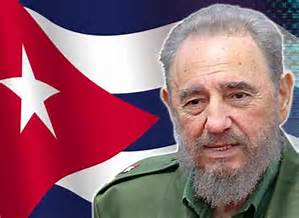
Fidel Castro and the American Empire

castro

The death of the brutal Cuban Communist dictator Fidel Castro closes the door, in some respect, on another disastrous page in US foreign policy history.  For all the denunciations and criticism of Castro from conservative elements and exiled Cubans, his despotic rule was the outcome of decades of American imperialism which began with President William McKinley’s infamous decision to wage war on hapless Spain in 1898.

The defeat of Spain and the confiscation of its possessions, which the US imperialist and corporate forces had longed prized, set the stage for the nation’s hubristic foreign policy course throughout the 20th and 21st centuries.  America’s action against Spain showed its ungratefulness for it attacked the country that did more for it than any other (including France) in its struggle for independence.  Maybe Castro’s interminable reign, which had always been a thorn in the side of US globalists, was payback for America’s wanton aggression against Spain.

Castro’s rise to power came about not only through the bungling of American diplomacy, but also from genuine “populist” support directed against the thoroughly corrupt regime of the US puppet in charge at the time, Fulgencio Batista.  Even by Latin American standards, the corruption which existed under  Batista was legendary!

The US government played an enormous role in Batista’s second presidency which began when he seized power in 1952.  Throughout his second tenure, Batista received massive kickbacks from American multinational businesses for grants of monopoly privileges on the island.  The most notable was the ITT corporation.

Batista used his unjust gains to enrich himself and buy weapons to be used against his opponents. It was claimed that when he fled Cuba he took a personal fortune of $300 million with him. While Batista and his ruling clique were enriching themselves through US assistance, the Cuban population suffered as the gap between rich and poor continued to widen.

Like Castro, Batista was ruthless in political repression which even American politicians noticed.  In a speech during the 1960 presidential campaign, John Kennedy claimed that Batista had murdered some 20,000 Cubans!

Of course, the US empire learned little from the fiasco with Castro and continued on its rampaging, destructive ways – destabilizing, bombing, and squelching populist uprising across the globe.  No sooner had the island become a lone communist outpost in the Western Hemisphere and the “Cuban Missile Crisis” was defused, than the nation plunged itself into a far bigger and more costlier quagmire in Vietnam.

Donald Trump rightfully condemned Castro’s murderous reign:

The world marks the passing of a brutal dictator who

oppressed his own people for nearly six decades.  Fidel

Castro’s legacy is one of firing squads, theft, unimaginable

suffering, poverty and the denial of fundamental human

rights.*

The President-elect must, however, understand the reason why Castro came to power and was able to maintain his totalitarian grasp for so long if America is to begin a new and hopefully peaceful foreign policy path.

Trump promised that the US would do all that it can to bring about a “free Cuba:”

Though the tragedies, deaths and pain caused by Fidel Castro

cannot be erased, our administration will do all it can to ensure

the Cuban people can finally begin their journey toward prosperity

and liberty.**

The best way he could accomplish this task not only in Cuba but in regard to all other nations is to heed the words of America’s third president, Thomas Jefferson, on the proper foreign policy path for the nation: “Peace, commerce, and honest friendship with all nations – entangling alliances with none.”

Maybe the demise of Castro and the ascendancy of Donald Trump is not a coincidence, but an opening which points to a new direction in foreign affairs: one that rejects nation building, intervention, and financial terrorism against friend and foe alike.  Let us hope so.

*David Jackson, “Trump Condemns Castro as ‘Brutal Dictator.’”  USA Today.  26 November 2016.

**Ibid.

Antonius Aquinas@AntoniusAquinas
https://antoniusaquinas.com/

Pope Francis is at it Again

pope-trump

As if there are not enough sufficient reasons for right thinking individuals to want a Donald Trump Presidency, one of the biggest is that it would be a direct and quite necessary rebuke and humiliation of the purported head of the Catholic Church, Pope Francis.

Bergoglio has once again injected his neo-Marxist self into areas where he has no right to interfere.  Of course, this has never stopped this cretin from doing so before, especially when it comes to liberalistic causes such as climate change.  Whatever happened to popes that preached the Gospel, spoke of the saints, or expounded on doctrine?

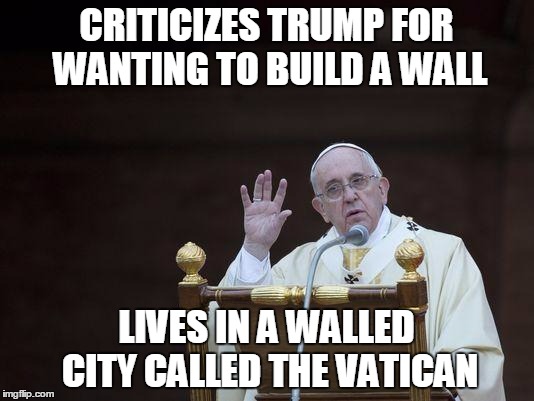
In a speech given at the Vatican on November 5, Bergoglio spoke of not giving into those politicians who talk of building walls, but those who work to build bridges.  He condemned “physical and social walls” that “close in some and exclude others” and added: “mercy is the best antidote against fear” while it “is much more effective than walls, than barbed wire fences, than alarms and arms, and it is free.  It is a gift of God.”*

That the timing of Bergoglio’s remarks – on the eve of the Presidential election – criticizing those who actually seek to get a handle on unwanted and country-wrecking mass immigration is not surprising, but it is particularly revolting coming from a person who heads an organization that has done virtually nothing to end its own great Sex & Embezzlement Scandals.  This is a “Church” which has protected, hid, and actually promoted known perverts and rapist of children and young adults while its leader has the unmitigated gall to lecture American voters about not electing someone who will try and prevent the country from descending into multicultural disintegration!

What is surprising is that Bergogolio is again seeking to influence American politics on the heels of credible revelations that emerged from the investigation of Anthony “pervert” Weiner’s laptop of a child pedophile ring inside the Clinton Crime Family and their sleazy and demented associates and friends.  If Bergoglio had any political acumen he would have kept his big and nauseating mouth shut since now the Church’s own abominable, criminal actions with children and the Clintons’ will be linked in voters’ minds.  One can only hope so!

Bergoglio was elected, in part, to clean up the sex scandals and the financial improprieties which surround the Vatican Bank.  Instead of fixing the criminality and expunging the perverts, rapists, and embezzlers, Bergoglio has instead become one of the world’s leading social justice warriors.  Furthermore, he has been an unabashed opponent of the market economy constantly speaking of income disparity and the supposed exploitation of the poor which takes place under capitalism.

While Bergoglio has shown himself to be an ignoramus on subjects such as immigration, global warming, and economics, he is apparently quite deficient in his knowledge of the glorious history of his own institution.  Such a lack of knowledge is probably intentional since the Church’s rich past does not coincide with its new ecumenism, which was hatched during the tragic years of the Vatican II Anti-council, 1962-65.

It was the Catholic Church which organized the military forces on a number of occasions to fight and defend Europe from invading Muslims hordes.  Inspired by real popes, the Church rallied the Continent’s often indifferent and self absorbed political leadership to take up their crosses and liberate the Holy Land from the Muslim yoke.  Any talk of allowing Muslims to infiltrate European lands would be rightly countered with cries of treason and punishment in blood.

Such facts are no longer spoken of by Bergoglio or his Vatican II predecessors who have made every effort to encourage mass migration.  The historical record cannot be denied; it, therefore, must be ignored.

The election of Donald Trump will hopefully not only be the end of the Clinton Crime Family, but it will put a brake on destructive mass immigration while inspiring anti-immigration forces throughout Europe.  Moreover, a Trump victory will put in his place the self righteous “pope” who, through the office which he unworthily occupies, is just as dangerous to the future of what is left of Western civilization as a Hillary Clinton Presidency.

*Michael O’Loughlin, “Days Before U.S. Election, Pope Francis Warns Against Politics of Fear.”  America.  5 November 2016.

Antonius Aquinas@AntoniusAquinas
https://antoniusaquinas.com/


Donald and the “Maestro”

trump-ii            greenspan-ii

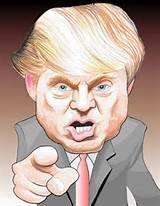
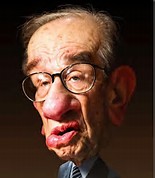
Former Federal Reserve Chairman Alan Greenspan, who was once laudably referred to as “Maestro” for his supposed astute stewardship of U.S. monetary policy, commented last week on the nation’s current political and economic climate:

We’re not in a stable equilibrium.  I hope

we can all find a way out because this too

great a country to be undermined, by how should

I say it, crazies.*

Well, if there is anyone who knows how to “undermine” an economy, it is the Maestro, since it was his “crazed” policies that brought about the 2008 financial crisis which ushered in the Great Recession that continues to this very day.

In a demonstration of how truly clueless Greenspan is about economic conditions, he cautioned that the U.S. is “headed toward stagflation – a combination of weak demand and elevated inflation.” Memo to the Maestro: stagflation is already here and has been for quite a while, especially when real economic gauges are used instead of the phony baloney numbers routinely lied about by the BLS and other corrupt state agencies.

The “crazies” that Greenspan refers to are, of course, the “deplorable” Trump supporters and The Donald himself, who the Maestro contends is responsible for “the worst economic and political environment that I’ve ever been remotely related to.” Oh, poor Alan has to suffer through an election where one of the candidates has not been approved by the ruling class.  Too bad.

Instead of carping about the current state of political affairs which, at least financially, he and his successor, Helicopter Ben Bernanke, largely contributed to, Greenspan should be grateful that he has had no reprisals for the financial crimes, chaos, and misery that he has afflicted upon the world.  Instead of significant jail time or worse, Greenspan is free to pontificate on current events, receiving hefty financial remuneration, and just as important for top members of the governing elite, ego-enhancing hosannas!

While Ben Bernanke has been a lifelong committed Keynesian and inflationist, Alan Greenspan, at least in his younger days as a member of Ayn Rand’s circle, was a free marketer who spoke positively about the efficacy and moral soundness of a gold standard.  That he abandoned these beliefs to go over to the Dark Side is further cause for retributive justice.

Greenspan’s betrayal was similar to those economists of the 1930s (Lionel Robbins most notable) who were followers of the teachings of Mises and Hayek, yet were swept away by the fanciful Keynesian deluge of the day and abandoned their economic senses and conscious for similar allurements which seduced the Maestro.  Had these economists as well as Greenspan stuck to their original principles, the world may not be in its current financial mess.

While Greenspan was lamenting the state of political affairs, the head “crazy,” Donald Trump, commented on the Maestro’s former place of employment.  Unlike the Maestro, the financial media, and just about every other politician, Trump had some perceptive things to say about the nation’s central bank, showing again that the billionaire businessman’s political acumen is quite good:

The Fed is being totally controlled politically because

Obama wants to go out with no stock market disruptions.**

The Republican Presidential hopeful could have easily added that the Fed’s policy is being deliberately carried out to ensure his Democratic opponent’s victory this fall.  A booming stock market is perceived by most as an indication of a vibrant economy.

Trump does not buy the supposed “independence” of the Fed from political influence and the conduct of monetary policy solely for the well being of the economy:

If it was a choice between the right decision and a political

decision… The Fed would choose the political decision.

Throughout the campaign, Trump’s instincts on political and economic matters have been quite good and hopefully if he does become chief executive those instincts will translate into positive change.

A Clinton Presidency would assuredly mean a continuation of the ruinous policies of Greenspan and his successors.  The election of Donald Trump could not only mean a new direction in monetary policy, but the public demotion of the likes of Alan Greenspan who will hopefully fade into the sunset never to be heard or seen from again.

*Rich Miller, “Greenspan Worries That ‘Crazies’ Will Undermine the U.S. System.”  Bloomberg.  14 September 2016.  http://www.bloomberg.com/news/articles/2016-09-14/greenspan-worries-that-crazies-will-undermine-the-u-s-system

**Tyler Durden, “Trump Slams ‘Totally Politically Controlled’ Fed, Sees No Rate Hike Until Obama Has Left.”  Zero Hedge. 15 September 2016.  http://www.zerohedge.com/news/2016-09-15/trumps-slams-totally-politically-controlled-fed-sees-no-rate-hike-until-obama-has-le

Antonius Aquinas@AntoniusAquinas
https://antoniusaquinas.com/


“A Date Which Will Live in Infamy:” President Nixon’s Decision to Abandon the Gold Standard

Nixon-Gold

Franklin Delano Roosevelt called the Japanese “surprise” attack on the U.S. occupied territory of Hawaii and its naval base Pearl Harbor, “A Date Which Will Live in Infamy.”  Similar words should be used for President Nixon’s draconian decision 45 years ago this month that removed America from the last vestiges of the gold standard.

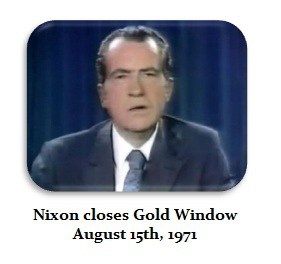
On August 15, 1971 in a televised address to the nation outlining a new economic policy entitled, “The Challenge of Peace,” Nixon instructed the Treasury Department “to take the action necessary to defend the dollar against the speculators.”*

Nixon continued:

I have directed Secretary Connally to suspend temporarily the convertibility of the dollar into gold or other reserve assets, except in amounts and conditions determined to be in the interests of monetary stability and in the best interests of the United States.**

Of course, any objective student of history knows that this was a lie and that it was not “speculators” which were causing monetary instability, but the U.S.’s own crazed inflationary policy which attempted to fund its imperialistic endeavor in Vietnam while expanding the welfare state at home.  This resulted in the Treasury losing an alarmingly amount of gold reserves to other central banks who rightly sought real value in exchange for depreciated American greenbacks.

In essence, Nixon’s decision ended gold redemption and placed the U.S. and the rest of the world on a purely fiat paper standard for the first time in recorded time.  By doing so, the U.S., in effect, became a deadbeat nation which no longer honored its obligations and was set on the road to its current banana republic status.

Instead of impeachment proceedings and his ultimate resignation for the juvenile break in at the headquarters of the nation’s other ruling crime syndicate, Nixon should have been imprisoned for this deliberate and destructive act which has led, in large measure, to the nation’s crushing and insurmountable debt burden, reoccurring booms and busts, and now economic stagnation.

Nixon’s disastrous decision had precedent.  FDR had his own day of monetary infamy in 1933 when, by Executive Order 6102, he outlawed the private ownership of the precious metal while eliminating  gold redemption by banks for dollars.  Ostensibly, the order was instituted as an emergency measure to combat the Depression, but in reality, it was done to allow the Federal Reserve greater “flexibility” in inflating the money supply.

While Roosevelt and Nixon’s decisions would backfire economically, their actions highlighted the totalitarian direction that the federal government and its executive branch were heading throughout the 20th century.  Moreover, the lack of opposition or protest to blatant executive dictatorial decrees by either the legislative or judicial wings of the federal government demonstrates again the flawed and frankly naive argument put forth by Constitutionalists of every ideological persuasion on how the celebrated “separation of powers” theory checks tyranny.

Nixon’s final abandonment of the gold standard had far greater ramifications than simply bad economics.  Without the discipline of hard money, central banks could, and did, create massive quantities of paper money and credit, which enriched the politically connected financial elites and the governments which they were aligned.  Such power was used, in time, to control, spy on, and regulate the subject populations to a degree never seen before.  The power of the state has swelled mostly through bank credit expansion without worry of gold redemption.

Despite what is taught in social science courses, a true gold standard is a greater protector of individuals’ economic well being and, ultimately, their political liberty than any legislation or “rights” document ever penned.  Hard money limits state power!

While it is painful to quote from an ardent opponent of sound money, the international bankster Baron Rothschild said it best when he described the relationship of money and power: “Permit me to issue and control the money of a nation, and I care not who makes its laws.”

Richard Nixon’s elimination of the last remnant of the gold standard over four decades ago combined with FDR’s earlier decree has fulfilled to the detriment of the American and world economies Baron Rothschild’s adage to a tee.  The return of prosperity and individual liberty will only come about when these two heinous acts are eradicated.

*Richard M. Nixon.  “Address to the Nation Outlining a New Economic Policy: ‘The Challenge of Peace.’”  The American Presidency Project.  15 August 1971. http://www.presidency.ucsb.edu/ws/?pid=3115

**Ibid.

Antonius Aquinas@AntoniusAquinas
https://antoniusaquinas.com/


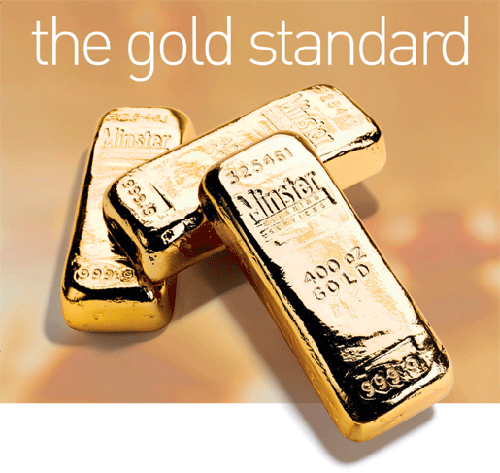
Don’t Expect a Return to a Gold Standard Any Time Soon

goldstandard

Despite trillions of paper currency units poured into the world economies since the start of the financial crisis, there has been no recovery, in fact, all legitimate indicators have shown worsening conditions except, of course, for the pocketbooks of the politically -connected financial elites.  Yet, despite the utter failure of the current money and banking paradigm to resolve the situation, the chance of a return to a commodity based monetary order is highly unlikely especially when one looks at the anti-gold bias found in typical college economics textbooks.

Macroeconomics: Principles, Problems and Policies by McConnell, Brue and Flynn is a leading introductory level college text which has been through, to date, some 20 editions.  Until the financial crisis of 2008, the subject of a commodity- backed money was not discussed, however, after the crisis and the popularity of gold standard enthusiasts like former Congressman and Presidential candidate Ron Paul, the authors of Macroeconomics obviously felt the need to address the resurgence in the interest of metallic money.

McConnell and company’s critique of the gold standard is full of fallacious reasoning that monetary cranks have employed for generations, all of which have been easily refuted by eminent economists.  Yet, the lies and distortions about commodity money continues in academia.

The authors admit that:

To many people, the fact that the government does

not back the currency with anything tangible seems

implausible and insecure.

This logical sentiment and realization of the fraudulent nature of unbacked currency by those outside the economics profession is brushed aside by the esteemed trio:

But the decision not to back the currency with anything tangible was made for a very good reason.

Yes, and we know what that reason was: so that the state and central banksters could have a ready and unlimited access to the creation of money to solidify and expand their power.  The gold standard was always an impediment to this cherished dream of the political elites – the establishment of an irredeemable, paper monetary order.

The authors, not surprisingly, see things differently:

If the government backed the currency with something

tangible like gold, then the supply of money would

vary with how much gold was available.  By not backing

the currency, the government avoids this constraint and

indeed receives a key freedom – the ability to provide

as much or as little money as needed to maintain the

value of money and to best suit the economic needs of

the country.

By all means, the state and central banksters should be given as much “freedom” as possible for we all know that governments would never abuse such license and would always act in the best interests of their citizens.  Certainly, the authors are not aware of any cases in history where such “freedom” was ever abused.

    Nearly all today’s economists agree that managing the

money supply is more sensible than linking it to gold or

to some other commodity whose supply might change

arbitrary and capriciously. . . .  if we used gold to back the

money supply so that gold was redeemable for money . . .

then a large increase in the nation’s gold stock as the

result of a new gold discovery might increase the money

supply too rapidly and thereby trigger rapid inflation.  Or

a long-lasting decline in gold production might reduce the

money supply to the point where recession and

unemployment resulted.

Volumes have been written debunking such stupidity.  The point, however, is that millions of minds have been exposed to such thinking and while most will not become economists (thank goodness!), what is taught in college and university classrooms about the gold standard is negative, to say the least.  Moreover, those who continue in a career in finance or economics will unlikely ever be presented with an accurate assessment of the gold standard.

A return to a sound and just monetary order will only take place after the ideological groundwork has been first laid, just as fiat money and central banking came about after years of proselytizing by inflationists.  It is also not enough to show the economic efficacy and moral soundness of commodity money, the ideas of crackpots like McConnell, Brue and Flynn need to be exposed for what they are.

Under the current academic environment, as generations have been misinformed, deceived, and lied to, it is unlikely that a return to a gold standard will take place.  Until the intellectual battle is won, paper money and the central banksters that manage it will continue their reign of financial terror.

Antonius Aquinas@AntoniusAquinas
https://antoniusaquinas.com/


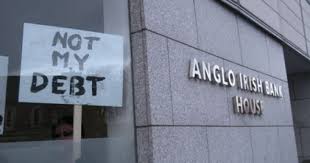
Jailing Banksters Will Not Resolve the Economic Crisis

Anglo Irish Bank

Last week, an Irish court sentenced three prominent banksters for their roles in the 2008 financial crisis.  Judge Martin Nolan, who pronounced judgment, said that the bansksters had committed “a very serious crime.”  He continued, “The public is entitled to rely on the probity of blue chip firms. If we can’t rely on the probity of these banks we lose all hope or trust in institutions.”*

A number have criticized the judge’s sentence for its mildness in light of the catastrophic damage that the banks have done to the economy.  Irish taxpayers have bailed out the banks five times since 2011, while it has been estimated that it will take up to 15 years, if ever, to recover.

While Irish banksters and the political class who have enabled them are certainly deserving jail time and much worse, whether they or other banksters who have committed similar crimes are punished will not prevent a reoccurrence of further economic crisis, undo the harm done to the Irish economy, nor will it pull Ireland or the rest of the Western world out of its economic malaise.

The seminal cause of the economic crisis of 2008 and almost every one preceding it has been the fraudulent expansion of the money supply by the banking system through the practice of fractional reserve banking.  Until this economy wrecking and social destructive scheme, along with the central banks that oversee and protect the nefarious practice, are abolished, the economic crisis will continue and deepen no matter how many banksters are jailed.

Simply put: fractional-reserve banking, for those who do not know, which includes 99.9% of the financial press, is the practice by which banks keep only a fraction of their deposits on hand and “invest” or loan out the rest at interest. Of course, if any other warehouse or storage facility engaged in such a practice it would be rightly considered fraud.

The process is augmented by central banks, which expand the money supply through the deposits that individual banks keep with them.  In fact, the main purpose for the creation of central banking in the first place was to enable individual banks to engage in this fraudulent undertaking which leads to all sorts of monetary mischief.

The beautiful part of outlawing fractional reserve banking is that it requires no creation of regulatory agencies, commissions, or convoluted legislation.  All that is needed is a simple universal prohibition of the nefarious practice applicable at all times and all places: any bank or financial intermediary which engages in fractional reserve banking or similar practices will be condemned and prosecuted with its perpetrators punished up to and including torture and death!

The judicial system is culpable too in this process.  Courts that actually prosecute banksters are not trying to get to the root of the problem, but are merely saving face with the public by doling out prison time or uttering harsh rebukes at the banksters.  Of course, as an arm of the state, the courts have a vested interest in not seeking the truth, since doing so would expose the actual method upon which nation-states obtain a good deal of their power.  Fines, jail time (usually reduced or suspended) to placate the angry populace is as far as the judicial system will typically go.

Naturally, a financial order devoid of fractional reserve banking would, as Providence had intended, consist of gold and silver, where paper currency and notes would most likely be of limited if any use.  The only significant hanky-panky which would occur with metallic money would be the old ploy of “coin clipping” which, although deplorable, was limited as compared to the inflations that have taken place under a pure paper, fiat standard.  To keep coin debasement in check, however, the same punitive measures should prevail as with those who engage in fractional reserve banking.

Punishing banksters for their monetary transgressions years after their dastardly deeds have taken place is comparable to buying fire insurance after a house has burned down.  If the Irish and the rest of the world’s populations want to eliminate the monetary chaos and the declining living standards which have ensued over the past half dozen years or so, they need to look at the ultimate cause of the crisis – eliminate fractional reserve banking and the central banks which condone and engage in the practice.

*Tyler Durden, “Ireland Jails 3 Top Bankers Over 2008 Collapse . . . Instead of Bailing Them Out.”  Zero Hedge.  30 July 2016.

Antonius Aquinas@AntoniusAquinas

https://antoniusaquinas.com/


The Gold Standard: Friend of the Middle Class

In-Gold-We-Trust

It has been theoretically demonstrated and seen in general practice that a monetary system of 100% metallic money devoid of central banking checks monetary inflation, prevents a general rise in the price level, and eliminates the dreaded business cycle while making all sorts of monetary mischief nearly impossible.  A gold standard is not only economically superior to any paper money scheme, but is morally just, which is why it is hated by the politically well-connected, academics, politicians, and the rest of the Establishment.

Often not discussed, however, even by its proponents is the beneficial effect that “hard money” has for the middle class.

It is not a coincidence that since the U.S. left the last vestiges of the gold standard in 1971with President Nixon’s nefarious decision to no longer redeem international central bank payments in gold, real wages for Americans have stagnated.  Nixon’s decision to put the nation on an irredeemable paper money standard set it on a course of economic ruination, which is why he should have been hounded from office not for his role in the bungled, petty cover up at the Watergate.

Stagnating wage rates have been confirmed by a number of studies, take, for instance one from the Pew Research Center which states that “today’s average hourly wage has just about the same purchasing power as it did in 1979. . . . [I]n real terms the average wage peaked more than 40 years ago: The $4.03-an-hour rate recorded in January 1973 has the same purchasing power as $22.41 would today.”*

While the absence of the gold standard has impoverished laborers, it has benefitted (not surprisingly) the very wealthy – hence, the reason why it was abandoned, as the Pew Study reports: “What gains have been made, have gone to the upper income brackets.  Since 2000, usual weekly wages have fallen 3.7% (in real terms) among workers in the lowest tenth of the earnings distribution, and 3% among the lowest quarter.  But among people near the top of the distribution, real wages have risen 9.7%.”**

Of course, this was part of Nixon’s plan: redistribution of wealth from the middle class and low income groups via money printing to the political class.  Such a scheme, however, could have only happened if the gold standard was eliminated.

Since the start of the abominable Obama Administration in 2009, the adjusted monetary base of the U.S. rose from $1.772 trillion to $3.966 trillion as of March 16, 2016.***  Of course, even these unfathomable figures as well as all other information supplied by the dominant media and government cannot be trusted.  It, therefore, can be safely assumed that the real money supply is more than officially reported.

Money, like every other good, is subjected to the immutable law of supply and demand.  Every increase in the money supply reduces the purchasing power of the monetary units which are already in circulation.  Naturally, since wages are paid in dollars, increases in the supply of them will decrease their purchasing power.  Thus, while nominal wages have gone up as the Pew Study shows, real wages (what wages can purchase) have stagnated.

The decline in real wages over the decades from profligate money printing has resulted in lower standard of living for wage earners and those living on fixed incomes. The rise in two income families is, in part, a consequence of a paper money economy and the fact that the financial survival of families now requires two incomes.  Two-income families have also profound cultural implications which are now manifesting themselves.

There has been much talk throughout the current presidential campaign about the financial decline of the middle class.  Candidates on the Left naturally talk of subsidies and more redistribution of wealth while those on the Right have called for tax cuts. While tax reduction of any kind is always welcomed and leads to economic growth, a sound monetary policy is just as important for a revitalization of the middle class.  Moreover, a return to honest money does not require any expansion of government spending or debt.

If policy makers truly want to improve the condition of the middle class, which consists primarily of wage earners, a return to a monetary order of “hard money” is an economic and moral necessity.

*Drew Desilver.  “For Most Workers, Real Wages Have Barely Budged for Decades.”  Pew Research Center.  9 October 2014.

**Ibid.

***Jerome R. Corsi, “Obama’s Latest Fraud: ‘Economic Recovery’ Disproven in Just 9 Charts.”  WND Money.  3 March 2016.

Antonius Aquinas@AntoniusAquinas

https://antoniusaquinas.com/

Presidential Dictatorship

Sic Semper tyrannis II

Executive orders, undeclared wars, drone hits, assassination of citizens and non-citizens alike, the overthrow of foreign regimes, domestic spying, the abetting of known criminal activities through pardons, economic planning, opening borders, monetary manipulations are just some of the nefarious activities that routinely emanate from the most dangerous political office that the world has ever painfully come to know – the United States Presidency!

The U.S. presidents can and have created a veritable “hell on earth” for their opponents, perceived enemies, and the innocent not only in the country in which they reign, but over the lives and fortunes of peoples and places where they have absolutely no authority to interfere.  While other chiefs of state have theoretically had such power, U.S. presidents have been able to inflict their destruction and chaos because, paradoxically, the nation’s free-market system, for a long time, created immense wealth which could be tapped into.

The tyrannical nature of the presidency was recognized long ago by those politically perspicacious men who opposed both the office and the draconian document which created it.  Few groups in history have been so vindicated for their foreboding as those who vainly argued against the ratification of the United States Constitution than the Antifederalists.

“An Old Whig”* aptly sums up the damage that would come about if the Constitution was ratified and the office of president would come into being:

. . . the office of President of the United States appears to me

to be clothed with such powers as are dangerous.  To be the

fountain of all honors in the United States, commander in chief

of the army, navy and militia, with the power of making treaties

and of granting pardons, and to be vested with an authority to

put a negative upon all laws, unless two thirds of both houses

shall persist in enacting it, . . . .**

An Old Whig saw that the president would become a “king” but without the natural and binding checks that even the most absolutist of monarchs were restrained by:

[The president] is in reality to be a KING as much a King

as the King of Great Britain, and a King too of the worst

kind; – an elective King. . . . The election of a King

whether it be in America or Poland, will be a scene of

horror and confusion; and I am perfectly serious when

I declare that, as a friend to my country, I shall despair

of any happiness in the United States until this office

is either reduced to a lower pitch of power or made

perpetual and hereditary.***

One of the Federalists’ counterarguments to the Antifederalists’ concern over the presidential office was the widely held assumption that George Washington would become the new Republic’s first chief executive and the general knowledge of his impeccable character would assuage those worried of potential executive overreach.  Such a lame response neglected to look into the future when the office’s huge potentiality for despotism would be sought after and won by those who had less upstanding personal traits than the father of the country.

The growing decentralized political movements throughout the world with, for instance, the hopefully upcoming British exit from the European Union, can only be enhanced if the office of the president and, for that matter, all other nation state’s chief executives are exposed as tyrannical institutions which are anathema to individual liberty and collective self-determination.  Presidents, premiers, chancellors, prime ministers, and their like along with central banking are the two nefarious pillars of power of the modern nation state whose continued existence guarantees perpetual war and economic regression.

In this seemingly interminable presidential election cycle, populist, libertarians, conservatives, and all sorts of anti-Establishment types are delusional if they believe the totalitarian direction in which the country is now headed will be reversed through elections or choosing the “right” candidate.  “Making American Great Again” will only come about when the chief executive office and the statist document that created it have been repudiated.

Prior to the presidency’s abolition, its ideological justification must be first debunked.  There is no finer place to start for this most necessary task to take place than in the dissemination of the perceptive and enduring words of the much neglected Antifederalists.


*Probably penned by a group of Philadelphia Antifederalists – George Bryan, John Smilie, James Hutchinson and maybe others.  See, John P. Kaminski & Richard Leffler, eds., Federalists and Antifederalists: The Debate Over the Ratification of the Constitution.  Madison, Wisconsin: Madison House Publishers, 1989, p. 18.

**Ibid., p. 86.

***Ibid.

Antonius Aquinas@AntoniusAquinas

https://antoniusaquinas.com/

A Morally Sound Tax Reform Proposal

US Taxpayer

The Oppressed U.S. Taxpayer

This year, Americans’ day of tribute to their federal overlords falls on April 18.  As calculated by the Tax Foundation, the average American will work from January 1 to April 24 (Tax Freedom Day) to pay his share of taxes to all levels of government with some $3.3 trillion to be forked over to the federal government and $1.6 trillion to state and local jurisdictions.*

While any talk of tax cuts are verboten on the Democratic side of the presidential campaign, the remaining Republican contenders have offered their views on the matter suggesting a flat tax, reduction in corporate tax rates, and a call for the consolidation of the current tax bracket from seven to four.*  Most of these and their variations have been trumpeted before and even if enacted would not permanently undo the crushing tax burden or prevent rates from escalating to even more confiscatory heights.

If real and lasting tax relief is ever going to come, a more fundamental alteration of tax policy needs to be taken, which has not been suggested by any of the presidential contenders, but had once been an integral part of the nation’s political thought.

One of America’s most neglected political theorists of the 19th century was South Carolina statesman John C. Calhoun, who wrote the important treatise, A Disquisition on Government.  Calhoun perceptively saw that politically, society is divided between two distinct groups: taxpayers and taxconsumers.  Obviously, taxpayers are the ones who “pay” taxes while taxconsumers, such as government employees, welfare recipients, state contractors, and all others that receive income from the public trough, “consume” or live off taxation.

Naturally, when it comes to the issue of taxation, taxconsumers will be in favor, or, at least, want to maintain the status quo and, more than likely, would support notions of tax increases.  Taxpayers, on the other hand, would oppose increases or enlargement of the tax base, since they are the ones “footing the bill.”

Of course, politicians of all stripes and colors try to blur this distinction that Calhoun so brilliantly made, especially on tax day by declaring how “they paid their taxes.”  This, however, is sophistry.

In reality, politicians are just returning some of the loot that they coercively took from their fellow citizens.  Federal government employees in essence do not pay federal taxes!  Nor do individual state employees pay state taxes.  This is merely an accounting gimmick to bamboozle the public. And, this is one of the reasons that, for the longest time (and wisely so), citizens of the District of Columbia could not vote in federal elections since most of them were government employees and would, in their self interest, oppose tax cuts or public spending reductions.

When government was limited and the welfare state effected only a small group, voting and levels of taxation did not have a significant correlation.  However, with the number of people working for the government in the millions and those dependent on state largesse in the tens of millions, who votes, and in what numbers is extremely important.

It has been recently estimated that of the total U.S. adult population of some 260 million, only one third (some 79 million) can be said not to be dependent on state support for their existence while 70% of the adult population or 57% of the total population is dependent on some form of state aid.  And, unfortunately, all indicators point to more and more headed for the dependency category, primarily due to the destructive economic policies of the Obama Administration.

All of those who seek to lower the oppressive levels of taxation not only in America but throughout the Western world are foolish if they allow those who parasitically live off others to have a voice in choosing candidates or initiatives in regard to taxation.  Democracy does not trump human nature.  State dependents will vote for those they perceive will continue their subsidies.

Instead of lobbying for the redress of phony grievances against Politically Correct victims and groups, social justice warriors should direct their energies to the long suffering U.S. taxpayers and demand that those who live off them should have no say in either how much taxpayers are to pay or how their confiscated wealth is to be dispersed.

*”No Emancipation This Year.”  The Washington Times.  Friday, April 15, 2016, B2.

**Ibid.

Antonius Aquinas@AntoniusAquinas