Category Archives: Europe

Donald Trump & The Passion of the Christ

                                  the-donald-christ  the-passion

If Donald Trump can somehow defeat the Wicked Witch of Chappaqua despite vote rigging, outlandish media bias, backstabbing by his own party’s elites, and opposition of Wall Street, his victory may be the most serious setback for The Establishment since, perhaps, the release of Mel Gibson’s blockbuster movie, The Passion of the Christ.

Both Gibson and Trump faced seemingly impossible odds at the start of their quests and were viciously attacked and undermined by the usual Establishment suspects, yet, in Gibson’s case, he was able to beat the bastards at their own game producing one of the most accurate and authentic Christian movies ever made which garnered over a half billion dollars and numerous cinematic awards!

Unfortunately, Mel Gibson did not parlay his enormous success and cause further aggravation for the Entertainment industry with additional non-cultural Marxist features, but fell prey to booze and the pleasures of the flesh.  Moreover, Gibson, who was once a traditional Catholic who rejects the heretical changes brought about at the Vatican II Anti-council, could have been a force in a counter insurgency to rid the Church of its current horde of apostates including its head honcho.

If Trump wins he will have completed what earlier populists, most specifically Ross Perot and Pat Buchanan, had started, but were unable to complete.  A real challenge to the two-party duopoly could have taken place had Perot and Buchanan stuck with the Reform Party and built it up as a legitimate alternative.

A Trump Presidency will, at the very least, put a temporary halt to the totalitarian liberal order’s relentless drive to render American sovereignty and create a multicultural society via mass controlled (and uncontrolled) immigration.  There would be no return from such a demographic onslaught and political realignment, at least through the ballot box, with the only alternative being secession or the emergence of a strongman who would violently suppress the Left.

A Trump victory would not only be a blow against the entrenched political class, but like Gibson’s great movie, it would be a mighty and much needed knockdown of the mass media.  No presidential candidate has ever dared to openly take on the mainstream media and expose it for what it truly is – the propaganda arm for the New World Order and the purveyors of degenerate cultural Marxism.

The protagonist in The Passion of the Christ has often been referred to as “The Prince of Peace,” which is somewhat of a misnomer.  The Christ of the Scriptures is a fighter who spends a good portion of His ministry battling and upbraiding the corrupt Church officials and hierarchy of the day who were not properly shepherding His flock.

Similarly, Donald Trump has always considered himself a fighter (counter puncher) who has promised to get rid of the corruption and criminality that pervades the political establishment, especially the Clinton cartel.  Trump is uniquely qualified for such a task because, unlike nearly every other politician, he is not beholding financially to anyone.

Most importantly, Trump will set a new course in US foreign policy which will lead to a de-escalation in tensions around the globe especially with Russia.  High praise was attributed to the peacemakers by the Author of the Beatitudes who said: “Blessed are the peacemakers: for they shall be called children of God.”

Not only for America, but a Trump victory will have positive reverberations throughout the Western world which would surpass that of the surprising Brexit vote.  European anti-immigration groups and organizations would undoubtedly become further emboldened both psychologically and financially in their struggle to stem the tide of massive unwanted and society-wrecking immigration.  There is no telling what the effect would be when the chief executive of the world’s dominant power would be in sympathy with those who have courageously sought to preserve their families, heritage and way of life from the wicked designs of the New World Order.

While Mel Gibson self destructed after the phenomenal success of the The Passion of the Christ, his movie still stands not only as an inspirational and moving cinematic masterpiece, but as a glorious blow against the Establishment.  A Trump victory could mean an even greater strike against our globalist masters.

Antonius Aquinas@AntoniusAquinas

https://antoniusaquinas.com/


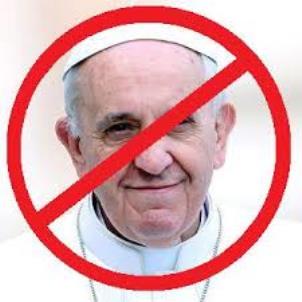
“Pope Francis:” Traitor to Western Civilization

no-pope-bergoglio

There has been no greater advocate of mass Muslim migration into Europe than the purported head of the Catholic Church, “Pope Francis.”  At a recent conference, he urged that “asylum seekers” be accepted, “through the acts of mercy that promote their integration into the European context and beyond.”*

Jorge Bergoglio is the “purported pope” of the Catholic Church because, as certain theologians have argued, he was neither validly ordained as a priest or consecrated as a bishop in the traditional Catholic rites of Holy Orders.  Since a pope must first be a bishop, in particular the bishop of Rome, Bergoglio cannot, therefore, be pope.

He is not a Catholic pope, but head of a new “Conciliar Church” which was concocted at the time of the Second Vatican Council (1962-65), actually an “Anti-council,” and in the tumultuous years that followed, which witnessed fundamental changes in doctrine and the Sacraments, most damaging the promulgation of the New Mass by Paul VI-Montini.  The New Church also did away with its traditional view on evangelization and conversions and adopted the previously condemned heresy of “syncretism,” which contends that “we all worship the same god,” and that “one religion is as good as another.”  This idea pervades post-Vatican II Catholicism and is what Francis bases most of his justification for the mass migration onto lands which once made up Christendom.

While Bergoglio cannot be pope on technical grounds, he is also disqualified for his blasphemies and heretical actions, words, and teachings, all of which have flowed at a breathtaking pace.  From the infamous, “who am I to judge,” about sodomites, to his alteration of two millennium of teaching on divorce and remarriage, to such whoppers as “God does not exist,” Bergoglio has placed himself “outside of the Church” and thus cannot hold ecclesiastical office and certainly not that of supreme pontiff.

Despite the overwhelming theological and empirical evidence that the Chair of St. Peter is vacant (sede vacante) and its restoration will take place in its Founder’s good time, for the vast majority of Catholics and the world at large, Jorge Bergoglio is pope and his actions have consequences.  And, since his promotion and support of mass Muslim migration is leading to not only the destruction of what is left of Western Civilization and the species which largely created that civilization – white, gentile, heterosexual men – Bergoglio and the organization which he represents, must be stopped.  If Pope Francis and his New World Order cohorts are not countered, whites, and the cultures which they built, will vanish.

The Catholic Church is an integral part of Western Civilization even if Bergoglio and the pack of cultural Marxists prelates which surround him will not admit it.  It was the Church that preserved the heritage of Antiquity from the barbarian invasions during and after the fall of the Roman Empire.  Without the actions of the monks and other clerics, many of the classical works would have been lost forever, leaving future generations bereft of the wisdom and treasures of the Ancients.  It was the Church that was the indispensable part in the formulation of the greatest civilization known to mankind, Christendom.  Moreover, it was the Catholic Church, largely through the Papacy, that inspired the Crusades, which for a glorious time drove out the Muslims from the Holy Land and returned it to its rightful possessors.

It is undeniable that the Catholic Faith (which Bergoglio is supposedly its chief representative) inspired numerous European sovereigns, most notably Queen Isabella, to take up arms against the Mohammedans.  It was her faith which drove the heroic queen to free the Iberian Peninsula from the Muslim yoke, which then allowed her to finance Christopher Columbus on his epic, world-changing voyage.

Yet, Bergoglio and his fellow heretical Churchmen assiduously avoid any reminiscing of such facts and instead are deliberately encouraging Muslim migration into the lands that Europeans spilled blood and sacrificed treasures to defend – Queen Isabella must be turning over in her grave!

If Western Civilization is to be salvaged, those who seek its destruction must be removed from their positions of authority and influence.  Whether through political means, armed revolt, or de-legitimization, those who hold such power must be toppled.  Exposing “Pope Francis” for what he is, or is not, will go a long way in that most vital and necessary task.

*http://en.radiovaticana.va/news/2016/09/17/pope_francis_%E2%80%98each_migrant_has_a_name,_a_face,_and_a_story%E2%80%99/1258801#

Antonius Aquinas@AntoniusAquinas

https://antoniusaquinas.com/

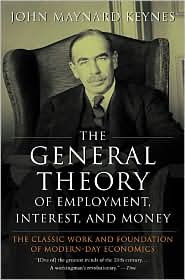
John Maynard Keynes’ “General Theory” Eighty Years Later

Keynes Gen Theory

To the economic and political detriment of the Western world and those economies beyond which have adopted its precepts, 2016 marks the eightieth anniversary of the publication of one of, if not, the most influential economics books ever penned, John Maynard Keynes’ The General Theory of Employment, Interest and Money.  Sadly, even to this day, despite its thorough refutation by lights such as Henry Hazlitt and other eminent scholars, The General Theory, which spawned “Keynesianism” and its later variants, remains supreme in academics, financial markets, and public policy.

Despite its outlandish theoretical flaws and nonsensical economic jargon and the catastrophic empirical evidence of its failure to prevent financial downturns or “stimulate” sustainable growth, Keynesianism remains the ruling paradigm of economic thought.

Why?

A number of trenchant reasons have been given for the General Theory’s continued dominance, however, one stands above all else: Keynesian economics provides the intellectual justification for economists, statisticians, technocrats, bureaucrats, and policy wonks in their exalted positions as “fine tuners” of economies the world over.  Since markets are to Keynes and his disciples inherently unstable from erratic investment spending and aggregate demand, it is up to these theoreticians steeped in the knowledge of their master’s teachings to ameliorate any economic fluctuations.

The General Theory came on the scene at a propitious time during the height (or more accurately the depth) of  the Great Depression, which in 1936, despite Roosevelt’s New Deal and other Western nation states’ initiatives, had not improved conditions.  Keynesianism was actually a “middle way” between all out Soviet-style central planning and that of laissez-faire capitalism.  Primarily through fiscal policy, the economy would be kept on an even keel under the astute management of Keynesian-trained economists.  Naturally, this appealed to academics and intellectuals the world over who correctly envisioned positions of power and influence in expanded state apparatuses.

As history has shown, Keynesianism was to become more than a remedy for the Depression, but would be applicable after the crisis dissipated.  The General Theory was based, in part, on the (false) notion that the capitalist system is inherently unstable and is, therefore, in need of state intervention.  Keynes  deliberately ignored the scholarship at the time, which demonstrated that the instability was not a “market failure,” but a monetary disorder caused by artificial credit expansion generated by the central banks, especially the Federal Reserve.

The enthusiasm for The General Theory came at first from younger economists while it was (rightly) dismissed by many of their elders as incomprehensible.  Yet, its lack of clarity was appealing to the novices, since they would become the Creed’s interpreters.

Not all, however, were entirely overwhelmed by their mentor’s magnum opus as Paul Samuelson candidly admitted:

[The General Theory] is a badly written book:

poorly organized. . . . It abounds in mares’ nests

of confusions. . . .  I think I am giving away no

secrets when I solemnly aver – upon the basis of

vivid personal recollection – that no one else in

Cambridge, Massachusetts, really knew what it

was all about for some twelve to eighteen months

after publication.*

Despite such an assessment, Keynesianism was never seriously challenged by its adherents, it opened too many lucrative policy making doors to be refuted.

That Keynesianism continues to reign supreme, despite its theoretical and empirical bankruptcy, speaks volumes of the state of Western intellectual and academic life.  Instead of the pursuit of truth and the refutation of error, Western intelligentsia is primarily concerned with securing privilege and power for itself.  At one time such status was gained by honest inquiry into social questions and issues, now it is obtained in the justification of the expansion of state power.  Very few turn down such enticements!

Societies are the product of ideas.  Since the release of The General Theory, the Western world has been under the destructive sway of Keynesianism, which has resulted in stagnation, financial turmoil, and eventual collapse.  Until Keynes and his nutty theories have been refuted, the economic malaise will continue.

Quoted in Murray N. Rothbard, “Keynes, the Man.” In Mark Skousen, ed., Dissent on Keynes: A Critical Appraisal of Keynesian Economics.  New York: Praeger Publishers, 1992, p.184

Antonius Aquinas@AntoniusAquinas

https://antoniusaquinas.com/

Feudalism: Was it so Bad?

feudal system

One of the biggest misconceptions held among the independent and alternative media is that of feudalism and the political, economic and social arrangements which characterized that unfairly maligned epoch.

Derogatory language is often used to describe feudal times with commentators often suggesting that today’s political and financial elites seek to return mankind to such a supposedly depressed, stagnate and repressive condition.

Those who receive the most animus from alternative media pundits are the authority figures and institutions which reigned throughout the period – knights, dukes, kings, princes, popes, priests, bishops, churches, monasteries, and cathedrals.

Yet, was this the case; was feudalism which existed throughout much of the Middle Ages really that bad?

Politically, despite the distortions found in contemporary history books and political science texts, state power in feudal times can be categorized in one term – decentralized – which in reality meant a considerable amount of individual liberty and freedom for all, including serfs.

Naturally, feudal political conditions across Europe varied, however, a look through Carl Stephenson’s classic work, Mediaeval Feudalism, is instructive:

So far as eleventh-century France is concerned, we may disregard

the royal authority altogether.  The kingdom of the West Franks,

which had never been more than a political makeshift, now seemed

on the point of final dissolution. . . . The ancient rights of the crown

had long since passed to such men as were able, with or without

legal authorization to organize and defend a local territory. . . .

The greater of the king’s alleged vassals never came near his court,

whether to perform homage or to render any other service.  What

respect could they have for a theoretical lord who was defied with

impunity by petty officials on his own domain?1

Professor Stephenson continues with words that should warm the hearts of anti-statists everywhere:

France, obviously, had ceased to be a state in any proper sense

of the word.  Rather, it had been split into a number of states

whose rulers, no matter how they styled themselves, enjoyed

the substance of the regal power.2

In Germany, too, power was radically diffused as Professor Stephenson describes:

. . . in various other ways the rulers of Germany sought to

maintain the Carolingian tradition of a grandiose monarchy.

They even revived the imperial title and made brave efforts

to reign on both sides of the Alps.  But the task was an

impossible one.  The Holy Roman Empire became a mere

sham; and as the prolonged contest between the royal

and the princely authority ended in the complete victory of

the latter, Germany. . . was resolved into a group of feudal

states.3

Despite their aggrandizing efforts, the German kings could never succeed in establishing absolutist rule:

Vainly trying to be Roman emperors, the successors of

Otto I . . . became [as kings] purely elective, degenerated

into a sort of decoration to be borne first by one local prince

an then by another.4

Germany remained, for the longest time, an area of decentralized political authority as Professor Stephenson explains:

From the Rhineland to the Slavic frontier, armies were

made up of knights, society was dominated by a

chivalrous aristocracy, the countryside was dotted with

motte-and-bailey castles, and governments were

organized on the basis of feudal tenure.5

Political and economic theory have demonstrated that power which is diffused typically leads to low levels of taxation.  In the case of medieval feudalism, this certainly was the case:

. . .  if the lord needed military service or financial aid beyond

what was specifically owed by his vassals, his only recourse

was to ask them for a voluntary grant.  He had no right to tax

or assess them arbitrarily, for his authority in such matters was

determined by feudal contract.6

Likewise, law was not “made up” by legislative acts, but was that of custom and tradition based on the natural law which kings, lords, vassals, and commoners were all obliged to live by:

Nor does he [the king, or lord] have a discretionary power

of legislation.  Law was the unwritten custom of the country.

To change or even to define it was the function, not of the lord,

but of his court.  It was the vassals themselves who declared the

law under which they lived; and when one of them was accused

of a misdeed, he was entitled to the judgment of his peers, i.e.

his fellow vassals.7

Warfare, too, was limited in scope compared to the massive human slaughter and destruction of property which has taken place over the past two centuries:

    The general character of feudal warfare may be easily

deduced from what has already been said about

vassalage and chivalry. . . .  when two feudal armies

met, each knightly participant was apt to conduct

himself as he saw fit.  The final outcome would depend

on a series of duels in which the determining factor was

individual prowess.  But battles on a large scale were

rare in feudal Europe.  The characteristic warfare of the

age consisted rather of pillaging raids into the enemy’s

territory, of skirmishes between small bands of knights,

and of engagements incident to the siege of castles.

[Emphasis mine.]8

While there used to be a debate about the conditions of serfs compared to that of modern day wage earners, the argument is now falling apart with studies showing that real wages and corresponding standards of living have actually contracted over the past half century for most.  Where there can be no debate, however, is the moral condition of the people of the feudal past compared with contemporary times where “gay marriage” and other abominations have now been given legal status.  No right-minded person could argue that marriage, the family, and child rearing are in better shape today than they were in the supposed “Dark Ages.”

In nearly every aspect of societal appraisement, medieval feudalism was a far superior social order than anything which has come in its wake.  Those who denigrate it not only show their historical ignorance, but play into the hands of their elite oppressors who understand that a return to such a social order would be a much greater threat to their power than any presidential candidate or his “movement.”

1Carl Stephenson, Mediaeval Feudalism, Ithaca, NY.: Great Seal books, 1942; 1960, pp. 77-78.

2Ibid., p. 78.

3Ibid., 92-93.

4Ibid., 93.

5Ibid.

6Ibid., p. 31.

7Ibid.

8Ibid., pp. 66-68.

Antonius Aquinas@AntoniusAquinas

https://antoniusaquinas.com/


“Pope” Francis and the Disintegration of Europe

Pope's Wall

A Massive Wall Surrounds Francis-Bergoglio’s Vatican City-State

Despite being rebuked and humiliated by the Republican presidential front runner over his inflammatory statements about U.S. illegal immigration policies, Newpope Francis of the Vatican II sect has continued to opine about the migration crisis.

In an address to a Newcatholic French group, Bergoglio admitted the obvious: “We can speak today of [an] Arab invasion.  It is a social fact.”  Yet, despite the horrific consequences of this fact, mostly orchestrated by New World Order groups and organizations of which his church is a part, Newpope amazingly contends that this will eventually be a positive thing for Europeans: “How many invasions has Europe experienced in the course of its history! But it’s always been able to overcome them and move forward, finding itself complimented and improved by the cultural exchange they brought about.”*

Europe “complimented and improved”?!   Right.  Tell that to the thousands of women who have been raped, assaulted, and terrorized by mostly Muslim fanatics, or look at the widespread destruction of private property that these trespassers have wrought, and worse, the cultural transformation that this deliberately created crisis has produced.

Bergoglio furthered these idiotic statements with some multicultural speak: “the only continent [Europe] that can bring some unity to the world.”  And that Europe must fulfill its “universal role” and “rediscover its cultural roots.”**

If Bergoglio really wants Europeans to “rediscover” their “cultural roots,” they will find that ever since the emergence of Mohammedanism, its fanatical adherents have repeatedly attempted to overrun and conquer the Continent and subject its peoples to the crazed religious and political dictates of its possessed “prophet.”

At one time, Europe fulfilled its “universal role” by engaging in a series of military actions (the Holy Crusades) which were mostly inspired by true popes (which Bergoglio and his Vatican II predecessors are certainly not) to expunge the infidel from the sacred places where the Founder of Christianity lived, preached, was crucified, and gloriously rose from the dead.  These authentic successors of St. Peter, in particular Urban II and Innocent III, understood the threat that Mohammedanism posed to their flocks both spiritually and culturally.

The failure of Christendom to ultimately defeat Islam and drive it out of the former lands of the Roman Empire was not the fault of the popes, but that of the secular powers who increasingly sought their own aggrandizement. If the European principalities had heeded the popes’ calls and driven the Muslims back to their tribal homeland, history would have had a happier outcome.

Bergoglio, if he cared to look, would find that Europe’s “universal role” included the justification of “holy war,” in the use of violence against Islam, not only during the Crusades, but in the re-conquest of Spain, and in the defense of its homeland from numerous Muslim assaults. Moreover, the idea of Muslims living side-by-side with Europeans or being able to create their own autonomous communities would have rightly been considered societal genocide.

No authentic pope would be engaged in “dialogue,” common prayer meetings, or other ecumenical interchanges with Muslims as Bergoglio and his Vatican II predecessors have repeatedly and blasphemously done over the years.  Any pre-Vatican II pope, theologian, bishop, priest, or, for that matter, astute layman would properly consider such actions abominable and would recommend as punishment a rendezvous with some of the scum that abounds at the bottom of the Tiber for its transgressors!

Bergoglio and most of the Newchurch hierarchy’s support for free migration and open borders and their condemnation of those who have opposed such lunacy clearly demonstrates that the Vatican II sect is part and parcel of the New World Order which seeks the eradication of sovereignty and the extinction or at least subjugation of European peoples to the global elites.

Not only is this cretin wantonly overturning two thousand years of traditional Christian teaching on morality, but he is openly encouraging the destruction of those societies which that morality ultimately helped to build.

Despite the skillfully and deceitfully crafted persona as “Mr. Humble” and his white pontifical attire, “Pope” Francis and the sect that he heads are a clear and present danger to what remains of Western civilization and must be opposed and removed from power.

*Tom Wyke, “The Pope says ‘It is a Social fact’ that Europe is seeing an ‘Arab Invasion’ and it’s a Good Thing.”  Daily Mail.com.  4 March 2016

**Ibid.

Antonius Aquinas@AntoniusAquinas


Queen Isabella and the Invasion of Europe

Surrender of Granada

The Muslim Surrender of Granada to Fernando and Isabella, 1492

If the Western world ever becomes serious on how to deal with the current, mostly Muslim, invasion of its once sacred soil, all it needs to do is to look to its glorious past.  In particular, it should examine the heroic actions of one of its greatest figures, Isabella of Castile. This is why the historian William Thomas Walsh entitled his magisterial biography of the queen, Isabella of Spain: The Last Crusader.

While the Reconquista was not directed at securing access to the Holy Land and Jerusalem as earlier Crusades had attempted, the ridding of the Spanish peninsula of Muslim power was a definite part of what Jonathan Riley-Smith calls the “paraphernalia of crusading:”

. . . with the union of Aragon and Castile in the

persons of Ferdinand and Isabella in 1479 and

the resurgence of crusading ideas that had followed

the loss of Constantinople the Spanish court, with

Isabella taking the lead, began to seethe with fervour,

nationalistic as well as religious.  The paraphernalia

of crusading – papal letters and crusading privileges –

were in evidence.  [Jonathan Riley-Smith,

The Crusades: A History, p. 312

Isabella and Fernando used their money and resources not for “national greatness,” or their own self aggrandizement as the later “absolutist” monarchs would do, but instead employed their treasures to triumphantly defeat one of Christianity’s mortal foes.

Huge sums of money were spent and large armies

raised and the war was pursued with a remarkable

singlemindedness at the expense of almost

all the country’s other interests.  [Ibid]

If Christian principalities and powers had a portion of Isabella’s ardor for the Faith, the infidel would have long since been vanquished or at least pushed out of the former lands of the Roman Empire which they had brutally overrun.  Unfortunately, the Western world went in an increasingly secular direction after the passing of the great queen, eventually adopting totalitarian social democracy as its governing system while pushing Christianity out from nearly every sector of public life.

Norman Housley in Contesting the Crusades adds, “. . .  the Granada war of 1482-92 had shown not just that the crusading mechanism could still work, thereby confirming the lesson of the Hussite crusades, but that it could generate military success.” (p. 138) He points out that the Reconquista was a part of crusading tradition and not some separate political aggrandizement scheme of Isabella and Fernando: “A significant feature of recent research on the Granada war, however, has been the demonstration that the campaigns were advanced with the help of a cluster of ideas and emotions that had strong links with past crusading.” (p. 139)

Before the final elimination of Muslim power in Spain, Isabella was engaged in crusading activity.  Her forays against the Muslims were undertaken outside of Spain proper and done despite the kind of internal political difficulties which kept other sovereigns from taking up the Cross.

In 1479, the Grand Turk Mohammed II besieged Rhodes which Venice had abandoned, in part, to preserve its own trading privileges in the Levant.  While the Hospitallers of St. John of Jerusalem had held off the Muslims, it did not end the threat as the Turks set their sights on the coast of Italy which, of course, sent shock waves not only throughout the country, but Europe at large.

In August of 1480, the Turks attacked and took the city of Otranto in the Kingdom of Naples.  The atrocities committed were particularly heinous as Walsh details:

Of the 22,000 inhabitants, the barbarians bound 12,000

with ropes and put them to death, thus helpless, with

terrible tortures.  They slew all the priests in the city.

They sawed in two the aged Archbishop of Otranto,

whom they found praying before the altar.  On a hill

outside the city, now known as Martyrs’ Hill, they

butchered many captives who refused to become

Mohammedans, and threw their corpses to the dogs.

[Walsh, Isabella of Spain, p. 192]

The account of these actions became widely dispersed and certainly known to Isabella.

As happened far too often in earlier crusades the political leadership, this time in Italy, was too busy with their own petty squabbles to recognize the Muslim threat despite pleas from the pope: “If the faithful, especially the Italians wish to preserve their lands, their houses, their wives, their children, their liberties, and their lives; if they wish to maintain that Faith into which we have been baptized, and through which we are regenerated, let them at last trust in our word, let them take up their arms and fight.” [Quoted in Walsh, Isabella of Spain, p. 192]

Not only for the rest of Europe, but the Moors’ capture of Otranto was a threat to Spain, especially since Granada, with two important sea ports on the Mediterranean, could easily be used as military bases.  Isabella, however, keenly understood what the establishment of a Muslim foothold on Italian soil would mean for the security of Christendom.  In response, she sent the entire Castilian fleet to assist in the recapture of Otranto.  The queen went beyond just providing arms for defensive purposes, but took the offensive despite delaying much needed domestic reform as Walsh describes:

. . . it was characteristic of Isabella to stop at nothing short of

her utmost.  At a moment when she had need of her new

revenues to complete her program of reform and to prepare

for war with Granada . . . she generously threw all her energies

and material resources into the major struggle for the safety

of Christendom.  She formed the audacious design of raising

a fleet powerful enough not only to defend Italy and Spain,

but if necessary to defeat the Turks on the high seas and

smash their whole offensive.   [Ibid., p. 193]

The idea of compromise or coexistence with the Muslims, a policy which had been taken by crusaders both in the East and in Spain’s case with El Cid was anathema to Fernando and Isabella.  [S.J. Allen & Emilie Amt, eds.,The Crusades: A Reader, pp188-191]  After the sultan of Egypt, al-Ashnat Saifud-Din Qa’it Bay, had won a significant victory over the Ottoman Turks, he demanded that Fernando and Isabella stop their war on Granada.  He threatened, among other measures, to take reprisals on Christian pilgrims and suggested destroying the Holy Sepulcher.  [Warren H. Carroll, Isabel of Spain: The Catholic Queen, p. 190]

Fernando was not to be intimidated.  He quickly retorted with a sharp and detailed history of the Reconquista which showed that it was his and his predecessors’ right to regain their homeland from the Muslim invaders.  Moreover, if Catholics were killed to stop the war in Granada, Fernando would kill Granada Moors in retribution. [Ibid.] To this warning, no response was ever recorded from the sultan!

Isabella’s personal sanctity and love for her people has never been denied.  Prior to the attack on the Muslim held fortress of Loja, Isabella organized a massive army the makeup of which consisted of soldiers from across the Continent eager to join the crusade, inspired, no doubt, by the queen’s indomitable will as the late Warren Carroll shows:

The whole army knew that Isabella . . . was praying night

and day for their success; knowing her holiness, they were

immensely confident in the power of her prayers.  Never

had her prestige among them stood so high; her constant

care for the wounded, her fine and firm hand upon their

supply line, keeping them equipped with all they needed

wherever they might go, were now known and honored by

every soldier.  [Ibid., p. 172]

Even her love for her husband would not dissuade the queen from accomplishing what she believed was a holy mission.  In 1484, Fernando had sought to reclaim rights that his family had in Roussillon, France.  Yet, the financial situation at the time only allowed for one war to be fought so a decision had to be made: a conflict over a dynastic dispute or the continuation of the struggle to expel the Muslims.

Isabella never wavered.  Unlike other sovereigns who became embroiled in internal politics instead of fulfilling their crusading vows, Isabella pressed on, even more determined.  In one of the few instances where her disagreements with her husband became public, the queen wrote:

    This is so just and so holy an enterprise that among all

those of Christian princes there was none more honorable

or more worthy, none more likely to gain the aid of God and

the love of the people. . . .   Two years ago the war with the

Moors began, in which great efforts were made and great

preparations undertaken on land and sea, at immense cost.

In view of all this, it appears unwise to lose all by beginning

another war with the French.  [Quoted in Carroll, Isabel of Spain,

pp, 158-9.]

The Reconquista was not only a part of Spain’s struggle, but became one of Christendom’s, which can easily be seen with the participation of knights and fighting men from across the Continent.  The most important of these were the Lombards whom Isabella recognized as crucial for the achievement of the ultimate goal as Carroll points out:

. . .  the Lombards became the key to the war against Granada;

they were the decisive and irresistible weapon, once brought

to the scene of action.  It was not easy to transport these

monsters over the primitive roads of southern Spain, but

it was done under Isabella’s constant prodding.  [Ibid., p. 159]

While the conquest of Granada at the beginning of 1492 ended seven hundred years of Muslim rule on the Iberian peninsula, the victory would have never been achieved without the sacrifices of Queen Isabella.  Before an attack on Granada could be made, the fortress of Baza had to be captured, however, Fernando’s earlier defense of Sicily and his foray into France left him critically short of funds.  He considered postponing the assault until the needed money and supplies could be procured and sought Isabella’s advice.

Her response was typical, “[Baza] has to be continued and it will continue.”  [quoted in Carroll, Isabel of Spain, p. 192]  Another retreat would be fatal to the spirit of the people and ultimate success.  William Thomas Walsh explains the heroic efforts the queen made to secure the funds, soldiery, and supplies for Baza’s capture:

Money was the first need.  She pawned her gold and plate,

priceless heirlooms from her ancestors; and she sent all

her jewels by speedy messengers to  Valencia and

Barcelona . . . her pearl necklace, her balas rubies, even

the jeweled crown of Saint Fernando.  [Walsh, Isabella of

                                Spain, p. 312]

The amount sold was astronomical totaling some 60,000 gold florins.  [Carroll, Isabel of Spain, p. 192]  “The pawning of Isabella’s jewels,” Walsh contends,” was the turning point in the Crusade, and the fall of Baza marked the beginning of its third and final phase.”  [Walsh, Isabella of Spain, p. 314]

The capitulation of Granada and the restoration of Christianity throughout Spain was celebrated throughout Europe and recognized at the time for its supreme significance.  Probably no one summed up the accomplishment of Fernando and Isabella than King Henry VII who proclaimed:

These many years the Christians have not gained new ground

or territory upon the infidels, nor enlarged and set farther the

bounds of the Christian world.  But this is now done by the

prowess and devotion of Fernando and Isabella, sovereigns

of Spain, who to their immortal honor have recovered the

great and rich kingdom of Granada, and the populous and

mighty  city of the same name from the Moors . . . for which

this assembly and all Christians are to render laud and thanks

to God, and to celebrate this noble act of the King of Spain, who

in this is not only victorious but apostolical, in the gaining of

new provinces to the Christian faith.  [Quoted in Walsh, Isabella

of Spain, pp. 333-34]

While it took some 700 years to rid Spain of the Muslim yoke, at least Isabella and her predecessors had only to contend with the infidel.  Today, however, those who oppose the invaders have a two-fold problem: not only must they battle a hostile, alien group which may freely roam within their midst, but they must counter the Continent’s political elites who are allowing and, often times, encouraging the catastrophe to take place.

If victory is to be achieved, those who seek to preserve Europe’s cultural and demographic heritage must adopt Isabella’s uncompromising policies and replicate her own tremendous sacrifices.  Many have done so already and will certainly be honored by history for their gallant stand, but many more must join if the contest is to be ultimately won.


Selected Bibliography

Allen, S.J. and Amt, Emilie, eds., The Crusades: A Reader.  2nd ed., Toronto:

University of Toronto Press, 2014.

Carroll, Warren H.  Isabel of Spain: The Catholic Queen.  Front Royal, VA.:

Christendom Press, 1991

Housley, Norman.  Contesting the Crusades.  Malden, MA.: Blackwell

Publishing, 2006.

Smith, Jonathan Riley.  The Crusades: A History.  3rd ed., London:

Bloomsbury Academic, 1987; 2014.

Walsh, William Thomas.  Isabella of Spain: The Last Crusader.  New York:

Robert M. McBride and Company, 1930; Rockford, Illinois: Tan Books and

Publishers, Inc., 1987.


Antonius Aquinas@AntoniusAquinas