Category Archives: capitalism

Trump’s “Big Beautiful Bill” and the Ultimate Demise of the Dollar

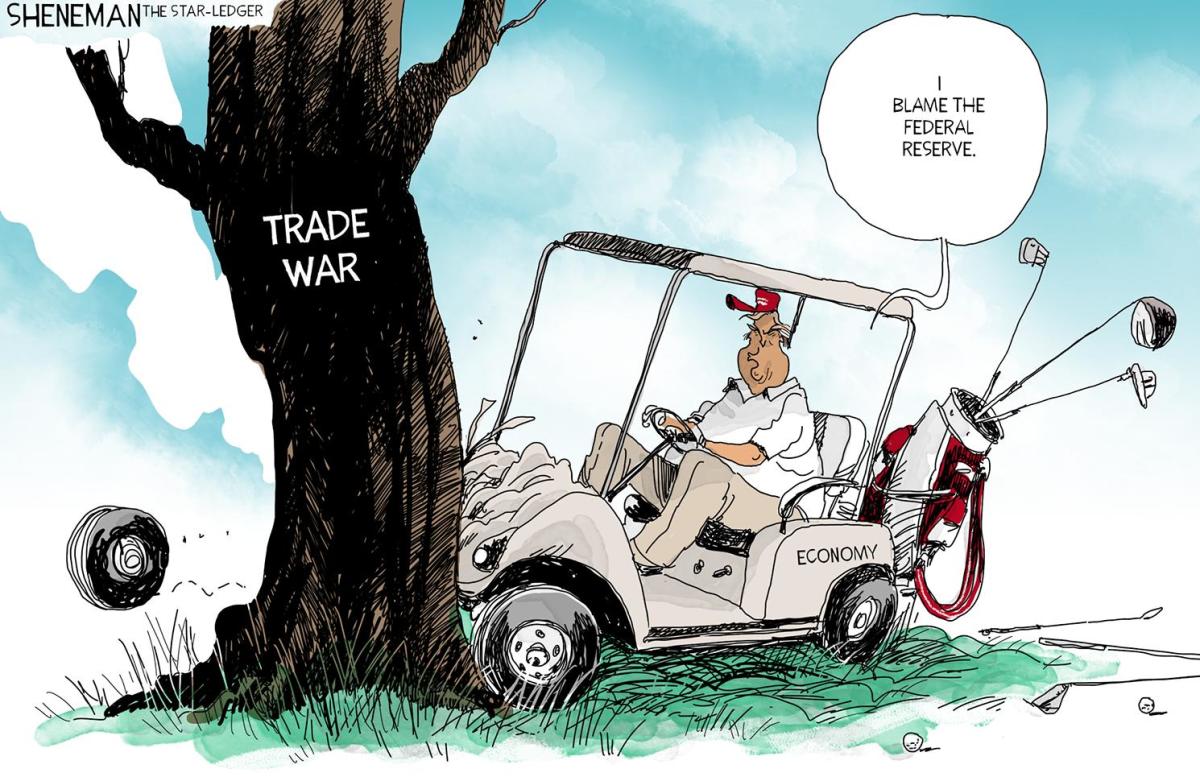
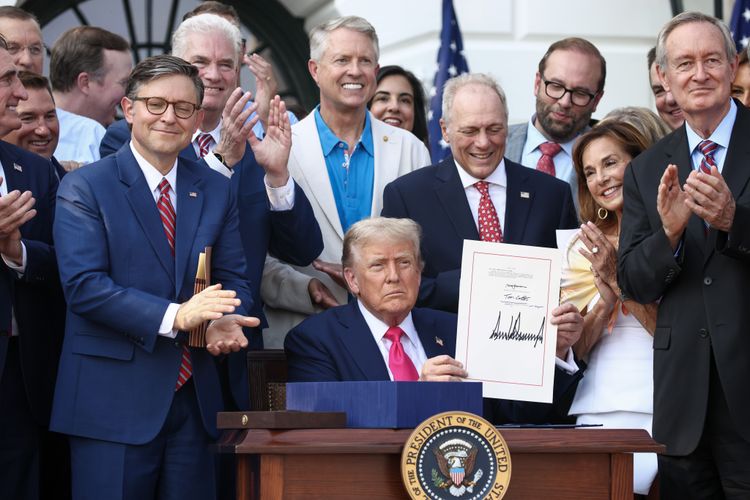
Despite considerable arm-twisting, President Donald Trump’s laughably misnamed “Big Beautiful Bill” (actually a Big Ugly Atrocity) barely passed both houses of Congress.  Such a monstrosity, which has been conservatively estimated to add $5 trillion to the national debt including interest over the next decade, is a slap in the face to those souls who believed Trump’s campaign rhetoric of cutting federal spending.*  This vindicates, once again, those who have correctly seen Trump for what he truly is – a big-spending liberal New York democrat.

Arguably, the most reprehensible aspect of the legislation is the $150 billion increase in “defense” outlays which will boost Uncle Sam’s military budget to a neat $1 trillion a year.  This will provide plenty of lucre to keep the military industrial complex well-oiled to continue its world-wide mass slaughter of innocents.  So much for lightweight Secretary of Defense Pete Hegseth’s initial, and now long forgotten, talk of cutting the Department’s budget by 8% per year over the next decade.

While Trump and nearly every Congressional Republican continue to spend the nation into oblivion, little attention was given to the continuing and financially ominous decline in the U.S. dollar.  The greenback has fallen more than 7% in 2025, the worst since 1973, with some analysts predicting another 10% drop by the end of the year.**
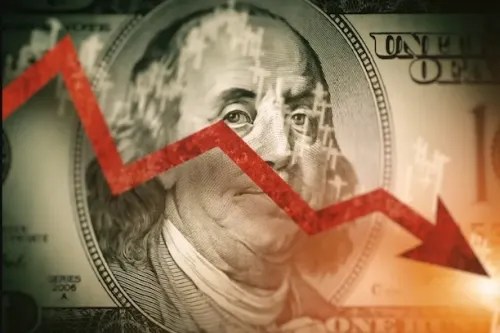
Concomitantly, the dollar’s decline has seen a historic rise in the gold price with silver reaching highs not attained since 2012.  Precious metals are signaling economic troubles ahead, especially in the currency markets.

While some have pointed to Trump’s harmful tariff policy for the dollar’s fall, the real culprit is the massive U.S. debt and interest payments, which increased even further with the passage of the Big Beautiful Bill Act.  To finance the exploding debt and interest (which has now surpassed $1 trillion per year), the government will have to borrow even more. 

This will force the Federal Reserve to print more money to service the debt putting added downward pressure on the greenback.  More dollars printed will obviously mean a fall in its purchasing power, not only domestically but in relative terms to foreign currencies.  The inverse of a decrease in the purchasing power of the dollar will be an increase in the prices of goods. 

It is a vicious circle exacerbated by Trump’s latest budget.

A larger question that U.S. policy makers will have to face if the dollar continues to slide is its current status as the world’s reserve currency.  The loss of this privileged position would be the death knell to the ability of the United States to project its financial and military power throughout the world. 

Most international transactions are settled in dollars that bolsters its demand in foreign exchange markets.  If countries settle trade in another currency or, as some have speculated, in terms of precious metals, the demand for dollars would fall.  If the supply of dollars has to increase due to continued profligate U.S. federal spending and demand for dollars internationally falls, the “price” of dollars (their purchasing power) would tank. 

Moreover, if foreign nations do not need dollars in trade, eventually the dollars they hold will make their way back to America, causing domestic prices to sharply escalate. 

Of course, the one bright spot of losing its world’s reserve currency status would mean the collapse, or at least a catastrophic pull back, in America’s vast overseas military commitments and interventions.  No longer could the U.S. maintain its mammoth military expenditures to police the world.

Massive deficits are also an impediment (although Trump apparently does not realize it) to the president’s hopes of lowering interest rates.  Even if he can get Federal Reserve Chairman Jerome Powell to cut rates, the Fed does not control long-term rates which will undoubtedly spike putting upward pressure on all rates.  This will increase borrowing costs for the government, which will likely end in a sovereign debt crisis.

At this point, there is no turning back.  The only way to save the dollar is to cut spending, which would mean less borrowing and thus less money printing. 

Trump and the Republicans with their Big Beautiful Bill have hasten the dollar’s ultimate demise and the economic collapse and social misery that will follow. 

*Committee for a Responsible Federal Budget, “Breaking Down the One Big Beautiful Bill.”  4 June 2025, ww.crfb.org/blogs/breaking-down-one-big-beautiful-bill 

**Liz Hoffman, “The US dollar is on track for its worst year in modern history.”  Semafor, 3 July 2025, https://www.semafor.com/article/07/03/2025/the-us-dollar-is-on-track-for-its-worst-year-in-modern-history

Antonius Aquinas@AntoniusAquinas
Taxes vs. Tariffs: Which is Fairer?

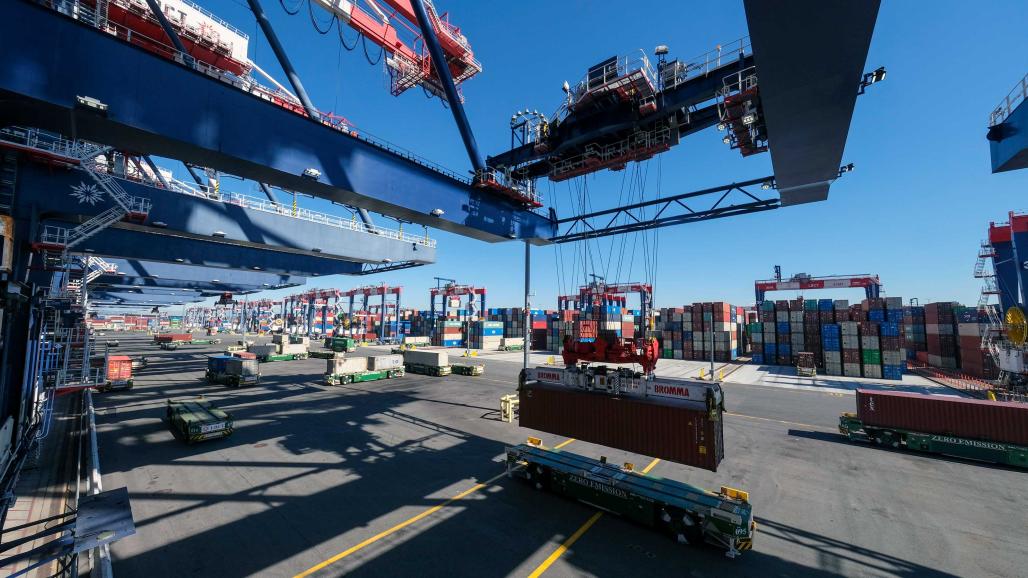
In the final days of his presidential run, Donald Trump floated the idea of eliminating the income tax and replacing it with tariffs as the means to fund federal spending.  He cited the era of U.S. history when the country had no income tax:

When we were a smart country, in the 1890s . .

this is when the country was relatively the

richest it ever was.  It had all tariffs.  It didn’t

have an income tax.*

While Trump was correct about the prosperity at the time, it is wrong to suggest that tariffs were the reason.  While there was no income tax, there was little if any burdensome regulation or government subsidy, and, most importantly, the nation was on a gold standard, which kept increasing the purchasing power of wages, all of which raised living standards to unprecedented heights.

On the surface, the idea of replacing the income tax with tariffs seems equitable. This is why many conservatives, populists, and libertarians have supported the idea. 

Under the present political order, the United States is a constitutional republic that is based on the social contract theory.  Government is established, in part, to protect the persons and property from external threats and internal unrest.  All citizens, in theory at least, are protected by the state.  It follows, therefore, that they are obliged to contribute to their defense.

Tariffs, on the other hand, are borne directly by two groups: consumers who buy imported goods, and businesses who sell imported goods and are impacted by a loss of income. 

Consumers pay the tax levied on foreign goods.  Therefore, those consumers who buy more expensive goods, such as a Mercedes Benz, pay a higher percentage of tax than those who buy trinkets such as Christmas tree ornaments and plastic cutlery from China.

Businesses, too, suffer from tariffs.  While it is often said that the tax is “passed on to consumers,” companies will see a reduction in income, since tariffs raise the price of goods.  Higher prices will cause a fall in demand, resulting in loss revenue.  Moreover, businesses who deal in foreign products have to bear the bureaucratic cost of complying with the government’s ever-changing trade policies while serving as tax collector for the state. 

While the income tax under social contract theory is more “equitable” than tariffs, one of its most egregious features cannot be justified.  Under current law, American citizens that are living abroad or have relocated permanently are still subjected to the income tax.  However, expats are no longer being defended by the U.S. government.  Renouncing citizenship (which is quite costly) is the only way to avoid being taxed.

Why should Americans, who are no longer being defended by their government, still be required to pay for it?  This would be a clear violation of the “social contract” that citizens have supposedly agreed to. 

There are other dangers that have come with government financing through tariffs, or, as some have called for, a national sales tax. Originally, when the income tax was proposed, it was to replace tariffs.  Tariffs, like all sales taxes, burden the poor and middle class disproportionately.  The income tax, which at first only affected the affluent, was accepted by the public since tariffs were to be eliminated.  Unfortunately, the tariffs remained after the two world wars and the income tax was levied on almost everyone. 

A similar situation could occur with the expansion of tariffs or the implementation of a national sales tax.  Governments rarely relinquish their taxing power.  

What is being ignored in the talk about tariffs and the income tax are the exploding government deficits.  Fiddling with what source of revenue the government collects is not addressing an impending financial crisis that could bring down the entire U.S. economy.

Of course, runaway debts and deficits are inherent in democratic republics as politicians are not personally responsible for the debt, unlike a monarch or king.  This is another flaw in the social contract theory. 

Before policy makers change the nation’s tax system, they should carefully consider the ramifications and seek to find the most equitable solution that will not burden only part of the citizenry. Cutting runaway federal spending is a first step.       

*https://www.cnn.com/2024/10/26/politics/trump-income-taxes-tariffs/index.html

Economic Collapse May Be the Only Way to Prevent World War III

The tensions between the West and Russia over the Ukraine have escalated over the past few months with an almost daily occurrence of provocations and belligerent talk mostly from members of NATO.  In response, Russia sent a naval contingent to the Caribbean in a show of force.  Some of the Western provocations include:

  • Polish President Andrzej Duda’s willingness to place U.S. nuclear weapons on Polish soil;
  • German Defense Minister Boris Pistorius’ s call for reinstitution of a draft;
  • A hand-delivered check by Biden to Volodymyr Zelensky as part of the $95 billion U.S. “defense” package for Ukraine
  • A request by Zelensky for Westerners to train troops on Ukrainian soil; and
  • US and NATO okaying Ukraine to fire long-range American weapons as much as 12 miles into Russian territory

It is apparent that, until Russian President Vladimir Putin capitulates to Western demands in regard to Ukraine, NATO will continue to push the envelop.  In hindsight, analysts such as Paul Craig Roberts have, from the start, urged Putin to swiftly finish off Ukraine militarily and replace the Zelensky regime with one favorable to Russia.  A protracted struggle, Roberts warned, would give the West more time to supplement Ukraine: “The conflict dragged on, because having declared the intervention limited, the Kremlin left Kiev to continue the war, thus playing into Western hands as the West gradually widened the war.” *

Unfortunately for Russia, Paul Craig Roberts’s prognostication is now coming to fruition. 

The counter argument to a more aggressive Russia is that Putin realizes that the West is run by a pack of sociopaths who would have no qualms launching WWIII, which would include the use of nuclear weapons, or ignite a major military conflagration in the area.  The Russian president sees that the West holds a decisive military advantage over Russia even if it allied with China.  The U.S. alone spends more than the combined expenditures of the top nine militaries in the world.

The United States has thus the ability and means to operate and intervene in almost any sector of the world.  It is able to do so because it has had, for the longest time, an economy which was able to not only produce goods for the domestic market and also for its foreign adventures.  It takes wealth to be able to arm, transport, deploy, and maintain men in distant lands.

Because of America’s relatively free economy, it could produce a seemingly endless supply of military hardware for itself, but also to buy off client states and fund proxy wars.  In contrast, the Soviet Union could never export communism in any significant way after World War II because it lacked the means to do so.  Its economy was a basket case that could barely feed its citizens. 

While the U.S. may have the military capability to be the world’s policeman, its actions in the Ukraine are ultimately controlled by ideology.  And, for the longest time, U.S. foreign policy has been one of interventionism and war with the ultimate goal of the establishment of a one-world state.  Its proxy war in Ukraine is designed to cripple Russia, which stands as a roadblock to this long-desired goal.

Since it is apparent that the principles guiding U.S. foreign policy are not going to change anytime soon, the nation will continue on its bellicose course until it no longer has the means to do so.  This would mean a financial crisis, most likely in the form of a dollar collapse, which would ground the economy to a halt. 

In such a scenario, the United States would be following the course that Great Britain took after World War II, when its empire could no longer be sustained since the country insanely exhausted itself in the conduct of fighting two world wars. 

A similar, earlier historical example was the Western Roman empire, which, through currency debasement, heavy taxation and government largesse, ruined its economy and then could no longer maintain its empire.

 The ideology of Great Britain and Rome did not change, however, they simply no longer had the means to sustain and expand their empires.

Despite massive deficits, record-setting inflation, and a recent bank crisis in March, 2023, a financial crisis does not appear to be on the horizon.  Although things can change quickly, for the foreseeable future, the U.S. empire is in no danger from internal collapse.

While an economic collapse would mean misery for millions of Americans, it would be, in a sense, retribution for the nation’s murderous and costly foreign policy, which has brought, and still is bringing, untold death and destruction to millions of people.  

*Paul Craig Roberts, “Normalizing War with Russia,” PaulCraigRoberts.org, 6 June 2016, https://www.paulcraigroberts.org/2024/06/06/normalizing-war-with-russia/

The U.S. Is Spending $1 Trillion Every 100 Days On The Deficit

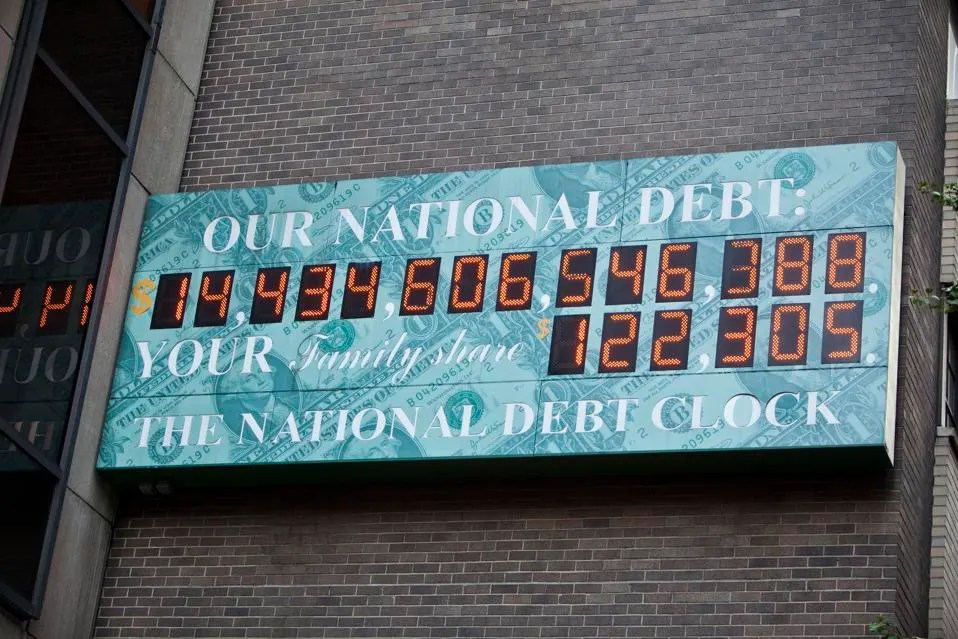
While it made some headlines in the financial press, neither policy makers nor the two presumptive presidential nominees have paid much attention to the fact that the U.S. is adding a mind-boggling $1 trillion to the national debt every 100 days.  This amounts to around $3.6 trillion annually. 

As law makers remain willfully ignorant of the financial elephant in the room, it is most likely that the only way that the debt will be addressed is through a monetary crisis which will involve the status of the dollar as the world’s reserve currency.  Such a scenario would then force authorities to take action.

As if there needed to be more evidence of how impervious Congress and the Biden Administration are to the burgeoning debt spiral, the House and Senate passed two stop-gap funding packages to avoid a government shut down on March 22, 2024.  One Senator called it “a pork fest of epic proportions.”*

Despite the ominous prognostications of a dollar collapse by financial doomsayers, the Greenback has remained the best of all competing currencies.  Yet, this time could be different, since interest rates – which have been artificially suppressed by the Federal Reserve (Fed) – have risen, making servicing of the national debt more expensive as Moody’s Investors Service noted: “In the context of higher interest rates, without effective fiscal policy measures to reduce government spending or increase revenues Moody’s expects that the US’ fiscal deficits will remain very large, significantly weakening debt affordability.”** 

While “King Dollar” has continued its financial hegemony, the running of a staggering national debt – which now stands at over $34 trillion – has had baneful repercussions for the average American.  The funding of the debt has led to a resurgence in 1970s-style stagflation with a decline in productive job growth such as manufacturing and near double-digit price inflation.  This, of course, has had a deleterious effect on the middle and lower classes’ standards of living since rising prices disproportionately effect these groups harder than the more affluent.

Of course, the simplest approach (although politically unpalatable) to the problem would be to dramatically cut government spending by eliminating agencies and programs.  With the Uniparty in charge, however, there is virtually no chance of budget cuts, especially in an election year.  Whatever happened to the “deficit hawks” and those calling for a balance budget amendment to the Constitution?

The funding of the debt is the primary factor for the rise in consumer and producer prices.  Since federal spending is beyond what the government receives in revenues, it must borrow through the issuance of debt/bonds to make up for the shortfall. 

The principal buyer of government debt has been the Fed, which pays for the bonds by the creation of money, “out of thin air.”  The printing of money (now done through the stroke of a computer key) bids up prices in the market.  Federal Reserve officials have innocuously called this scam “Quantitative Easing” (QE), which is in realty a monetization of the debt. 

Since the Fed has begun hiking interest rates, it has been doing “Quantitative Tightening” (QT) where it ostensibly has not been buying U.S. debt, but selling it.  This would lead to a contraction of the money supply and a fall in prices. The central bank has not been aggressive enough in its tightening nor has it raised interest rates enough to have any real effect on soaring prices. 

It is highly doubtful that the U.S. will escape the fate of other republics who have pursued reckless fiscal and monetary policies.  It is almost a mathematical certainty that the nation will default on its debt by either hyperinflating the currency or discounting bonds with massive haircuts to their premiums. 

The most likely path is hyperinflation; then the dollar will once again fulfill Voltaire’s dictum that all “paper money eventually returns to its intrinsic value – zero.”  While there will be massive social misery from a dollar collapse, the one bright spot from its demise is that it will mean an end of the murderous U.S. Empire.

*Tyler Durden, “’A Pork Fest of Epic Proportions:’ Congress Passes Spending Package to Avert Shutdown.” Zero Hedge 8 March 2024.  https://www.zerohedge.com/markets/pork-fest-epic-proportions-congress-passes-spending-package-avert-shutdown

**Quoted in Michelle Fox, “The U.S. national debt is rising by $1 trillion about every 100 days,” cnbc.com   https://www.cnbc.com/2024/03/01/the-us-national-debt-is-rising-by-1-trillion-about-every-100-days.html   Updated, 4 March 2024.

Antonius Aquinas@AntoniusAquinas
https://antoniusaquinas.com

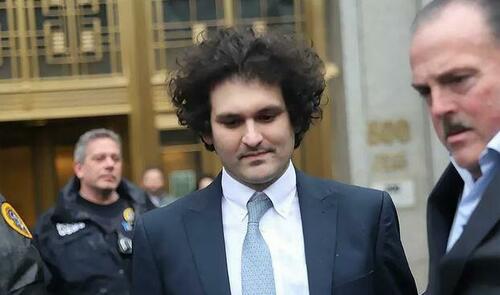
The Hypocrisy of the Sam Bankman-Fried Conviction

Sam Bankman-Fried (SBF), the founder of FTX and Alameda Research hedge fund has been found guilty on all seven counts related to financial fraud and money laundering in a lower Manhattan court room.  The trial took a lot less time than expected as did the jury’s deliberation of the case which speaks to the overwhelming evidence against the onetime financial guru of entertainers, crypto enthusiasts, and politicians.  SBF could face up to 100 years behind bars.

Gary Gensler, chairman of the Securities and Exchange Commission, said that “Sam Bankman-Fried built a house of cards on a foundation of deception while telling investors that it was one of the safest buildings in crypto.”*  Manhattan U.S. Attorney Damian Williams concurred, calling Bankman-Fried’s actions “one of the biggest financial frauds in American history.”**

SBF’s conviction is particularly fitting since he had marketed himself as a new-style capitalist who was more interested in philanthropy and giving away his wealth, instead of enriching himself.  That so many were taken in by this charlatan, especially a number of supposedly savvy investors, demonstrates again that greed remains a significant part of the human condition. 

While SBF will hopefully receive his just rewards for his wrongdoings, there is another fraud that has been taking place in the financial world for quite some time which dwarfs exponentially the scam of the one-time “crypto-king.” Unlike SBF, however, this entity continues to exist and faces no prosecution, but instead is often praised for its operations.

The institution, of course, is the Federal Reserve and, for that matter, all central banks.  Central banks do what FTX did but on a colossal scale.  While SBF’s crimes were limited to those who foolishly invested with him, the Fed’s customers are all those who hold dollars and have little option to not use them unless they want to revert to barter and become desperately poor.  Like what SBF did to his investors, the Fed has defrauded (although surreptitiously) its “customers” by robbing them of their purchasing power through monetary debasement.  The loss of purchasing power by the public has been redistributed to the Fed, the political class, and financial elites. 

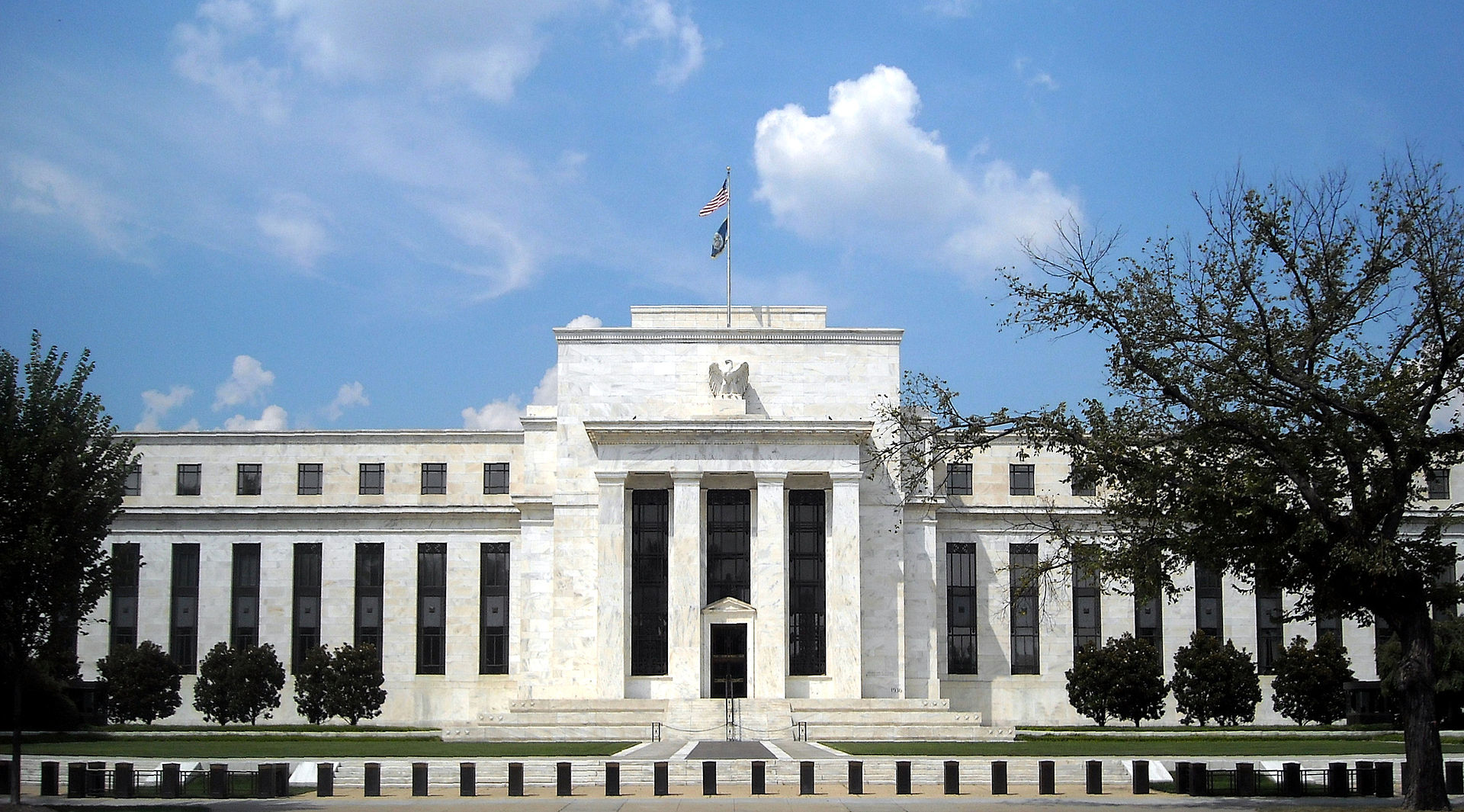
The Federal Reserve

While Fed officials, the government, academia, and the sycophantic financial press may try and obfuscate the matter, the fact remains that the Federal Reserve has the ability to create money out of thin air and without limit.  It is counterfeiting writ large.  No criminal, be it SBF, Bernie Madoff, or the Mafia could ever dream of such a scenario! 

The Fed’s creation of money through credit expansion is certainly more subtler than the swindling which SBF engaged in or what took place in earlier times from “coin clipping,” but the criminality of the action is the same.  Under Western jurisprudence, however, central banking is now enshrined in law as a legitimate part of financial life.

As SBF wrapped himself in an aura of a benevolent and charitable new-age businessman, the Fed hides behind its criminality by presenting itself as a necessary and indispensable factor for the nation’s economic well-being.  Without the Fed and its dual mandate of “price stability” and full employment, the economy would collapse. 

Yet, this is a ruse.  Before the advent of central banking, economic life went about quite nicely.  It was only when central banks appeared that the dreaded boom and bust cycle became more frequent and severe.  Moreover, in the pre-central bank era, the world was on a metallic monetary standard which protected peoples’ purchasing power.

The Fed was created by the major U.S. banks and top politicos at the time to allow banks to counterfeit without facing the consequences of their actions.  Stable prices and low unemployment are secondary functions of the Fed and mostly spoken about for public relations.  Protection of the system, especially the solvency of the Big Banks and now funding the national government through debt monetization, remains the prime responsibility of the Fed. 

This, of course, is not to exonerate SBF.  Why is it though that the laws which convicted the rogue crypto financier are not applied to America’s central bank?  When sovereigns of the past debased the money supply most acknowledged its immorality and pointed out who benefited.  In this supposed enlightened age where “equal justice before the law” is a ruling mandate of the legal system, its application apparently does not apply to the monetary authorities of the world.

Capitalism, at its core, is a moral argument where respect for property rights, the freedom to exchange, honest money, and the liberty to become an entrepreneur are the foundations which the system rests.  Those who legitimately satisfy consumer tastes and demand are rightly rewarded.  Naturally, in doing so, entrepreneurs enrich themselves but they do so by providing for the needs of their customers and in the process create jobs and incomes for those they employ, all of which is done on a voluntary basis. 

Central banking is the essential instrument of “crony capitalism” which is the antithesis of free enterprise.  Crony capitalism is a new version of mercantilism which was condemned by the likes of Adam Smith and was one of the factors why the American Revolution was fought.  It has since come back with a vengeance.

Besides the immorality of central banking, the Fed’s manipulation of the money supply has deleterious effects on economic life. Inflation hurts the poor and the working class disproportionately while the Fed’s control of interest rates and credit is the reason for the dreaded business cycle.

The present age has prided itself in its efforts to attain justice in regard to race relations, the environment, economic equality, and now gender recognition.  Yet, the immorality of central banking remains and while Sam Bankman-Fried may be incarcerated, social justice warriors (as well as conservatives) willfully ignore the counterfeiting elephant in the room.  Until central banking is outlawed, a truly just social order is an impossibility.

*https://www.zerohedge.com/political/sam-bankman-fried-found

**https://nymag.com/intelligencer/2022/12/sam-bankman-fried-has-been-arrested.html

Antonius Aquinas@AntoniusAquinas
https://antoniusaquinas.com

“Don’t Buy Government Bonds”

As another farcical “debt-ceiling raising” saga unfolds, conducted by the two indistinguishable political parties hell-bent on driving America into economic ruin, it would be instructive to look at how some earlier conservative/libertarian thinkers viewed public debt.  Unlike the present generation – with the notable exception of Ron Paul – these intellectuals asked fundamental questions about such matters as debt, taxation, central banking, and foreign policy.

One of the leading lights of what was known as the “Old Right” of the 1950’s, which opposed the Cold-War globalism of the likes of William Buckley and domestically sought to overturn the New Deal, was Frank Chodorov (1887-1966).  In his books and essays, Chodorov challenged the pillars which social democracy rested and sought to return America to small government, free trade, and “isolationism.” 

In one of his provocative essays, Chodorov pervasively argued that those who purchase public debt are complicit in the enhancement of state power.  Unlike many present-day economists who only see the baneful economic effects of profligate government borrowing, he makes a moral case against debt financing.*

He points out that public borrowing burdens future generations for the benefit of the present.  Despite reasons often given for the necessity of borrowing – war, natural disaster, infrastructure, etc., – Chodorov contends that the practice of shifting the cost to later generations, whatever the reason, is unjust:

This is exactly what you do when you
cooperate with the State’s borrowing
program. You are loading on your children
and your children’s children an obligation to
pay for something they had no voice in, and
for which they may not care at all. Your
‘investment for posterity’ may earn you
nothing but the curses of posterity.

Chodorov understood, as most commentators do not today, that a gold-backed currency restrained State largesse: “When money was redeemable in gold, the inherent profligacy of government was somewhat retrained; for, if the citizen lost faith in his money, or his bond, he could demand gold in exchange, and since the government did not have enough gold on hand to meet the demand, it had to curtail its spending proclivity accordingly.”

It was Franklin Delano Roosevelt’s despicable and criminal act of taking the U.S. off the gold standard domestically that led to the expansion of the public debt as Chodorov describes: “. . . Mr. Roosevelt removed this shackle and thus opened the flood gates.  The only limit to the inclination of every politician to spend money, in order to acquire power, is the refusal of the public to lend its money to the government. . . . the government can then resort to printing of money, to make money out of nothing. . . .” 

Not realized at the time, but the ability of the American government to expand its revenue base fit nicely into FDR’s later nefarious foreign policy objectives. 

Chodorov’s viewpoint on public debt can also easily be applied to FDR’s decision to eradicate the gold standard through which the U.S. currency could be redeemed for precious metals.  FDR’s act, however, was a “violation of contract” with American citizens since the U.S. government defaulted on its obligations.

In Orwellian fashion, the verbiage used with most government operations is often misused to legitimize State functions.  “Investment” is one such term that has been corrupted in relations to spending and debt.

In promoting their spending schemes, politicians will often use the term investment, “investment in education,” “investment in infrastructure,” etc.  This is deliberate, since it tries to equate government spending with a vital component of the market process.

In a market economy, investment means the lending of savings, which is used to expand and/or start an enterprise.  In return, the lender receives a stock or a bond.  If the business is successful, the lender’s investment will receive a return – dividends from a stock or interest from a bond.  Business investment is, therefore, a necessary aspect of capitalism which results in economic growth and increased living standards.

As Chodorov incisively points out, however, government investment is the antithesis of what takes place in the marketplace:  

The State, however, does not put your money into production.  The State spends it – that is all the State is capable of doing – and your savings disappear.  The interest you get comes out of the tax fund, to which you contribute your share, and your share is increased by the cost of servicing your bond.

Chodorov’s solution to deficit financing was not to buy government bonds.  While this would certainly be a step in the right direction, a more radical approach is needed since the problem has now become so immense. 

Simply put: there should be a prohibition on government borrowing of any kind.  State revenues should only come through tax receipts and fees paid by those in the present.  This would completely eliminate the “moral hazard” of debt financing and drastically reduce the size and scope of government over society.

For those who seek to put an end to the current debt-ceiling charade and rectify the immoral practice of burdening future generations by the irresponsibility of the present, the works of Frank Chodorov are essential.

* “Don’t Buy Government Bonds,” The Mises Institute, 13 January 2011. https://cdn.mises.org/Out%20of%20Step_4.pdf

Antonius Aquinas@AntoniusAquinas

https://antoniusaquinas.com

America’s Trade Deficit: An Enormous Concern

Another milestone (or more accurately millstone) was recently passed by the U.S. economy as the January trade deficit surged to an all-time record high of $107.6 billion, up some $26 billion from December’s $80.7 billion imbalance.*

Like the gigantic federal budget deficit, the trade imbalance is no longer talked about by the financial press.  There has been little criticism of President Biden on either matter nor are Administration officials questioned about how things can be reversed.  In fact, some commentators bizarrely contend that trade deficits show how robust an economy actually is!     

The trade deficit was supposed to be alleviated by former President Trump who vowed throughout the 2016 campaign that he would rectify the situation and repeatedly ridiculed U.S. trade negotiators for their lack of financial acumen.  He touted that his “friendship” with world leaders, most notably Chinese President Xi Jinping, would result in favorable trade deals for the country. 

Trade hawks got on board with Trump’s economic nationalism believing that he would not only fix imbalances, but create an American industrial renaissance.  Optimism ran high after his unexpected win in 2016. 

As president, after a couple of contentious years of on-again, off-again negotiations a first phase of an agreement with China was signed in early 2018.  During the negotiations, he boasted:

When a country (USA) is losing many billions of dollars

on trade with virtually every country it does business with,

trade wars are good and easy to win.**

In actuality, nothing significant was agreed upon with China despite the Trump Administration bragging that it was the first phase of a more comprehensive deal to come.  Despite all of the hoopla, the trade imbalance continued to grow and no deal was ever finalized. 

Besides the initial agreement with China, the next biggest trade policy act was the scrapping of NAFTA and its replacement with a new treaty, “The U.S.-Mexico-Canada Agreement” (USMCA).  The new agreement was little different than the original treaty.

Thus, by the time he left office in 2020, the U.S.’s trade gap ($68.2 billion) was greater than during his predecessor, Barrack Obama’s term, who Trump lambasted for his ruinous trade policy.***

Trump wisely spoke little about trade during his unsuccessful 2020 re-election bid and, surprisingly, his opponents, despite the president’s miserable failure, steered clear of the issue.  Of course, the Democrats were limited in what they could do with an obvious feeble, senile, and vile candidate at the top of their ticket.

Like the Democrats, Trump’s trade-hawk cheerleaders have remained reticent about the escalating trade numbers and like the former president they too, are now discredited when it comes to trade.  If America could not overcome its trade gap with an economic nationalist as president for four years, then there must be a problem with their thinking.      

The reason why Trump failed – as will Biden – is that he, his negotiators, and the trade hawks who supported him are ignorant of basic economics. The burgeoning trade deficits are not the result of bad trade deals or that of ineffective tariff policies, but are the result of a deteriorating U.S. economy which is no longer one of production, but of consumption and debt.  A growing economy creates trade surpluses not deficits; it produces more than it consume.

Because of decades of anti-capitalistic economic legislation – confiscatory taxation, regulatory burdens, inflationary monetary policy, “crowding out” budget deficits, unemployment subsidies, minimum wage laws, and an overemphasis by the Establishment on higher education – the U.S. is no longer an industrial power and not a conducive environment for economic growth.    

Because it possesses the world’s reserve currency, the U.S. has been able to offset its trade imbalances by importing goods in exchange for dollars.  Even with this advantage, however, trade deficits have continued to grow.  It appears that even its status as the possessor of the world’s reserve currency may be coming to an end as the dollar’s preeminence will fall with the surge in price inflation.  This will have a devastating effect not only for the domestic economy but its foreign trade as well as the country will not be able to export dollars for goods in the future. 

The burgeoning trade deficit is a far more accurate indicator of the health of an economy than GDP, unemployment figures, or the government’s “official” rate of price inflation.  All these statistics are so manipulated that they do not come close to showing what is actually happening in the real world.  The trade deficit is a more reflective gauge of an economy’s productive capacity.    

That Trump posted the largest trade deficit in history also explodes his claim that under his watch, the U.S. had the greatest economy ever!  How he calculated and supported such nonsense (which was not challenged by the financial press) is hard to maintain with trade deficits in the stratosphere.

When America’s economy was at its zenith, it was a creditor nation with trade surpluses and producing goods which were sold the world over.  It had a high savings rate, a low inflationary environment, little public debt, and respect for private property, particularly the right for entrepreneurs to hire and fire whom they pleased.  All socio-economic groups prospered from the free market and free trade, not just the 1%. 

The trade deficit can be turned around, but not through bureaucratic state orchestrated deals which favor big business and multi-national corporations at the expense of American consumers.  The proper trade policy is no policy at all, except the freeing of the economy from government intervention.     

*https://www.reuters.com/business/us-goods-trade-deficit-hits-record-high-january-2022-02-28/

**https://www.reuters.com/article/us-usa-trade-trump/trump-tweets-trade-wars-are-good-and-easy-to-win-idUSKCN1GE1E9

***https://www.cnbc.com/2021/03/05/us-trade-deficit-january-2021.html

Antonius Aquinas@AntoniusAquinas

https://antoniusaquinas.com


“Inflation,” Properly Defined

What Is Inflation in Economics? Definition, Causes ...

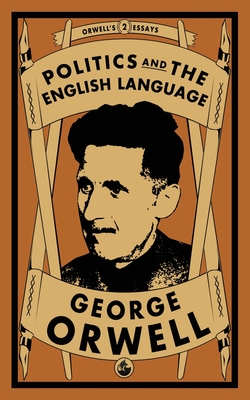
The use or rather misuse of language has always been an effective tool of politicians to enact their agendas.  George Orwell’s “Politics and the English Language” brilliantly showed, in his day, how language was being manipulated for all sorts of totalitarian measures:

Political language — and with variations this is true of all  political parties, from Conservatives to Anarchists — is designed to make lies sound truthful
and murder respectable, and to give an appearance of solidity to pure wind. One cannot change this all in a moment, but one can at least change one’s own habits, and from time to time one can even, if one jeers loudly enough, send some worn-out and useless phrase —
some jackboot, Achilles’ heel, hotbed, melting pot, acid test, veritable inferno, or other lump of verbal refuse — into the dustbin, where it belongs.*

Since its publication in 1946, matters have only gotten worse.  For example, in today’s parlance words such as “racism,” “discrimination,” “fascism” have lost all meaning and are usually used by the Left to smear its political opponents.

In the sphere of economics, examples abound of the misuse of terms and concepts all of which advance the interests of the politically-connected elites, technocrats, governments, and the banking establishment at the expense of everyone else.  One of the most glaring examples which, after the financial collapse in 2020, has now become more prominent in daily life, has been the meaning of the word “inflation.” 

Inflation, at one time, and properly understood meant an increase in the money supply; it did not mean an increase in prices.  A rise in prices was and still is, the result of inflation.

The meaning of inflation, however, has been deftly misused by the world’s monetary lords to cover their own nefarious machinations.  By deliberately changing the term it deflects the focus of their activities which can thus be blamed on others – greedy businessmen, oil cartels, workers demanding higher wages, etc.

Since central banks have complete control of the money supplies of the world, when inflation is properly understood its cause can be directly traced to them, which may lead to some inconvenient – for the banksters at least– inquires such as: “How did they attain such power and privilege?”

Redefining inflation has been done to disguise and shift focus away from the actual cause of what America and many economies of the Western world are now experiencing in the startling rise in both producer and consumer prices.  This is the result of the central banks’ expansion of the money supply to mind-boggling proportions purportedly to fight the corona plandemic, but in reality it has been done to offset the financial implosion which began in late February/March of 2020 before the unnecessary and destructive lockdowns began.  The lockdowns and closing of the economies gave cover for the Federal Reserve and central banks to create vast amounts of money and credit to salvage, and then re-inflate a bubble in the stock and asset markets.   

An accurate account of the matter will show that the financial collapse of the system really began in the fall of 2019 as the “repo” market began to meltdown, causing the Fed to intervene with injections of “liquidity” to keep interest rates from spiking.  However, just like the meaning of inflation has been corrupted, so has the narrative of the financial collapse of 2020 been purposely skewed.

As a separate discipline, economics developed in large part in reaction to British Mercantilism of the 18th century.  Economic theory was used by authors such as Adam Smith in his Wealth of Nations to debunk the system of regulations, taxes and subsidies that the British government imposed.  Such economists, as did later schools of thought, most notably the Austrians, used economic thinking and its terms to expose the baneful effects of government intervention, fiat money, and the benefits of free trade. 

Over time, however, most economists became corrupted and instead of acting as a check on state power, became champions of regulation, central banking, and all sorts of social engineering schemes.  Economists were paid for their sell out with cushy positions and jobs in the state apparatus to manipulate language and doctrines. 

Today, an inflation rate of 2% is regarded by Fed officials as good for the economy and something monetary policy should try to achieve.  Previously, a rise in prices of 2% was seen for what it was – a loss of purchasing power hurting the middle and lower classes the worst while benefiting the wealthy.

For those who seek to rid economics or, for that matter, all the social sciences of deliberately misleading language and terms, George Orwell’s works are indispensable.  It is, therefore, incumbent for truth seekers of all persuasions to do so not only for their own benefit, but to maintain the sage author’s legacy.

*https://libcom.org/files/Politics%20and%20the%20English%20Language%20-%20George%20Orwell.pdf

Antonius Aquinas@AntoniusAquinas
https://antoniusaquinas.com


On the 75th Anniversary of V-E Day and the Coronavirus Scamdemic

VE Day Coronavirus

The iconic Champs-Élysées and its Arc de Triomphe stand eerily empty before V-E Day ceremonies Friday in Paris.

This month (May 8th) marks the 75th anniversary of “V-E Day” when German forces unconditionally surrendered to the “Allies.”  Numerous articles, essays, and monographs have appeared commemorating the anniversary and while all are mostly laudatory, some have acknowledged that the outcome had its “drawbacks.”

By any objective rendering, for Western Civilization WWII was an unmitigated catastrophe whose reverberations continue to this day.  Forty-three million troops were senselessly killed between American, British and Continental forces while 38 million civilians perished.  Europe’s current demographic nightmare had its unfruitful seeds cut down with the depopulation of the Continent’s finest for the maniacal aims of the world’s power elites.  Not only the loss of life, but the destruction of property and the cultures upon which they were built have been incalculable.  Although the US emerged in the post-war world as the dominant economic and political power (as its mainland remained unscathed from wartime destruction), its participation in the conflict was a titanic geopolitical blunder.

The defeat of Germany and Japan, which would have not come about without US military might, left vast power vacuums in Eastern Europe and the Far East that Soviet Russia and Red China ruthlessly filled.  Half of Europe would fall behind the Iron Curtain, subjected to fierce political repression and debilitating socialistic economic planning.  In Asia, Communist regimes sprang up with the assistance of China and the Soviet Union which America attempted to counter in Korea and Vietnam at a staggering cost to its domestic economy and social tranquility.

Even after the fall of Soviet Communism, the US’s supposed lethal enemy, America maintained its empire as its “defense” spending continued to escalate beyond all reasonable levels which has led, in part, to the decline of domestic living standards of nearly all except, of course, for the politically well-connected. Not only has military adventurism bankrupted the country, but there is now “blowback” from the countless enemies either real, imagined, or contrived – created by US overseas meddling.  Moreover, the nation’s military-industrial and security complex has turned on its own citizens with spying, surveillance, and data gathering that would be the envy of Stalin’s Cheka. Yet, it was US participation in WWII which cemented the nation on its ruinous course as global policeman.  This was predicted and feared by “isolationists” at the time which is why they so courageously fought to keep the country neutral.

While the peoples of the world suffered from the Apocalyptic-like destruction of the war, certain groups did gain.  The benefactors were obvious – Stalin and the Soviet state which was given free reign in Eastern Europe; the US military and security industrial complex which had a world empire to police; Chinese Communists, with Imperial Japan decimated, it left little opposition for them to gain control in China and beyond.  For almost everyone else, even the so called “victors,” WWII was a Pyrrhic victory at best.

For the remainder of 20th century American history, US entry into the Second World War proved to be the catalyst which led to the immense cultural, economic, and political changes, which many conservatives, libertarians, and traditional-minded people at the time and afterwards opposed.  Yet, it was US participation in the war which meant that all of those changes would become permanent.  Harry Elmer Barnes, who was a keen social theorist and wrote extensively in sociology, clearly understood the effects of US entry into the war:

Drastic changes in the domestic realm can also be attributed to the impact of our

entry into the second World War.  The old rural society that had dominated

humanity for millennia was already disintegrating rapidly as the result of

urbanization and technological advances, but the latter failed to supply adequate

new institutions and agencies to control and direct an urban civilization.  This

situation faced the American public before 1941 but the momentous transformation

was given intensified rapidity and scope as a result of the extensive dislocations

produced by years of warfare and recovery.*

Harry Elmer Barnes Harry Elmer Barnes

While every sector of American life was unalterably changed, the most ominous took place in the political order.  Although the federal government had begun to expand during the Progressive Era, its scope and involvement in society drastically accelerated during and after the war.  Barnes, holding many libertarian beliefs, observed the totalitarian features of the post-war nation:

The complex and cumulative aftermath of [WWII] has played the dominant role in

producing the menacing military pattern and political impasse of our time, and the

military-industrial-political Establishment that controls this country and has sought

to determine world policy.**

The rise of America to world power status diverted attention and scarce resources away from the domestic front, which further exacerbated social and economic changes.  The societal strife would become more and more acute as the nation’s overseas commitments mushroomed, as Barnes incisively explains:

The social problems of an urban age were enlarged and intensified, crime increased

and took on new forms that became ever more difficult to combat, juvenile

disorganization became rampant, racial problems increased beyond precedent, and

the difficulties of dealing with this unprecedented and complicated mass of domestic

issues were both parried and intensified by giving primary but evasive

consideration to foreign affairs in our national policy and operations.***

While domestic problems received less attention as the American empire expanded, foreign lands which held different patterns of social order or had non “democratic” forms of government, were targeted for “regime change,” even if they had taken no hostile action toward the US:

. . .  the results of [WWII] already indicate that this produced drastic and possibly

ominous changes in the pattern of American relations to the rest of the world.  We

voluntarily and arbitrarily assumed unprecedented burdens in feeding and

financing a world badly disrupted by war. . . .  The United States sought to police the

world and extend the rule of law on a planetary basis, which actually meant

imposing the ideology of our eastern seaboard Establishment throughout the world,

by force, if necessary. . . .****

Had the US remained neutral as the isolationists and American First supporters had pleaded, the world today would be markedly different – undoubtedly freer, more prosperous, and likely more peaceful.  Since every society is governed, in part, by its understanding of the past, the post-WWII world is built on a lie.  The lie, of course, was that the attack on Pearl Harbor was unprovoked and that the Roosevelt Administration had negotiated in good faith with the Japanese in the months and years leading up to it.

While not recognized at the time and even today the outcome of WWII ushered in the totalitarian nation state which would become a permanent and intimate fixture in the lives of its citizens.  There was no appeal to its dictates and as the decades rolled on it accrued unthinkable power over the society and economy.  It attempted to solve every social and economic problem or inequality (most of which it created) and in each action enhanced its power and control dramatically.

The corona scamdemic may be the state’s greatest power grab yet.  Besides the infringement of civil liberties, the shut down has been adroitly used to cover for the titanic economic collapse which began in the weeks prior to the draconian response measures.  Actually, the financial breakdown began last September with the Fed’s “repo” operations.

All of this has been quietly and deliberately forgotten by the financial press and under the cover of fighting the virus, the Fed and the rest of the world’s central banks have expanded their power and control of financial markets to unprecedented levels, making a mockery that the economy is in any sense “capitalistic.”

The adage that “history is written by the victors” has never been more apparent than in regard to V-E Day, however, the coronavirus scam has shown once again that the consequences of the day and the war which it commemorates are now being ominously fulfilled.

*Harry Elmer Barnes, “Pearl Harbor After a Quarter of a Century.”  In Left and Right: A Journal of Libertarian Thought.  Vol. IV, 1968, p. 11.

**Ibid., pp. 9-10.

***Ibid., p. 11.

****Ibid., pp. 10-11.

Antonius Aquinas@AntoniusAquinas

https://antoniusaquinas.com

Memo to The Donald: Cut Tariffs NOT Rates

trump tariff

So far, President Trump’s economic response to a potential coronavirus outbreak and a further stock market sell off has been expected – calls for more interest rate cuts and an additional round of monetary stimulus.  For the stock market, economy, and the virus itself, neither measure will have their desired effect and, in fact, may exacerbate things.

Further rate cuts and more money printing will not alleviate the situation since it has been the Federal Reserve’s recent “repo operations” which has pushed the market to its unsustainable highs.  For President Trump’s re-election hopes, the current “correction” better be short lived since he has repeatedly boasted about the stock market and has tied its success with the supposed health of the economy.  He will pay a political price if the market continues to tank and brings the economy down with it.

While President Trump and economic nationalists have bashed China for its trade practices, they are now going to see first hand how dependent the US and the West are on Chinese exports, as supply chains are disrupted over the coronavirus.

A Bloomberg article describes China’s weakest factory activity ever recorded:

The manufacturing purchasing managers’ index plunged to 35.7 in

February form 50 the previous month, according to data received by the

National bureau Statistics on Saturday, much lower than the median

estimate of economists.  Both were well below 50, which denotes

contraction.*

The expected reduction of Chinese goods will mean higher US domestic prices, however, the increase in prices can be offset somewhat not by rate cuts, but by tariff reductions, or, better still, elimination of duties on imports.  Increasing the money supply or cutting interest rates, which is what Trump, the market, and 95% of economists favor, will only mean higher prices for dwindling imports as greater amounts of money will chase fewer goods.

In the President’s comments on the coronavirus and the stock market plunge, he has repeatedly cited other nations’ (Japan, Germany) – lower interest rates as a policy that the Fed should pursue.  Apparently, the President is not aware that recent data out of Japan has shown that the economy shrank at an annualized rate of 6.3% for the fourth quarter of 2019 while the German economy only grew at 0.6% last year.**  Low rates have not helped either economy or anywhere else where they have been foolishly tried.

What President Trump, world policy makers, and central bankers do not understand, whether deliberately or from willful ignorance, is that the artificial suppression of interest rates and money printing does not lead to economic growth. Instead, prosperity can only come about by the arduous process of saving (abstention from consumption), which provides the means for capital formation, which leads to production.  Employment, wage growth, and income are also ultimately tied to savings.  For the creation of wealth, there is no way around this elementary economic principle – one that few profession economists comprehend.

For saving and investment to have their most efficacious impact and for individuals to engage in such sacrificial behavior, a sound monetary order must be in place.  Unfortunately, ever since the US went off the gold standard internationally in 1971, its monetary system has grown increasingly unstable.

If the Trump Administration would eliminate, or at least reduce significantly, tariffs, it would more than likely induce China to do the same.  The benefits of lower import prices for the millions of out of work Chinese due to the coronavirus shut downs would be a tremendous help and would also boost America’s export industries.  Such action would show to those who elected him that Donald Trump was not a typical politician, but one who thought outside the box.

While it did not cause the Great Depression, the Smoot-Hawley Tariff of 1930 contributed to its severity.  If the recent sell-off is indeed the beginning of the long anticipated bust, following a supposed decade long expansion, then policy makers should do all in their power to alleviate the coming suffering.  The reduction of tariffs not only on Chinese goods, but those the world over would be a step in the right direction.

Let us hope that someone will convince Donald Trump that tariff reduction and not rate cuts will help Americans better deal with the troublesome and potentially economic and socially devastating coronavirus.

*China Posts Weakest Factory Activity on Record,” Bloomberg News, 29 February 2020.  https://www.bloomberg.com/news/articles/2020-02-29/china-feb-manufacturing-pmi-at-35-7-est-45-0

**Megumi Fujikawa, “Japan’s Economy Shrinks Faster Than Expected.”  Market Watch.  16 February 2020.  https://www.marketwatch.com/story/japans-economy-shrinks-faster-than-expected-2020-02-16;  “German Economy Stagnates as Eurozone Growth Hits Seven-Year-Low,”  The Guardian,  14 February 2020, https://www.theguardian.com/business/live/2020/feb/14/german-economy-stagnates-growth-eurozone-gdp-business-live

Antonius Aquinas@AntoniusAquinas

https://antoniusaquinas.com