Tag Archives: tariffs

Central Banks Hoard Gold, Shed U.S. Treasuries

A lot has been made by gold-money bugs about the roles that central banks have played in the run-up in the gold price that accounts for a 38% increase in the yellow metal’s price this year alone.  Some of these analysts attribute the shedding of central bank holdings of U.S. treasuries and other agencies’ bonds to purchase gold, which has accelerated gold’s recent meteoric rise. 

It is not just those in the gold community that hold this belief, but some in the mainstream financial press cite reports and data that purportedly show that central banks now own more gold than U.S. bonds.  If true, such a shift would be a fundamental change in the world’s financial markets and could mean the end of the post-Bretton Woods monetary order, where the dollar acted as the reserve currency, replaced, ironically, by gold which the dollar replaced in 1971.

A recent Financial Times (FT) article, written by Toby Nangle and titled “Do Central Banks Really Have More Gold Than U.S. Treasury Bonds?,” attempts to shed light on these claims.* It should be a reminder, as the article admits, that it is difficult to get accurate figures from data provided by central banks and international agencies. 

Since the global financial crisis of 2007-2009, central banks’ holdings of gold have steadily risen.  The International Monetary Fund (IMF), which keeps data on central banks’ financial sheets, estimates that banks are holding between 22% to 28% of their assets in gold, which comes to $3.86 trillion of gold as of the end of June. 

The FT article contends that this percentage of reserves is “mostly about recent price action rather than a fundamental and dramatic shift out of treasuries and into the yellow metal.”

While central banks still hold the bulk of their reserves in U.S. treasuries, the gap is narrowing as the price of gold continues to reach new highs which FT admits, but downplays: “the underlying reality isn’t quite as dramatic as it might seem….”

What should be taken from the article, not only by investors, but just about everyone else, is that a mainstream financial organ like FT is noticing not only the rise in gold, but the potential of the greenback losing its reserve status – an event that would have immense and catastrophic consequences for all Americans.  Such talk, up to this point, was only heard from hard-money advocates.

The rising price of gold is signaling that greater price inflation is on the horizon with continuing deterioration of the dollar’s purchasing power along with more job losses, which is the dreaded specter of “stagflation.”

Another of America’s financial elite has sounded the alarm that something ominous is on the horizon.  Morgan Stanley has revised its traditional 60/40 portfolio split, the 40% typically allocated to bonds, to a 60/20/20 portfolio with 20% allocated to gold.  To readjust its portfolio to increase its gold holdings, Morgan Stanley will have to reduce its share of U.S. treasuries, which will put more downward pressure on bond prices and increase yields.

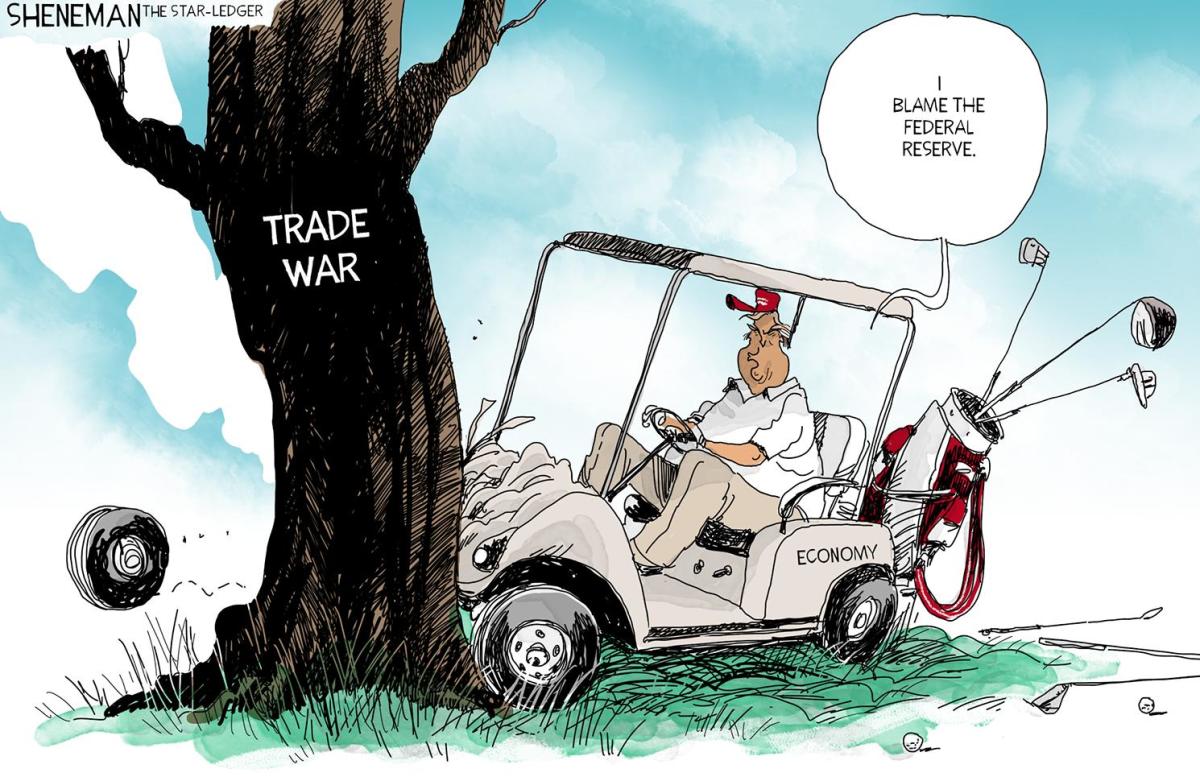
With growing concern over the safety of U.S. treasuries, the continuing rise in prices, and the all-time high in gold and asset prices, the Federal Reserve, at its September meeting, decided to cut the federal funds rate by 25 basis points while indicating that there will be more cuts coming.  The much-anticipated rate cut, of course, was in reaction to the unprecedented pressure brought to bear by President Donald Trump on Fed Chairman, Jerome Powell.

Like his reckless tariff policy, which has driven some allies into the arms of America’s supposed adversaries – see India and its rapprochement with China – Trump’s Fed bashing will have the opposite of its intended effect. 

Trump believes that rate cuts will make the economy “take-off” and he hopes that lower borrowing costs will make service of the gargantuan U.S. debt more manageable. 

As usual, the president talks out of both sides of his mouth.  He has spent most of his second term boasting that the economy is the best it has ever been.  Why then is there a need for interest rate cuts if the economy is booming? 

Trump also promised massive spending cuts via the Department of Government Efficiency but, instead, he passed the “Big Beautiful Bill,” which added more spending, requiring more borrowing.

America is not alone in cutting rates as central banks across the world (whose economies are also debt ridden) are reducing rates which will only encourage more borrowing.  This, of course, will lead to more price inflation as central banks will have to print more money to finance the profligate spending of their governments. 

Eventually there will be a return to gold in the monetary order, not just as a reserve asset, but one used in exchange as fiat currencies collapse. 

If economic trends continue, that day may not be far off.   

*https://www.ft.com/content/0dbc435d-7d7e-43d7-b730-b8ced4b1cba2

Antonius Aquinas@antoniusaquinas
https://antoniusaquinas.com

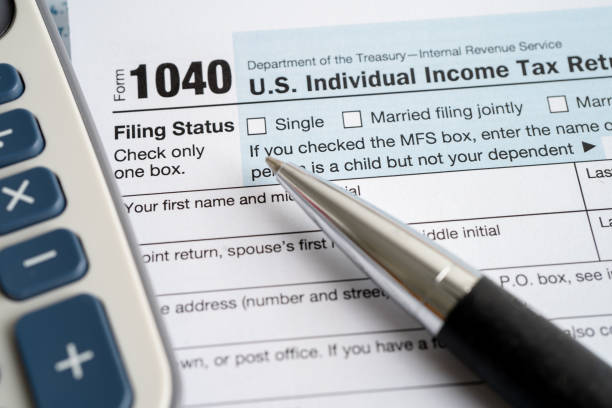
Taxes vs. Tariffs: Which is Fairer?

In the final days of his presidential run, Donald Trump floated the idea of eliminating the income tax and replacing it with tariffs as the means to fund federal spending.  He cited the era of U.S. history when the country had no income tax:

When we were a smart country, in the 1890s . .

this is when the country was relatively the

richest it ever was.  It had all tariffs.  It didn’t

have an income tax.*

While Trump was correct about the prosperity at the time, it is wrong to suggest that tariffs were the reason.  While there was no income tax, there was little if any burdensome regulation or government subsidy, and, most importantly, the nation was on a gold standard, which kept increasing the purchasing power of wages, all of which raised living standards to unprecedented heights.

On the surface, the idea of replacing the income tax with tariffs seems equitable. This is why many conservatives, populists, and libertarians have supported the idea. 

Under the present political order, the United States is a constitutional republic that is based on the social contract theory.  Government is established, in part, to protect the persons and property from external threats and internal unrest.  All citizens, in theory at least, are protected by the state.  It follows, therefore, that they are obliged to contribute to their defense.

Tariffs, on the other hand, are borne directly by two groups: consumers who buy imported goods, and businesses who sell imported goods and are impacted by a loss of income. 

Consumers pay the tax levied on foreign goods.  Therefore, those consumers who buy more expensive goods, such as a Mercedes Benz, pay a higher percentage of tax than those who buy trinkets such as Christmas tree ornaments and plastic cutlery from China.

Businesses, too, suffer from tariffs.  While it is often said that the tax is “passed on to consumers,” companies will see a reduction in income, since tariffs raise the price of goods.  Higher prices will cause a fall in demand, resulting in loss revenue.  Moreover, businesses who deal in foreign products have to bear the bureaucratic cost of complying with the government’s ever-changing trade policies while serving as tax collector for the state. 

While the income tax under social contract theory is more “equitable” than tariffs, one of its most egregious features cannot be justified.  Under current law, American citizens that are living abroad or have relocated permanently are still subjected to the income tax.  However, expats are no longer being defended by the U.S. government.  Renouncing citizenship (which is quite costly) is the only way to avoid being taxed.

Why should Americans, who are no longer being defended by their government, still be required to pay for it?  This would be a clear violation of the “social contract” that citizens have supposedly agreed to. 

There are other dangers that have come with government financing through tariffs, or, as some have called for, a national sales tax. Originally, when the income tax was proposed, it was to replace tariffs.  Tariffs, like all sales taxes, burden the poor and middle class disproportionately.  The income tax, which at first only affected the affluent, was accepted by the public since tariffs were to be eliminated.  Unfortunately, the tariffs remained after the two world wars and the income tax was levied on almost everyone. 

A similar situation could occur with the expansion of tariffs or the implementation of a national sales tax.  Governments rarely relinquish their taxing power.  

What is being ignored in the talk about tariffs and the income tax are the exploding government deficits.  Fiddling with what source of revenue the government collects is not addressing an impending financial crisis that could bring down the entire U.S. economy.

Of course, runaway debts and deficits are inherent in democratic republics as politicians are not personally responsible for the debt, unlike a monarch or king.  This is another flaw in the social contract theory. 

Before policy makers change the nation’s tax system, they should carefully consider the ramifications and seek to find the most equitable solution that will not burden only part of the citizenry. Cutting runaway federal spending is a first step.       

*https://www.cnn.com/2024/10/26/politics/trump-income-taxes-tariffs/index.html

Memo to The Donald: Cut Tariffs NOT Rates

trump tariff

So far, President Trump’s economic response to a potential coronavirus outbreak and a further stock market sell off has been expected – calls for more interest rate cuts and an additional round of monetary stimulus.  For the stock market, economy, and the virus itself, neither measure will have their desired effect and, in fact, may exacerbate things.

Further rate cuts and more money printing will not alleviate the situation since it has been the Federal Reserve’s recent “repo operations” which has pushed the market to its unsustainable highs.  For President Trump’s re-election hopes, the current “correction” better be short lived since he has repeatedly boasted about the stock market and has tied its success with the supposed health of the economy.  He will pay a political price if the market continues to tank and brings the economy down with it.

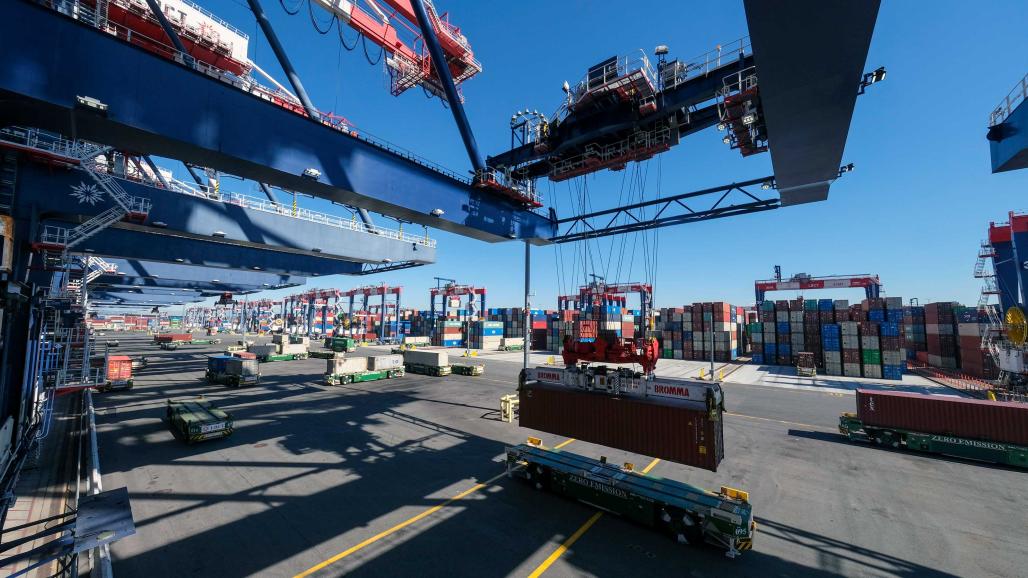
While President Trump and economic nationalists have bashed China for its trade practices, they are now going to see first hand how dependent the US and the West are on Chinese exports, as supply chains are disrupted over the coronavirus.

A Bloomberg article describes China’s weakest factory activity ever recorded:

The manufacturing purchasing managers’ index plunged to 35.7 in

February form 50 the previous month, according to data received by the

National bureau Statistics on Saturday, much lower than the median

estimate of economists.  Both were well below 50, which denotes

contraction.*

The expected reduction of Chinese goods will mean higher US domestic prices, however, the increase in prices can be offset somewhat not by rate cuts, but by tariff reductions, or, better still, elimination of duties on imports.  Increasing the money supply or cutting interest rates, which is what Trump, the market, and 95% of economists favor, will only mean higher prices for dwindling imports as greater amounts of money will chase fewer goods.

In the President’s comments on the coronavirus and the stock market plunge, he has repeatedly cited other nations’ (Japan, Germany) – lower interest rates as a policy that the Fed should pursue.  Apparently, the President is not aware that recent data out of Japan has shown that the economy shrank at an annualized rate of 6.3% for the fourth quarter of 2019 while the German economy only grew at 0.6% last year.**  Low rates have not helped either economy or anywhere else where they have been foolishly tried.

What President Trump, world policy makers, and central bankers do not understand, whether deliberately or from willful ignorance, is that the artificial suppression of interest rates and money printing does not lead to economic growth. Instead, prosperity can only come about by the arduous process of saving (abstention from consumption), which provides the means for capital formation, which leads to production.  Employment, wage growth, and income are also ultimately tied to savings.  For the creation of wealth, there is no way around this elementary economic principle – one that few profession economists comprehend.

For saving and investment to have their most efficacious impact and for individuals to engage in such sacrificial behavior, a sound monetary order must be in place.  Unfortunately, ever since the US went off the gold standard internationally in 1971, its monetary system has grown increasingly unstable.

If the Trump Administration would eliminate, or at least reduce significantly, tariffs, it would more than likely induce China to do the same.  The benefits of lower import prices for the millions of out of work Chinese due to the coronavirus shut downs would be a tremendous help and would also boost America’s export industries.  Such action would show to those who elected him that Donald Trump was not a typical politician, but one who thought outside the box.

While it did not cause the Great Depression, the Smoot-Hawley Tariff of 1930 contributed to its severity.  If the recent sell-off is indeed the beginning of the long anticipated bust, following a supposed decade long expansion, then policy makers should do all in their power to alleviate the coming suffering.  The reduction of tariffs not only on Chinese goods, but those the world over would be a step in the right direction.

Let us hope that someone will convince Donald Trump that tariff reduction and not rate cuts will help Americans better deal with the troublesome and potentially economic and socially devastating coronavirus.

*China Posts Weakest Factory Activity on Record,” Bloomberg News, 29 February 2020.  https://www.bloomberg.com/news/articles/2020-02-29/china-feb-manufacturing-pmi-at-35-7-est-45-0

**Megumi Fujikawa, “Japan’s Economy Shrinks Faster Than Expected.”  Market Watch.  16 February 2020.  https://www.marketwatch.com/story/japans-economy-shrinks-faster-than-expected-2020-02-16;  “German Economy Stagnates as Eurozone Growth Hits Seven-Year-Low,”  The Guardian,  14 February 2020, https://www.theguardian.com/business/live/2020/feb/14/german-economy-stagnates-growth-eurozone-gdp-business-live

Antonius Aquinas@AntoniusAquinas

https://antoniusaquinas.com