Tag Archives: Iran

America at 250 – and the War on Iran

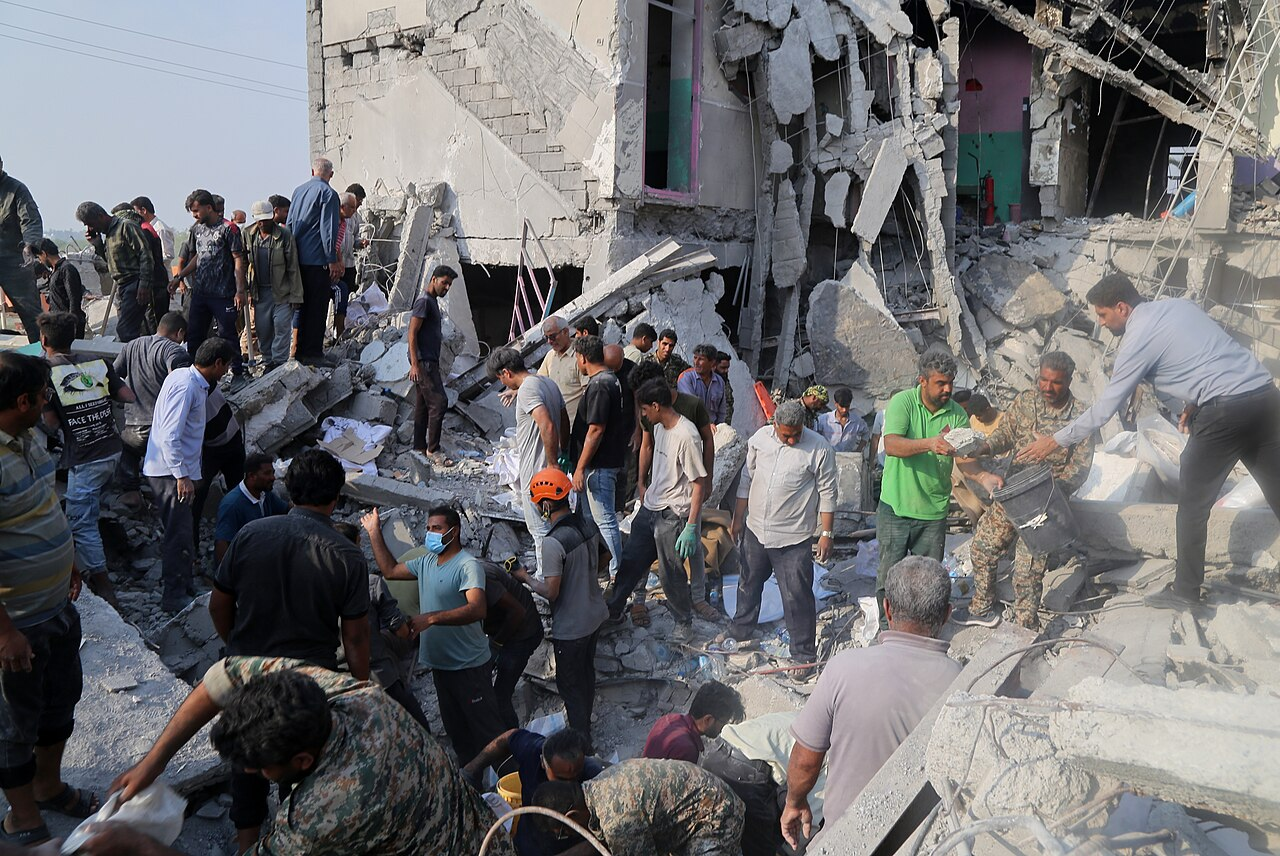
The U.S Destroys Iranian Girls’ School

It is ironic that the unprovoked U.S-Israeli attack on the Republic of Iran has taken place in 2026, the 250th anniversary of American independence.  No doubt there will be grand celebrations this summer for the American Revolution that brought the 13 colonies their freedom from England, However, the festivities planned may still be marred with the nation’s commuters paying $5-to-$10- per-gallon for gasoline.  A more somber pall on the celebrations will be the honoring of the inevitable wounded and dead U.S. military personnel from the hostilities. 

The duplicitous U.S.-Israeli attack was done, once again, under the cover of negotiations. They have at least a five-fold purpose:

  • To assist Israeli prime minister Benjamin Netanyahu in fulfilling the long-held Zionist dream of Greater Israel – the absorption of all of Israel’s neighbors into one massive Israeli state. This “Greater Israel Project” necessitates the destruction of Iran;
  • A payback to President Donald Trump’s Zionist donor class who financed his successful 2024 presidential election;
  • To cut off another energy supplier to China;
  • To continue to fill the coffers of the military industrial complex; and
  • Another distraction from the Epstein files.

The war with Iran is another in a long, bloody and destructive series of repudiations of the spirit of America’s independence which the country’s founders contended was a struggle against empire and any type of aristocracy and/or monarchial quasi-religious oversight. 

Seeing the level of government interference in the everyday lives of Americans, the level of taxation, and now Trump’s onerous tariffs, the amount of wealth confiscation and meddling that the English inflicted on its colonies was negligible compared to that of the Leviathan that resides on the shores of the Potomac River.

Independence from empire would prove fleeting and, within a decade, the confederacy of 13 independent states would lose almost all of their sovereignty to a powerful central government created under the U.S. Constitution.  A once – decentralized political arrangement had been trashed and turned into a centralized nation state with an unchecked executive branch.

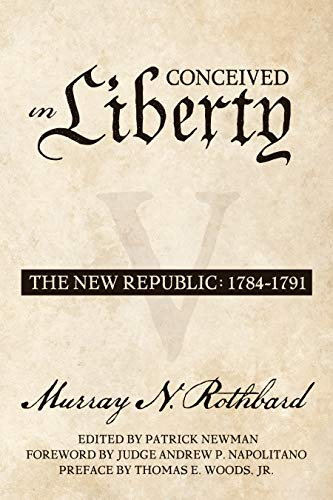
Murray Rothbard, in his five-volume history of the American Revolution, accurately described what took place in those tragic years between 1787 and 1789:

It was a bloodless coup d’etat against an unresisting

Confederation Congress.  … The Federalists, by use of

propaganda, chicanery, fraud, malapportionment of

delegates, blackmail threats of secession and even

coercive laws, had managed to sustain enough delegates

to defy the wishes of the majority of the American people

and create a new Constitution. *
It would be difficult to argue that the history of the world would have been a more peaceful and prosperous place had America remained a country with a myriad of sovereign governing bodies.  Furthermore, it is likely that such a political condition would have accelerated decentralization around the world.

Many libertarians and most anti-war podcasters still cannot see that the Constitution they so enthusiastically honor is the essence of the problem in U.S. foreign policy.  Moreover, it was the explicit intention of the framers to create such a case. The idea of the Constitution as a limitation on state power or that its interpreters have misunderstood the intention of the founders is fallacious. 

The political philosophy and understanding of the Constitution’s framers came mostly from antiquity, which glorified the state while they ignored the near millennium of European history after Rome’s fall which was a decentralized political order. 

Basic political science has demonstrated that a multitude of political entities and jurisdictions are superior and conducive to both personal freedom and economic growth.  Wars, too, that are fought under such conditions are limited in scope because the participants can only amass small amounts of resources and personnel from the populace.  Vast states, like the United States, China, and Russia can tap seemingly untold amounts of men and resources, which will mean far more destructive conflicts.   

It should be obvious that the solution to the nation’s interventionist foreign policy is one of political decentralization which, in America’s case, would mean a breakup of the nation into 50 (and hopefully more) political entities. 

President Trump was the last hope (among most) to rein in the empire.  Since he has the unlimited means to conduct wars as chief executive, it was only up to his personal integrity and discretion to abide by his campaign promises as the “peace president” to prevent future wars.  Since Trump, like most politicians, is untrustworthy and a bald-faced propagandist, conflicts were inevitable. Finding the right man for the job in the future is futile as it is the system itself which is to blame.

Disengagement from the political process and the building of the ideological case for decentralization should be the path of America firsters, libertarians, and anti-war social media outlets.  The secession of the American colonies from the British Empire 250 years ago should be the model for those who hope to stop the murderous foreign policy of the United States. 

*Murray Rothbard, Conceived in Liberty. Vol. 5, The New Republic, 1784-1791, ed., Patrick Newman.  Auburn, AL.: Mises Institute, 2019, p. 306.  

Antonius Aquinas@antoniusaquinas

https://antoniusaquinas.com

https://substack.com/@antoniusaquinas?

posted, eds. 3-12- ’26

Maybe the West Should Adopt Iran’s Nuclear Weapons Policy

Iran Nuclear Weapons

Prior to the modern age, when war was engaged in, combatants, for the most part, acted by a code of conduct which attempted to minimize civilian deaths and the destruction of non-participants’ property. With the onset of the democratic age and the idea of “total war” such modes of conduct have tragically fallen by the wayside, the consequence of which has made warfare far more bloody and destructive.

The ultimate violation of “just warfare” has been the possession and use of nuclear weapons which by their very nature cannot be reconciled with any notion of a civilized society.  Of all the hysteria over “terrorism,” nuclear weapons are rarely discussed anymore, but are the ultimate form of terror.

Despite the obvious fact that nuclear weapons cannot be reconciled with any moral code of warfare, Western nation-states continue to possess them and the US has actually used them in the final stages of WWII as it mercilessly bombed the Japanese civilian centers of Hiroshima and Nagasaki.

While most modern scholarship has abandoned the older idea of moral conduct in warfare, the great libertarian theorist, Murray Rothbard, continued the venerable tradition in his thought and applied it not only to nuclear weapons, but bombing as well:

    Not only should there be joint disarmament

of nuclear weapons, but also of all weapons

capable of being fired massively across national

borders; in particular bombers.  It is precisely

such weapons of mass destruction as the missile

and the bomber which can never be pinpoint-

targeted to avoid their use against innocent

civilians.*

He continues:

. . .  since modern air and missile weapons

cannot be pinpoint-targeted to avoid harming

civilians, their very existence must be condemned.

For a New Liverty II

It is beyond hypocritical, therefore, that the US has repeatedly accused Iran of seeking to build nuclear weapons despite the fact that the nation’s leadership has consistently declared that it will not do so because of its religious beliefs. In June, President Trump called off retaliatory raids on Iranian targets after it downed a US drone (which had flown into Iranian airspace), citing that it would cost the lives of some 150 people.  In response, Iran’s Foreign Minister Mohammad Javad Zarif exposed the hypocrisy of the US’s position on nuclear weapons:

You were really worried about 150 people?

How many people have you killed with a

nuclear weapon?  How many generations have

you wiped out with these weapons?**

Zarif added:

It is us who, because of our religious views,

will never pursue a nuclear weapon.

Not only has Iran’s leadership consistently declared that it would not use or build nuclear weapons, but it has stood by its words.  During the Iran-Iraq War (1980-88), Iraq (with US knowledge) repeatedly used chemical weapons.  Despite Iran’s  protests to the U.N., it refused to take action – mainly because the US through its position on the Security Council tabled any attempt to curtail Iraq’s nefarious actions.***

Despite the flagrant violation of international law, Iran refused to retaliate, although it had the capacity and certain justification in doing so.  The Ayatollah, in a religious ruling – fatwa – at the time of the war, asserted that such an act (the use of chemical/nuclear weapons) was “forbidden by god.”

This has been the position of the Ayatollahs since the formation of the Islamic Republic.  Ayatollah Ali Khamenei stated that “from an ideological and fighi [Islamic jurisprudence] perspective, we consider developing nuclear weapons as unlawful.  We consider using such weapons as a big sin.”  A top-ranking cleric, Grand Ayatollah Yusef Saanei, confirmed that this is part of Islamic doctrine:

There is complete consensus on this issue.  It is

self-evident in Islam that it is prohibited to have

nuclear bombs. It is eternal law, because the

basic function of these weapons is to kill innocent

people.  This cannot be reversed.

Sounds Rothbardian!

Despite Iranian claims to the contrary, the US and the controlled press continue to mischaracterize Iran’s position on nuclear weapons. Not only has it lied, but it continues to enact crippling sanctions on the beleaguered nation causing untold suffering which itself is an act of war.

The fact that Iran follows a moral principle which was once part of Western thought shows how far the Western world, especially the US, has declined in civility.  A return to a saner, more just position on nuclear weapons will only take place when there is a change in ideology. Under current intellectual conditions, such a change appears unlikely.  A rethinking will only take place of necessity when America has exhausted itself through debt and money printing and can no longer sustain its Empire and nuclear capabilities.

*See, Murray N. Rothbard, For A New Liberty: The Libertarian Manifesto, 293.

**Reuters, “Iran Will Never Pursue a Nuclear Weapon, Says Foreign Minister.”  24 April 2019.

***Ted Snider, “Iran, Islam, and Banning the Bomb.”  Antiwar.com 30 September 2019.


Antonius Aquinas@antoniusaquinas

https://antoniusaquinas.comhttps://antoniusaquinas.com

The Geopolitical Consequences of a Coming Recession

Irian Military

With the recent ominous inversion of the 2-10 year yield curve and its near infallible predictive recessionary power, the consequences for the economy are plain to see, however, what has not been spoken of by pundits will be the effect of a recession on US foreign policy.  If a recession comes about prior to November 2020, or if economic indicators such as GDP plummet even further, the chances of a Trump re-election is extremely problematic even if the Democrats nominate a socialist nut case such as Bernie Sanders or Pocahontas.

Elizabeth Warren has been the most vocal about coming economic troubles:

Warning lights are flashing.  Whether it is

this year or next year, odds of another

economic downturn are high – and growing. . . .


When I look at the economy today, I see

a lot to worry about again.  I see a

manufacturing sector in recession.  I see

a precarious economy built on debt – both

household debt and corporate debt and that

is vulnerable to shocks.  And I see a number

of serious shocks on the horizon that could

cause our economy’s shaky foundation to crumble.*

Warren

A “doom and gloomer” Demo?

If the economy cannot be reversed, despite the likelihood of rate cuts in September and a possible resumption of “QE” by the end of the year, President Trump will probably look for some “victory” or success to divert public attention away from deteriorating economic conditions.  The most likely targets will be renewal of hostilities toward Iran and/or an escalation of pressure on Venezuelan President Nicolas Maduro to resign.

Of course, the US has been conducting economic warfare on Iran ever since Trump stupidly pulled out of the nuclear agreement and began applying even more crippling sanctions on Iran.  In June, armed hostilities were about to take place over the Iranians downing of a US drone over its air space.  Reportedly, at the last minute, Trump called off retaliation, enraging, no doubt, the bloodthirsty neocons itching for an excuse to unleash more death and destruction.

Another factor, which has been little spoken of, but may contribute to foreign intervention is that Trump has alienated a number of his political base especially the spokesmen among the Alt Right.  While he still commands high poll numbers among Republicans and still attracts impressive rallies of “deplorables,” a number of his prominent backers, who were so crucial for his success in 2016, are, to say the least, disappointed over his inability to stem the tide of illegal immigration.  Moreover, these voices feel rightly betrayed since he has done nothing to halt the Internet tech giants from de-platforming many of their social media activity.

Another group which may be quickly added to disillusioned Trump supporters are gun owners and free-speech advocates if the President goes along with the proposed draconian “red flag” legislation. If these totalitarian measures are enacted, 2nd Amendment defenders will probably not vote for Trump’s opponent in 2020, but instead, may stay home in protest.

In electoral politics, voter enthusiasm can sometimes offset money and media control which was certainly the case for Trump both in the Republican primaries and the general election.  To win again, he will need to mobilize similar sentiment.

The politically savvy neocons, which the President has insanely surrounded himself with, are certainly aware of this dynamic which will give them considerable leverage to push forward their agenda.  A desperate Trump will surely be more malleable if a second term is in jeopardy.  Just look at the recent capitulation when there is, as of yet, no recession, yet, he called off the additional Chinese tariffs after the Dow plunged 800 points.

Even if a recession does not rear its ugly head, an armed conflict with Iran is a distinct possibility.  The more hard line neocons understand that they would be out of power under a Democratic president who may revert to compromise and negotiations to re-engineer a nuclear deal with Iran.  The push for war will intensify if Trump’s poll numbers drop as the election gets nearer due to a moribund economy.

Of course, the US is infamous for provocations and with the huge military build up in the Persian Gulf, any of the many trip wires may spring, leading to a local war which might turn into a general conflagration.

While it is not a certainty that a recession will lead to regime change in Washington, Trump has mistakenly tied his political fortunes to the well being of the economy especially the stock market.  He had the chance and the public support at the beginning of his term to level with the country and explain the monumental financial and economic problems which exist and that he had pointed out during the campaign.  Unfortunately, for both his and the nation’s future, he chose business as usual putting his own political goals (re-election) over the good of the country.

The cost of that choice is now coming to bear which may end in another war that will certainly seal the President’s fate and likely that of America.

*Sanjana Karanth, “Elizabeth Warren Predicts Another Economic Downturn.”  Politics.  22 July 2019.

Antonius Aquinas@antoniusaquinas

https://antoniusaquinas.comhttps://antoniusaquinas.com