Tag Archives: donald-trump

Dick Cheney and the American System of War

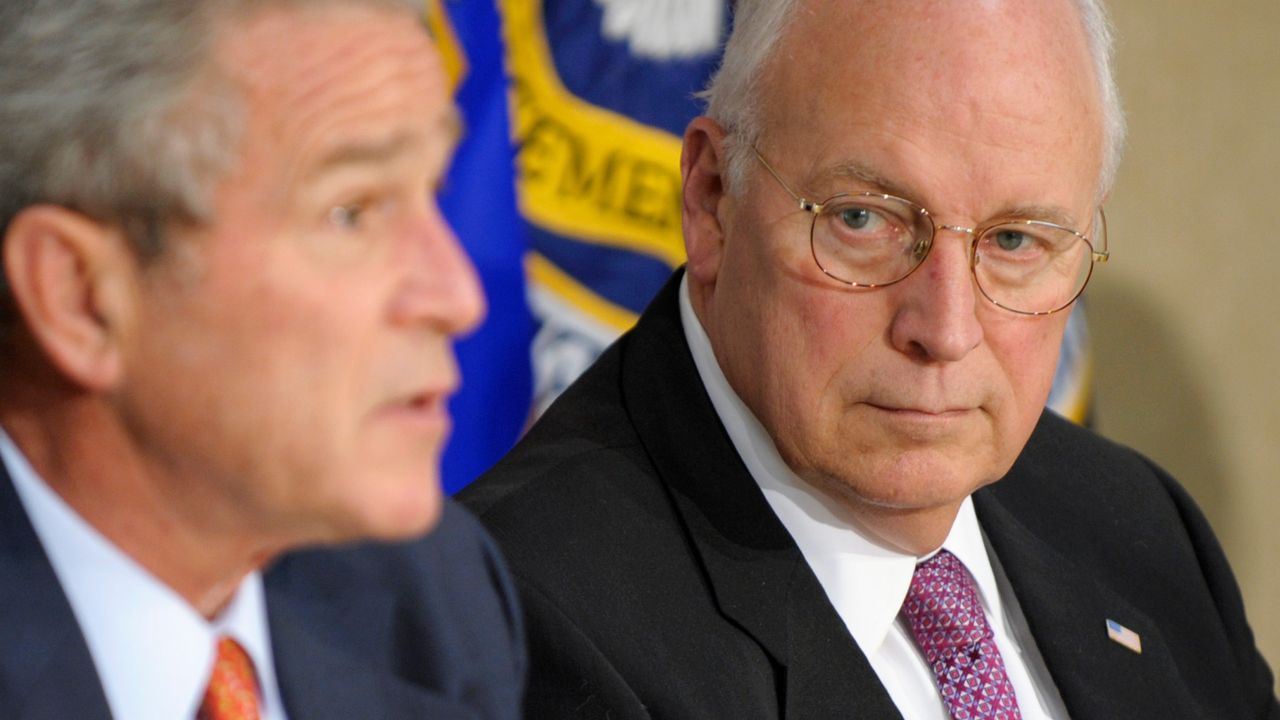
Former Vice President Richard “Dick” Cheney died on November 3, 2025 at the age of 84.  As secretary of Defense under President George H.W. Bush, Cheney was the architect of the 1991 Persian Gulf War and later, as vice president under George W. Bush, he was instrumental in the invasion and eventual conquest of Iraq.

Brown University’s Cost of War Project has modestly estimated that the “wars on terror” have resulted in the deaths of more than 940,000 people including 432,000 civilians and a monetary cost to the United States of about $8 trillion. 

Of course, Brown University’s study calls the post 9/11 U.S. military operations in the Middle East “wars on terror” when, in reality, they have been fought for the benefit of Israel and its Greater Israel Project, which has decimated the Arab world and has accomplished almost all of its objectives.

Cheney’s nefarious activities were not confined to mass murdering peoples that posed no threat to America’s national security.  He was a force behind the U.S. policy of torture (waterboarding), and nearly unlimited domestic surveillance (the Orwellian-labeled Patriot Act).

According to an article on the news and commentary website “Antiwar,” headlined “Dick Cheney: The Dark Legacy of a War Criminal,” Cheney suggested U.S. intelligence agencies must: [O]perate on the ‘dark side,’ spend time in the shadows, and use ‘any means at our disposal’ to achieve its objectives.” 

As if the U.S. Presidency was not unrestrained enough, Cheney advocated a “unitary executive” theory that the “president alone decides matters within the executive branch” without input from opposition voices within the government’s foreign policy agencies. 

The response by libertarian and alternative media outlets to Cheney’s demise were universal in their denunciation of the former vice president, calling him a “war criminal” and that he left this world with a “dark legacy.” 

It should be noted that a number of alternative media’s podcasters who have criticized Cheney regularly host guests and speakers who are former U.S. military and diplomatic personnel, ex-CIA agents and intelligence operatives, a number of whom participated in the Iraq wars and other American covert operations themselves.

Few, if any, who condemned the former vice president for his criminality mentioned or questioned why it was, and still is today, that monsters like Cheney were able to inflict so much death and destruction on peoples and nations across the globe who posed no threat to America. 

Could it be that the political system that Cheney operated under was the problem?  And, what is to be done to prevent future Cheneys from committing similar atrocities?

Unfortunately, “democratic” wars are paid for “by the people” and the costs are socialized among the population through taxation, inflation (money printing), and deficit financing.  Since warmongering politicians do not have to directly pay for conflicts, there will be a tendency for them to be more bellicose.  Moreover, democratic wars are collective enterprises where elected officials are not personally responsible for the actions of the government but are agents of the voters.   

Nor have the supposed checks and balances of constitutional government, so often touted by admirers of the U.S. Constitution, been able to prevent conflicts, as the horrific record of American warmaking sadly proves.

The passage of the U.S. Constitution established a powerful central state which could (and did) tap the resources and men of the individual states to conduct wars which eventually took place the world over. 

A weak national government, like that under the Articles of Confederation, or no central state at all, but instead a political order of numerous sovereigns (a world full of Switzerlands, Liechtensteins, etc.) would make warfare on a massive scale impossible.

Chip Gibbons, writing in the Jacobin magazine, called Cheney an “enemy of democracy whose agenda included war, indefinite detention, warrantless surveillance, and torture,” according to Alan Mosley. *

Cheney was not an enemy of democracy, but the product of a system that enables evil men to carry out the most heinous acts with little consequence, at least in this life. 

Labeling Dick Cheney a war criminal will tarnish his legacy, but it will not alter America’s murderous foreign policy course.  That will only come about when there is a recognition that the governing system itself needs to be abandoned and a decentralized political arrangement adopted.    

*Alan Mosely, “Dick Cheney (1941-2025): The Dark Legacy of a War Criminal,” Antiwar.com, 5 November 2025.  https://original.antiwar.com/Alan_Mosley/2025/11/04/dick-cheney-1941-2025-the-dark-legacy-of-a-war-criminal/

Antonius Aquinas@antoniusaquinas
https://antoniusaquinas.com

Trump’s Grandiose Political Centralization Scheme Not America-First in Spirit

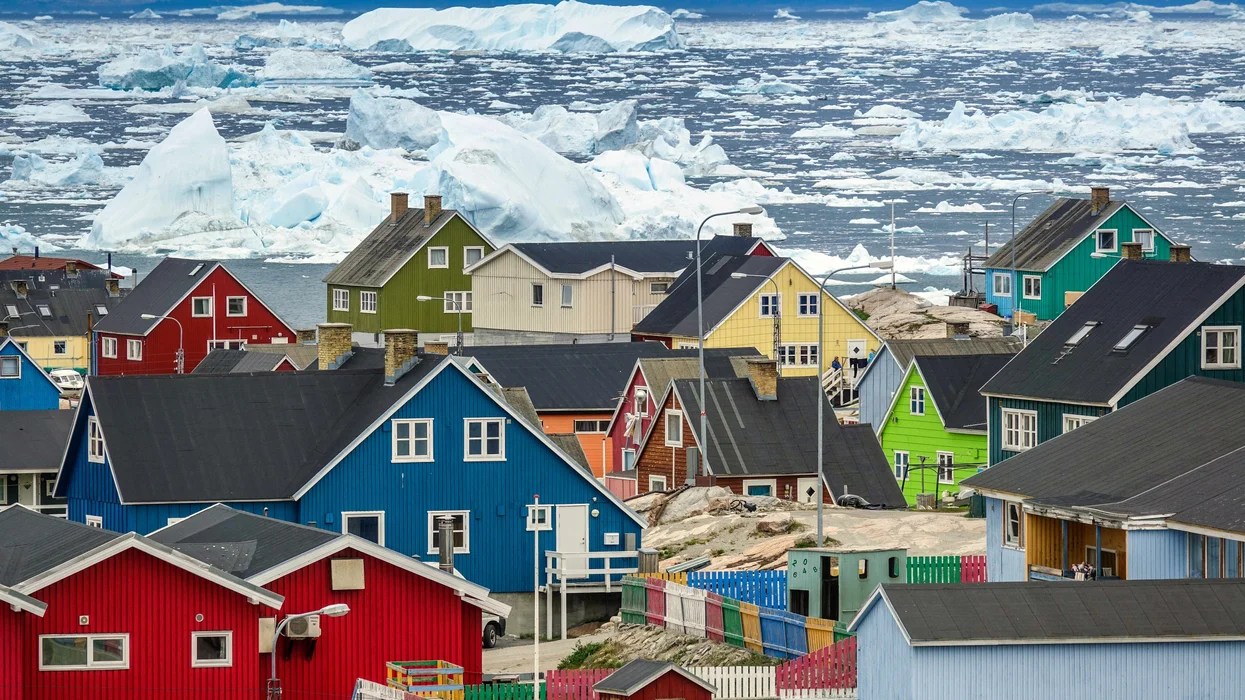
Colorful houses of the coastal town of Ilulissat in western Greenland.

Although Donald Trump is now in office, his statements since the election indicated he has forgotten his pledge to follow an “America first” foreign policy. This is what he promised during the recent presidential contest and what he pledged in the 2016 campaign, but failed to deliver during his first term.  While domestic issues are what a president is mostly concerned with, the most important decisions surround foreign affairs, since they often involve war.

Since his lopsided victory over the hapless Kamala Harris, Trump has made few references about reigning in the murderous U.S. Empire, but instead has talked about buying or invading Greenland, seizing the Panama Canal, and making Canada an American state.  After the resignation of Prime Minister Justin Trudeau, Trump said that “many people in Canada love being the 51st state,” according to The New York Times, Jan. 7.*

If Joe Biden or Kamala Harris said such things, the MAGA crowd would be up in arms and accuse them of moving the country in the direction of the New World Order.

Whether Trump follows through with such fanciful plans, it shows that he does not understand what lies at the heart of the social and economic problems that America and the Western world face.  Trump’s ideas would create greater political centralization, as an American-Canadian or American-Canadian-Mexican-Greenland union would create a gigantic North American state.

For anyone concerned with individual liberty, prosperity, and the No. 1 social issue that confronts the U.S. – illegal immigration – a North American superstate would be a nightmare. Gone would be the vital ability of “dissenters” to “vote with their feet” and move to less burdensome political jurisdictions.

In the United States, one can see this taking place on a daily basis as Americans move from high-tax and high regulatory states to those less onerous.  Of course, citizens cannot escape the federal government’s dictates unless one decides to expatriate. Students of the nation’s history know the often-overlooked Anti-federalists made this argument in their opposition to the Constitution which has, over time, proven to be quite prescient.

The idea that more political entities lead to greater freedom has been proven by history.  The best example of this is pre-modern Europe which was made up of a host of kingdoms, duchies, and free states with no dominant central government that could tax without impunity.  It is well accepted by historians that Europe’s rise in its standard of living was the result of its political decentralization that resulted in low levels of taxation.

A multitude of nation states allows for “competition,” where if one government becomes too tyrannical, people have an opportunity to flee to another land.  In recent U.S. history, a number of draft-aged men fled to Canada instead of being sent off to Vietnam to fight in what they considered an immoral war.  A colossal North American state would have ended such an option.

Although not explicitly discussed by Trump, a North American Union would more than likely mean the creation of a new monetary unit as was done with the euro when the European Union was formed.  Despite the warnings of some economists, price inflation in Europe escalated for countries like Germany once they relinquished their monetary autonomy. 

Currently, national currencies “float” against one another in terms of exchange rates. If one central bank inflates its currency too much, its money will lose purchasing power to less inflationary nations.  While not nearly as good as a gold standard, there is a sort of a “check and balance” on central bank monetary debasement with floating exchange rates.

A single North American monetary unit would not face the kind of limit that now exists, where the Canadian dollar, Mexican peso and U.S. dollar vie against each other.  A North American currency would be another ominous step to a one-world currency – a dream of New World Order proponents. 

While Trump’s disappointing talk about political centralization looks like a betrayal of the principles of America first principles, there may be a glimmer of hope.  In a recent Truth Social post, Trump reposted a video of Prof. Jeffery Sachs, a longtime critic of American foreign policy, criticizing Israeli Prime Minister Benjamin Netanyahu’s genocidal actions in Gaza and throughout the Middle East calling him a “deep, dark SOB.”

Since the video has been posted, Netanyahu has canceled his plans to attend Trump’s inauguration, the implication being the Israeli leader was offended by the comment.

Only time will tell if Trump will abandon his promised America-first policies or pursue a drive to a New World Order.

*David E. Sanger and Michael D. Shear, “Trump Floats Using Force to Take Greenland and the Panama Canal,”  The New York Times, 7 January 2025. 

Antonius Aquinas@antoniusaquinas

https://antoniusaquinas.com