Tag Archives: deficits

Central Banks Hoard Gold, Shed U.S. Treasuries

A lot has been made by gold-money bugs about the roles that central banks have played in the run-up in the gold price that accounts for a 38% increase in the yellow metal’s price this year alone.  Some of these analysts attribute the shedding of central bank holdings of U.S. treasuries and other agencies’ bonds to purchase gold, which has accelerated gold’s recent meteoric rise. 

It is not just those in the gold community that hold this belief, but some in the mainstream financial press cite reports and data that purportedly show that central banks now own more gold than U.S. bonds.  If true, such a shift would be a fundamental change in the world’s financial markets and could mean the end of the post-Bretton Woods monetary order, where the dollar acted as the reserve currency, replaced, ironically, by gold which the dollar replaced in 1971.

A recent Financial Times (FT) article, written by Toby Nangle and titled “Do Central Banks Really Have More Gold Than U.S. Treasury Bonds?,” attempts to shed light on these claims.* It should be a reminder, as the article admits, that it is difficult to get accurate figures from data provided by central banks and international agencies. 

Since the global financial crisis of 2007-2009, central banks’ holdings of gold have steadily risen.  The International Monetary Fund (IMF), which keeps data on central banks’ financial sheets, estimates that banks are holding between 22% to 28% of their assets in gold, which comes to $3.86 trillion of gold as of the end of June. 

The FT article contends that this percentage of reserves is “mostly about recent price action rather than a fundamental and dramatic shift out of treasuries and into the yellow metal.”

While central banks still hold the bulk of their reserves in U.S. treasuries, the gap is narrowing as the price of gold continues to reach new highs which FT admits, but downplays: “the underlying reality isn’t quite as dramatic as it might seem….”

What should be taken from the article, not only by investors, but just about everyone else, is that a mainstream financial organ like FT is noticing not only the rise in gold, but the potential of the greenback losing its reserve status – an event that would have immense and catastrophic consequences for all Americans.  Such talk, up to this point, was only heard from hard-money advocates.

The rising price of gold is signaling that greater price inflation is on the horizon with continuing deterioration of the dollar’s purchasing power along with more job losses, which is the dreaded specter of “stagflation.”

Another of America’s financial elite has sounded the alarm that something ominous is on the horizon.  Morgan Stanley has revised its traditional 60/40 portfolio split, the 40% typically allocated to bonds, to a 60/20/20 portfolio with 20% allocated to gold.  To readjust its portfolio to increase its gold holdings, Morgan Stanley will have to reduce its share of U.S. treasuries, which will put more downward pressure on bond prices and increase yields.

With growing concern over the safety of U.S. treasuries, the continuing rise in prices, and the all-time high in gold and asset prices, the Federal Reserve, at its September meeting, decided to cut the federal funds rate by 25 basis points while indicating that there will be more cuts coming.  The much-anticipated rate cut, of course, was in reaction to the unprecedented pressure brought to bear by President Donald Trump on Fed Chairman, Jerome Powell.

Like his reckless tariff policy, which has driven some allies into the arms of America’s supposed adversaries – see India and its rapprochement with China – Trump’s Fed bashing will have the opposite of its intended effect. 

Trump believes that rate cuts will make the economy “take-off” and he hopes that lower borrowing costs will make service of the gargantuan U.S. debt more manageable. 

As usual, the president talks out of both sides of his mouth.  He has spent most of his second term boasting that the economy is the best it has ever been.  Why then is there a need for interest rate cuts if the economy is booming? 

Trump also promised massive spending cuts via the Department of Government Efficiency but, instead, he passed the “Big Beautiful Bill,” which added more spending, requiring more borrowing.

America is not alone in cutting rates as central banks across the world (whose economies are also debt ridden) are reducing rates which will only encourage more borrowing.  This, of course, will lead to more price inflation as central banks will have to print more money to finance the profligate spending of their governments. 

Eventually there will be a return to gold in the monetary order, not just as a reserve asset, but one used in exchange as fiat currencies collapse. 

If economic trends continue, that day may not be far off.   

*https://www.ft.com/content/0dbc435d-7d7e-43d7-b730-b8ced4b1cba2

Antonius Aquinas@antoniusaquinas
https://antoniusaquinas.com

Big Spending Continues Under Trump

While DOGE (the Department of Government Efficiency) has made almost daily headlines pointing out fraud and waste in government, the real battle over federal spending is beginning to take place.  From what has been proposed, it looks like it will be business as usual in Washington.

Last week, the full House of Representatives passed the House Budget Committee’s plan (budget resolution) which specifies cuts in both taxes and spending over the next decade.  The key phrase here is “over the next decade.”

In a Feb. 13, 2025 Tax Foundation article titled “House Budget Resolution Aims to Balance Tax Cut and Spending Reduction Goals,” William McBride, explains that:

The resolution caps the deficit increase resulting from

                   tax cuts at $4.5 trillion over the next decade and requires

                   a minimum of $1.2 trillion in spending cuts.  Additionally,

                   it sets as a goal to reduce mandatory spending by $2 trillion

                   over the next decade, and, if not accomplished, the cap on

                   tax cuts would be reduced commensurately. *

The resolution calls for certain committees to implement the cuts:

  • Energy and Commerce Committee ($880 billion)
  • Education and Workforce Committee ($330 billion)
  • Agriculture Committee ($230 billion)

Programs that more than likely face budget reductions include: Medicaid, student loan relief, and the Supplemental Nutrition Program. 

Despite Defense Secretary Pete Hegseth’s call for an 8% yearly cut in defense spending over the next five years, the current House resolution would increase defense spending by $100 billion. There is an additional increase of $230 billion for border control and “deportation plans to be executed” according to Brett Samuels of the political website The Hill, in an article he penned titled “Trump Backs House GOP Reconciliation Bill Over Senate Version.”  ** 

Like Trump and most of his administration, Hegseth has sent conflicting signals on defense spending.  While in Germany, the defense secretary said: “I think the US needs to spend more than the Biden administration was willing to, who historically under-invested in the capabilities of our military.”

Hegseth bombastically added that he wants “the biggest most badass military on the planet,” as quoted by Dave DeCamp of news and commentary website Antiwar.com in a Feb 2025 analysis. *** So much for an America first foreign policy. 

The House’s estimate for spending and tax cuts are based on a real rate of growth of 2.6%.  This optimistic forecast, of course, does not account for any downturn in the economy, war, or continued uptick in price inflation.  Any of these, or some exogeneous shock to the economy would lower gross domestic product and tax revenues and jeopardize any long-term projected tax or spending cuts.

In the end, the budget resolution will increase spending, which Trump vowed to curb, as Rep. Thomas Massie (KY), who courageously voted against, succinctly summarized:

If the Republican plan passes under the rosiest

                                                assumptions, which aren’t even true, we’re gonna

                                                add $328 billion to the deficit this year, we’re gonna

                                                add $295 billion to the deficit the year after that, and

                                                $242 billion to the deficit after that. . . . ****

Trump, who enthusiastically supports the budget resolution, fails to realize that without deep and significant spending cuts, the cost of living will continue to escalate.  The president blamed the Biden Administration’s policies for the run-up in prices, when, in fact, it was Trump who began the present inflation cycle with the passage of the CARES Act in 2020, expanding the budget an unimaginable $2.2 trillion.

Without spending cuts, the burgeoning federal deficit ($2 trillion) and the interest on the national debt ($1 trillion) will need to be continually financed through borrowing.  The borrowing by the federal government is “paid for” through money printing (the real definition of inflation) by the Federal Reserve which buys U.S. debt with money “created out of thin air” which in essence is debt monetization.  The new money puts pressure on prices as it filters through the economy increasing the cost of living. 

While cuts in spending and reducing the amount of dollars in circulation will lower the cost of living, it will not come without severe economic pain.  The fall in prices will pop the bubble that stocks and other financial assets have been in which will result in widespread unemployment and business failures.  This is necessary to cleanse the malinvestment caused by the money printing and credit expansion and is necessary if America is to be put on a sound financial footing.

Of course, no politician wants to be blamed for such misery and even though Trump will not be up for re-election, he still does not want to be holding the bag when the economy implodes.  Yet, if such a scenario happens, the president should bear much of the blame for his policies ignited the present problem.

If President Trump truly wants to make America great again, cutting government spending must be undertaken no matter how painful. 

It appears, however, that he will join the long list of chief executives who have spent the nation into a horrific debt spiral which will inevitably end in economic ruin.

*William McBride, “House Budget Resolution Aims to Balance Tax Cut and Spending Reduction Goals,” Tax Foundation, 13 February 2025.  https://taxfoundation.org/blog/house-budget-resolution-tax-cuts-spending/

**Brett Samuels, “Trump backs House GOP reconciliation bill over Senate version,” The Hill, 19 February 2025.   https://thehill.com/homenews/administration/5152871-trump-endorses-house-gop-strategy/

***Dave DeCamp, “Pentagon Says Hegseth’s Order Will Redirect Spending, Not Make Actual Cuts,” Antiwar.com, 20 February 2025.

****Tyler Durden, “House Republicans Advance Trump Agenda as Final Vote Looms Tonight.” Zero Hedge, 25 February 2025,  https://www.zerohedge.com/political/house-republicans-advance-trump-agenda-final-vote-looms-tonight

Antonius Aquinas@AntoniusAquinas

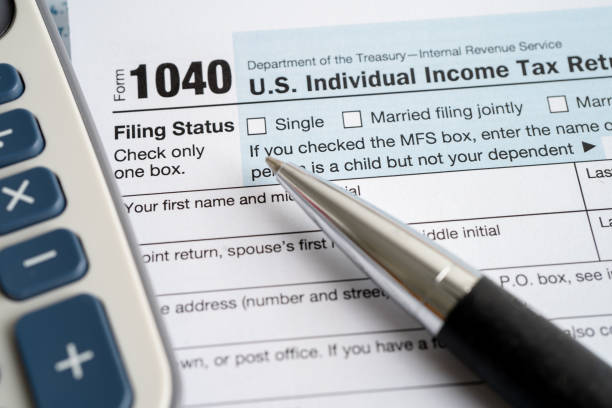
Taxes vs. Tariffs: Which is Fairer?

In the final days of his presidential run, Donald Trump floated the idea of eliminating the income tax and replacing it with tariffs as the means to fund federal spending.  He cited the era of U.S. history when the country had no income tax:

When we were a smart country, in the 1890s . .

this is when the country was relatively the

richest it ever was.  It had all tariffs.  It didn’t

have an income tax.*

While Trump was correct about the prosperity at the time, it is wrong to suggest that tariffs were the reason.  While there was no income tax, there was little if any burdensome regulation or government subsidy, and, most importantly, the nation was on a gold standard, which kept increasing the purchasing power of wages, all of which raised living standards to unprecedented heights.

On the surface, the idea of replacing the income tax with tariffs seems equitable. This is why many conservatives, populists, and libertarians have supported the idea. 

Under the present political order, the United States is a constitutional republic that is based on the social contract theory.  Government is established, in part, to protect the persons and property from external threats and internal unrest.  All citizens, in theory at least, are protected by the state.  It follows, therefore, that they are obliged to contribute to their defense.

Tariffs, on the other hand, are borne directly by two groups: consumers who buy imported goods, and businesses who sell imported goods and are impacted by a loss of income. 

Consumers pay the tax levied on foreign goods.  Therefore, those consumers who buy more expensive goods, such as a Mercedes Benz, pay a higher percentage of tax than those who buy trinkets such as Christmas tree ornaments and plastic cutlery from China.

Businesses, too, suffer from tariffs.  While it is often said that the tax is “passed on to consumers,” companies will see a reduction in income, since tariffs raise the price of goods.  Higher prices will cause a fall in demand, resulting in loss revenue.  Moreover, businesses who deal in foreign products have to bear the bureaucratic cost of complying with the government’s ever-changing trade policies while serving as tax collector for the state. 

While the income tax under social contract theory is more “equitable” than tariffs, one of its most egregious features cannot be justified.  Under current law, American citizens that are living abroad or have relocated permanently are still subjected to the income tax.  However, expats are no longer being defended by the U.S. government.  Renouncing citizenship (which is quite costly) is the only way to avoid being taxed.

Why should Americans, who are no longer being defended by their government, still be required to pay for it?  This would be a clear violation of the “social contract” that citizens have supposedly agreed to. 

There are other dangers that have come with government financing through tariffs, or, as some have called for, a national sales tax. Originally, when the income tax was proposed, it was to replace tariffs.  Tariffs, like all sales taxes, burden the poor and middle class disproportionately.  The income tax, which at first only affected the affluent, was accepted by the public since tariffs were to be eliminated.  Unfortunately, the tariffs remained after the two world wars and the income tax was levied on almost everyone. 

A similar situation could occur with the expansion of tariffs or the implementation of a national sales tax.  Governments rarely relinquish their taxing power.  

What is being ignored in the talk about tariffs and the income tax are the exploding government deficits.  Fiddling with what source of revenue the government collects is not addressing an impending financial crisis that could bring down the entire U.S. economy.

Of course, runaway debts and deficits are inherent in democratic republics as politicians are not personally responsible for the debt, unlike a monarch or king.  This is another flaw in the social contract theory. 

Before policy makers change the nation’s tax system, they should carefully consider the ramifications and seek to find the most equitable solution that will not burden only part of the citizenry. Cutting runaway federal spending is a first step.       

*https://www.cnn.com/2024/10/26/politics/trump-income-taxes-tariffs/index.html

The U.S. Is Spending $1 Trillion Every 100 Days On The Deficit

While it made some headlines in the financial press, neither policy makers nor the two presumptive presidential nominees have paid much attention to the fact that the U.S. is adding a mind-boggling $1 trillion to the national debt every 100 days.  This amounts to around $3.6 trillion annually. 

As law makers remain willfully ignorant of the financial elephant in the room, it is most likely that the only way that the debt will be addressed is through a monetary crisis which will involve the status of the dollar as the world’s reserve currency.  Such a scenario would then force authorities to take action.

As if there needed to be more evidence of how impervious Congress and the Biden Administration are to the burgeoning debt spiral, the House and Senate passed two stop-gap funding packages to avoid a government shut down on March 22, 2024.  One Senator called it “a pork fest of epic proportions.”*

Despite the ominous prognostications of a dollar collapse by financial doomsayers, the Greenback has remained the best of all competing currencies.  Yet, this time could be different, since interest rates – which have been artificially suppressed by the Federal Reserve (Fed) – have risen, making servicing of the national debt more expensive as Moody’s Investors Service noted: “In the context of higher interest rates, without effective fiscal policy measures to reduce government spending or increase revenues Moody’s expects that the US’ fiscal deficits will remain very large, significantly weakening debt affordability.”** 

While “King Dollar” has continued its financial hegemony, the running of a staggering national debt – which now stands at over $34 trillion – has had baneful repercussions for the average American.  The funding of the debt has led to a resurgence in 1970s-style stagflation with a decline in productive job growth such as manufacturing and near double-digit price inflation.  This, of course, has had a deleterious effect on the middle and lower classes’ standards of living since rising prices disproportionately effect these groups harder than the more affluent.

Of course, the simplest approach (although politically unpalatable) to the problem would be to dramatically cut government spending by eliminating agencies and programs.  With the Uniparty in charge, however, there is virtually no chance of budget cuts, especially in an election year.  Whatever happened to the “deficit hawks” and those calling for a balance budget amendment to the Constitution?

The funding of the debt is the primary factor for the rise in consumer and producer prices.  Since federal spending is beyond what the government receives in revenues, it must borrow through the issuance of debt/bonds to make up for the shortfall. 

The principal buyer of government debt has been the Fed, which pays for the bonds by the creation of money, “out of thin air.”  The printing of money (now done through the stroke of a computer key) bids up prices in the market.  Federal Reserve officials have innocuously called this scam “Quantitative Easing” (QE), which is in realty a monetization of the debt. 

Since the Fed has begun hiking interest rates, it has been doing “Quantitative Tightening” (QT) where it ostensibly has not been buying U.S. debt, but selling it.  This would lead to a contraction of the money supply and a fall in prices. The central bank has not been aggressive enough in its tightening nor has it raised interest rates enough to have any real effect on soaring prices. 

It is highly doubtful that the U.S. will escape the fate of other republics who have pursued reckless fiscal and monetary policies.  It is almost a mathematical certainty that the nation will default on its debt by either hyperinflating the currency or discounting bonds with massive haircuts to their premiums. 

The most likely path is hyperinflation; then the dollar will once again fulfill Voltaire’s dictum that all “paper money eventually returns to its intrinsic value – zero.”  While there will be massive social misery from a dollar collapse, the one bright spot from its demise is that it will mean an end of the murderous U.S. Empire.

*Tyler Durden, “’A Pork Fest of Epic Proportions:’ Congress Passes Spending Package to Avert Shutdown.” Zero Hedge 8 March 2024.  https://www.zerohedge.com/markets/pork-fest-epic-proportions-congress-passes-spending-package-avert-shutdown

**Quoted in Michelle Fox, “The U.S. national debt is rising by $1 trillion about every 100 days,” cnbc.com   https://www.cnbc.com/2024/03/01/the-us-national-debt-is-rising-by-1-trillion-about-every-100-days.html   Updated, 4 March 2024.

Antonius Aquinas@AntoniusAquinas

https://antoniusaquinas.com

The Gold Standard: Protector of Individual Liberty and Economic Prosperity

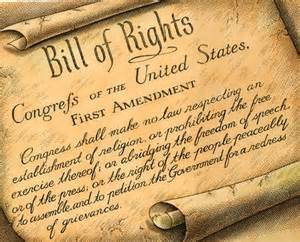
goldstandard vs.    the-bill-of-rights


The idea of a constitution and/or written legislation to secure individual rights so beloved by conservatives and among many libertarians has proven to be a myth. The US Constitution and all those that have been written and ratified in its wake throughout the world have done little to protect individual liberties or keep a check on State largesse.  Instead, in the American case, the Constitution created a powerful central government which eliminated much of the sovereignty and independence that the individual states possessed under the Articles of Confederation.

While the US Constitution contains a “Bill of Rights,” the interpreter of those rights and protections thereof is the very entity which has enumerated them.  It is only natural that decisions on whether, or if such rights have been violated will be in favor of the state.  Moreover, nearly every amendment which has come in the wake of the Bill of Rights, has augmented federal power at the expense of the individual states and that of property owners.

History has shown the steady erosion of individual rights and the creation of “new rights” and entitlements (education, health care, employment, etc.) which have occurred under constitutional rule.  Instead of limitation on government power, constitutions have given cover for the vast expansion of taxation, regulation, debt, and money creation.

While taxation has always been a facet of constitutional governments, it has been the advent of central banking and with it the elimination of the gold standard which has provided the means for the state to become such an omnipresent force in everyday life.  Irredeemable fiat paper money issued by central banks has also led to the entrenchment of political parties which has allowed these elites to create and subsidize dependency groups which, in turn, repeatedly vote to keep the political class in office.

Without the ability to create money and credit, the many bureaucracies, regulations, and laws could neither be created or enforced.  This would mean that the vast and powerful security and surveillance agencies could not exist or would be far less intrusive than they currently are.  With commodity money, debt creation would have to be repaid in gold, not monetized as it is currently done through the issuance of paper currency.

Just as important, it would have been next to impossible for the two world wars to have been fought and carried to their unimaginable destructive ends.  None of the populations involved would have put up with the level of taxation necessary to wage such costly undertakings.  Few of the wars which followed (most of which have been instigated by the US) could have taken place without central banking.  Nor could the level of “defense” spending – currently at a whopping $717 billion for fiscal year 2018 – be financed if the US was on a commodity standard.*

Under a gold standard, governments would have to rely on taxation alone.  Since citizens directly feel the effects of taxation, there is a “natural level” that it can be raised.  Punitive tax rates usually lead to a backlash and potential social insurrection which strike fear in the hearts of political elites.

Recent projections by the Congressional Budget Office again demonstrate that constitutional government provides little restraint on spending.

If present trends continue, the federal government will spend more on its interest serving its debt than it spends on the military, Medicare, or children’s programs.  It is also expected that next year’s interest on the debt will be some $390 billion, up an astonishing 50 percent from 2017.** And, for the entire fiscal year of 2018, the gross national debt surged by $1.271 trillion, to a mind-boggling $21.52 trillion.***

At one time, economists used to speak of the pernicious effects that “crowding out” had on an economy.  Since the onset of the “bubble era,” talk about deficits has almost dropped out of financial discussions.  Yet, the reality remains the same: public spending and borrowing divert scarce resources away from private capital markets to unproductive wasteful government projects and endeavors.

For those who seek a reduction in State power, defense of individual rights, and economic prosperity, the re-establishment of a monetary order based on the precious metals is the most efficacious path to take.  Such a social system would not require elaborate legislation or fancy proclamations of man’s inalienable rights, but simply a return to honest money – gold!

*Amanda Macias, “Trump Gives $717 Billion Defense Bill a Green Light. Here’s What the Pentagon is Poised to Get.”  CNBC.com 14 August 2018. https://www.cnbc.com/2018/08/13/trump-signs-717-billion-defense-bill.html

**Nelson D. Schwartz, “As Debt Rises, the Government Will Soon Spend More on Interest Than on the Military.”  The New York Times. 25 September 2018 https://www.nytimes.com/2018/09/25/business/economy/us-government-debt-interest.html

***Tyler Durden, “US Gross National Debt Soars $1.27 Trillion in Fiscal 2018, Hits $21.5 Trillion.” Zero Hedge.  2 October 2018.   https://www.zerohedge.com/news/2018-10-02/us-gross-national-debt-soars-127-trillion-fiscal-2018-hits-215-trillion

Antonius Aquinas@AntoniusAquinas

https://antoniusaquinas.com