Category Archives: Frank Chodorov

“Don’t Buy Government Bonds”

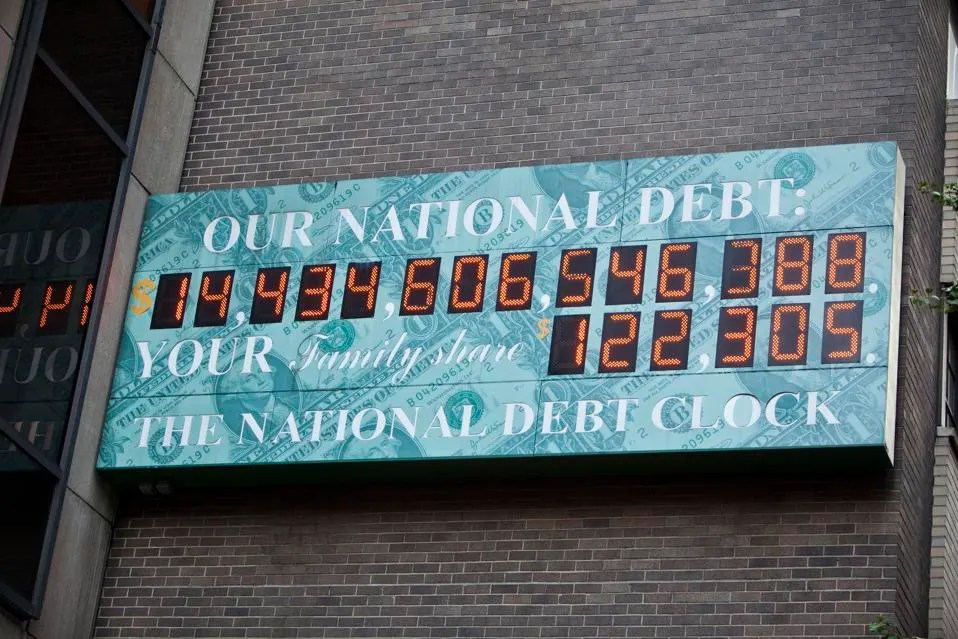
As another farcical “debt-ceiling raising” saga unfolds, conducted by the two indistinguishable political parties hell-bent on driving America into economic ruin, it would be instructive to look at how some earlier conservative/libertarian thinkers viewed public debt.  Unlike the present generation – with the notable exception of Ron Paul – these intellectuals asked fundamental questions about such matters as debt, taxation, central banking, and foreign policy.

One of the leading lights of what was known as the “Old Right” of the 1950’s, which opposed the Cold-War globalism of the likes of William Buckley and domestically sought to overturn the New Deal, was Frank Chodorov (1887-1966).  In his books and essays, Chodorov challenged the pillars which social democracy rested and sought to return America to small government, free trade, and “isolationism.” 
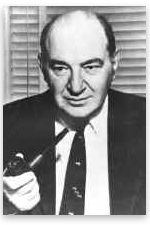
In one of his provocative essays, Chodorov pervasively argued that those who purchase public debt are complicit in the enhancement of state power.  Unlike many present-day economists who only see the baneful economic effects of profligate government borrowing, he makes a moral case against debt financing.*

He points out that public borrowing burdens future generations for the benefit of the present.  Despite reasons often given for the necessity of borrowing – war, natural disaster, infrastructure, etc., – Chodorov contends that the practice of shifting the cost to later generations, whatever the reason, is unjust:

This is exactly what you do when you
cooperate with the State’s borrowing
program. You are loading on your children
and your children’s children an obligation to
pay for something they had no voice in, and
for which they may not care at all. Your
‘investment for posterity’ may earn you
nothing but the curses of posterity.

Chodorov understood, as most commentators do not today, that a gold-backed currency restrained State largesse: “When money was redeemable in gold, the inherent profligacy of government was somewhat retrained; for, if the citizen lost faith in his money, or his bond, he could demand gold in exchange, and since the government did not have enough gold on hand to meet the demand, it had to curtail its spending proclivity accordingly.”

It was Franklin Delano Roosevelt’s despicable and criminal act of taking the U.S. off the gold standard domestically that led to the expansion of the public debt as Chodorov describes: “. . . Mr. Roosevelt removed this shackle and thus opened the flood gates.  The only limit to the inclination of every politician to spend money, in order to acquire power, is the refusal of the public to lend its money to the government. . . . the government can then resort to printing of money, to make money out of nothing. . . .” 

Not realized at the time, but the ability of the American government to expand its revenue base fit nicely into FDR’s later nefarious foreign policy objectives. 

Chodorov’s viewpoint on public debt can also easily be applied to FDR’s decision to eradicate the gold standard through which the U.S. currency could be redeemed for precious metals.  FDR’s act, however, was a “violation of contract” with American citizens since the U.S. government defaulted on its obligations.

In Orwellian fashion, the verbiage used with most government operations is often misused to legitimize State functions.  “Investment” is one such term that has been corrupted in relations to spending and debt.

In promoting their spending schemes, politicians will often use the term investment, “investment in education,” “investment in infrastructure,” etc.  This is deliberate, since it tries to equate government spending with a vital component of the market process.

In a market economy, investment means the lending of savings, which is used to expand and/or start an enterprise.  In return, the lender receives a stock or a bond.  If the business is successful, the lender’s investment will receive a return – dividends from a stock or interest from a bond.  Business investment is, therefore, a necessary aspect of capitalism which results in economic growth and increased living standards.

As Chodorov incisively points out, however, government investment is the antithesis of what takes place in the marketplace:  

The State, however, does not put your money into production.  The State spends it – that is all the State is capable of doing – and your savings disappear.  The interest you get comes out of the tax fund, to which you contribute your share, and your share is increased by the cost of servicing your bond.

Chodorov’s solution to deficit financing was not to buy government bonds.  While this would certainly be a step in the right direction, a more radical approach is needed since the problem has now become so immense. 

Simply put: there should be a prohibition on government borrowing of any kind.  State revenues should only come through tax receipts and fees paid by those in the present.  This would completely eliminate the “moral hazard” of debt financing and drastically reduce the size and scope of government over society.

For those who seek to put an end to the current debt-ceiling charade and rectify the immoral practice of burdening future generations by the irresponsibility of the present, the works of Frank Chodorov are essential.

* “Don’t Buy Government Bonds,” The Mises Institute, 13 January 2011. https://cdn.mises.org/Out%20of%20Step_4.pdf

Antonius Aquinas@AntoniusAquinas

https://antoniusaquinas.com

“We’re All Socialists Now!”

Despite being probably robbed of the Democratic Party’s nomination by the Clinton political machine, the success of the Bernie Sanders’ 2016 campaign with his advocacy of “democratic socialism” was an ominous sign of things to come and, in some sense, more telling of the political climate than Donald Trump’s improbable victory in November, 2016.  The millions of votes garnered by Sanders in the Democratic primaries has emboldened other socialists to seek political office while socialist ideas are openly spoken of with little fear of political recriminations. 

Sanders has doubled down on his advocacy of democratic socialism in a recent speech at George Washington University, calling for the completion of Franklin Delano Roosevelt’s New Deal of the 1930s:

Today I am proposing we complete

the unfinished work of Franklin Roosevelt

and the Democratic Party by putting

forth a 21st century economic bill of rights.*

Even supposedly “moderate” Democrats are trying to tout their “progressive” credentials, such as creepy Joe Biden who recently said:

I’m told I get criticized by the

New Left.  I have the most

progressive record of anybody

running for . . . anybody who would run.**

While Sanders’ chance of becoming the Democratic nominee in 2020 is still uncertain, President Trump has already indicated what is going to be a centerpiece of his election strategy: oppose socialism.  The first hint of the strategy came at this year’s State of the Union address when the President declared:

America will never by a socialist country.***

While President Trump will espouse his supposed accomplishments (tax cuts, deregulation, trade) as a contrast to democratic socialism, his emphasis will also  deflect attention away from his most solemn campaign pledge which has not been achieved – a border wall and a crack down and deportation of illegal immigrants.

Whether this is a winning formula remains to be seen.  If the Democrats are led by Bernie Sanders in 2020, they will probably lose, unless the economy falls off a cliff (very possible) or the Donald follows the suicidal advice of the war- mongering team of Messrs Bolton and Pompeo and start a war with Iran.

While the Trump campaign narrative for 2020 may convince the masses who may still not be ready to vote for outright socialism, the country, like most of the Western world, has long ago imbibed and adopted many of the philosophy’s tenets. 

Frank Chodorov, one of the most perceptive and courageous writers of what was affectionately known as the “Old Right,” pointed out over a half century ago that America had enacted many of the ideas which were enumerated in Marx and Engels’ Communist Manifesto.  Chodorov constantly chided the Cold War warriors of his time, such as William Buckley, that communism had come to America without one shot being fired by the Soviets.

Frank Chodorov, 1887-1966

In one of his most penetrating essays, “How Communism Came to America,”* Chodorov incisively pointed out the “long-term objectives of communism:”

Among them are government ownership of land, a heavy progressive income tax,

abolition of inheritance rights, a national bank, government ownership or control of

communication and transportation facilities, state-owned factories, a government

program for soil conservation, government schools, free education.

He trenchantly asked: “How many of these planks of the Communist Manifesto do you support?  Federal Reserve Bank?  Interstate Commerce Commission? Federal Communications Commission? Tennessee Valley Authority? The Sixteenth (income tax) Amendment?  The inheritance tax?  Government schools with compulsory attendance and support?”   

Further in his piece, Chodorov describes how the American economy, even at the time, had taken on many features of state capitalism: deficit financing, insurance of bank deposits, guaranteed mortgages, control of bank credits, regulation of installment buying, price controls, farm price supports, agricultural credits, RFC loans to business, social security, government housing, public works, tariffs, foreign loans.

He again asked: “How many of these measures . . . do you oppose?” 

The next financial downturn, which is starring America in the face, will be far more devastating than the last since nothing has been resolved financially while the cause of the Great Recession – the Federal Reserve – continues to operate with impunity. As things continue to deteriorate, there will be even greater calls and support for more socialism.  The free market will be blamed.

Despite the collapse of communism in the Soviet Union and the present day economic basket cases of North Korea and Cuba, socialism continues to be espoused throughout the West.  Despite its historic and current failures, socialism survives because it was never debunked philosophically within Western academia.  The main reason for this is that the intelligentsia derives much of their influence, power, and position from a socialistic society. 

Until the ideology of socialism is shown to be the morally corrupt, economic destructive, and de-civilizing social system that it has always been, the likes of Bernie Sanders will continue to be a nuisance and quite possibly the new rulers of America. 

*Stephen Dinan, “Sanders Proclaims Democratic Socialism as Answer for America.” The Washington Times.  13 June 2019, A1.

**David Krayden, “Biden Says He’s The ‘Most Progressive’ Democrat as He Almost Announces His 2020 Candidacy,”  The Daily Caller, 17 March 2019.

https://dailycaller.com/2019/03/17/biden-most-progressive-democrat-2020/

***Dinan, “Sanders Proclaims Democratic Socialism as Answer for America.”

****Charles Hamilton, ed. Fugitive Essays: Selected Writings of Franck Chodorov.  Carmel, IN.: Liberty Fund, 1980, pp. 186-89.

Antonius Aquinas@antoniusaquinas

https://antoniusaquinas.comhttps://antoniusaquinas.com