Category Archives: Federal Government

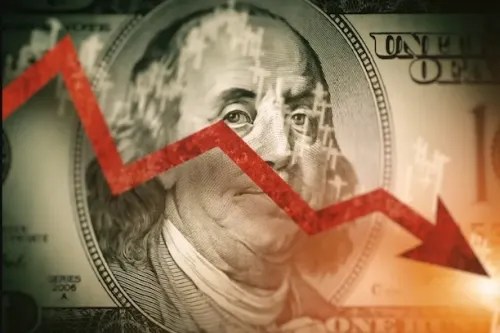
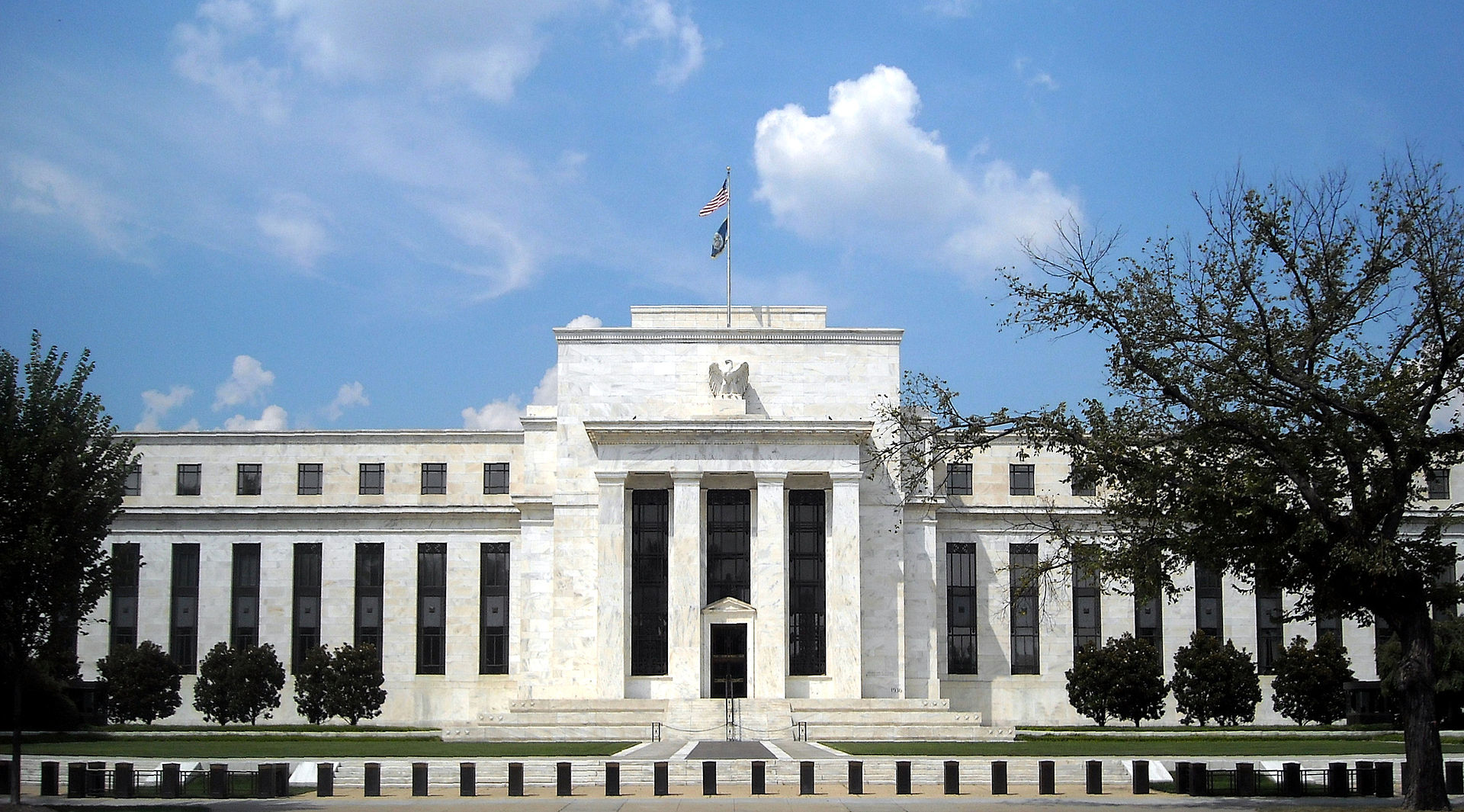
Central Banks Hoard Gold, Shed U.S. Treasuries

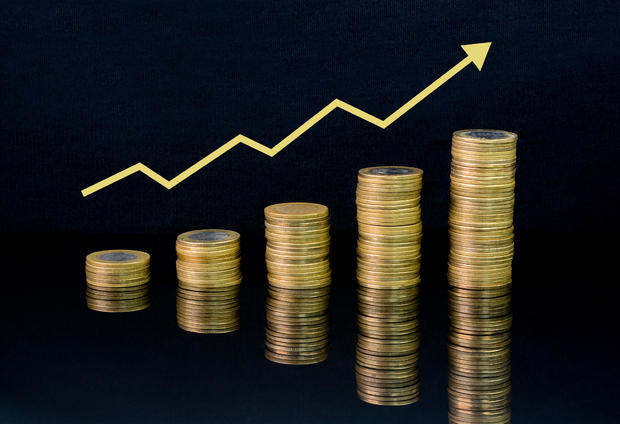
A lot has been made by gold-money bugs about the roles that central banks have played in the run-up in the gold price that accounts for a 38% increase in the yellow metal’s price this year alone.  Some of these analysts attribute the shedding of central bank holdings of U.S. treasuries and other agencies’ bonds to purchase gold, which has accelerated gold’s recent meteoric rise. 

It is not just those in the gold community that hold this belief, but some in the mainstream financial press cite reports and data that purportedly show that central banks now own more gold than U.S. bonds.  If true, such a shift would be a fundamental change in the world’s financial markets and could mean the end of the post-Bretton Woods monetary order, where the dollar acted as the reserve currency, replaced, ironically, by gold which the dollar replaced in 1971.

A recent Financial Times (FT) article, written by Toby Nangle and titled “Do Central Banks Really Have More Gold Than U.S. Treasury Bonds?,” attempts to shed light on these claims.* It should be a reminder, as the article admits, that it is difficult to get accurate figures from data provided by central banks and international agencies. 

Since the global financial crisis of 2007-2009, central banks’ holdings of gold have steadily risen.  The International Monetary Fund (IMF), which keeps data on central banks’ financial sheets, estimates that banks are holding between 22% to 28% of their assets in gold, which comes to $3.86 trillion of gold as of the end of June. 

The FT article contends that this percentage of reserves is “mostly about recent price action rather than a fundamental and dramatic shift out of treasuries and into the yellow metal.”

While central banks still hold the bulk of their reserves in U.S. treasuries, the gap is narrowing as the price of gold continues to reach new highs which FT admits, but downplays: “the underlying reality isn’t quite as dramatic as it might seem….”

What should be taken from the article, not only by investors, but just about everyone else, is that a mainstream financial organ like FT is noticing not only the rise in gold, but the potential of the greenback losing its reserve status – an event that would have immense and catastrophic consequences for all Americans.  Such talk, up to this point, was only heard from hard-money advocates.

The rising price of gold is signaling that greater price inflation is on the horizon with continuing deterioration of the dollar’s purchasing power along with more job losses, which is the dreaded specter of “stagflation.”

Another of America’s financial elite has sounded the alarm that something ominous is on the horizon.  Morgan Stanley has revised its traditional 60/40 portfolio split, the 40% typically allocated to bonds, to a 60/20/20 portfolio with 20% allocated to gold.  To readjust its portfolio to increase its gold holdings, Morgan Stanley will have to reduce its share of U.S. treasuries, which will put more downward pressure on bond prices and increase yields.

With growing concern over the safety of U.S. treasuries, the continuing rise in prices, and the all-time high in gold and asset prices, the Federal Reserve, at its September meeting, decided to cut the federal funds rate by 25 basis points while indicating that there will be more cuts coming.  The much-anticipated rate cut, of course, was in reaction to the unprecedented pressure brought to bear by President Donald Trump on Fed Chairman, Jerome Powell.

Like his reckless tariff policy, which has driven some allies into the arms of America’s supposed adversaries – see India and its rapprochement with China – Trump’s Fed bashing will have the opposite of its intended effect. 

Trump believes that rate cuts will make the economy “take-off” and he hopes that lower borrowing costs will make service of the gargantuan U.S. debt more manageable. 

As usual, the president talks out of both sides of his mouth.  He has spent most of his second term boasting that the economy is the best it has ever been.  Why then is there a need for interest rate cuts if the economy is booming? 

Trump also promised massive spending cuts via the Department of Government Efficiency but, instead, he passed the “Big Beautiful Bill,” which added more spending, requiring more borrowing.

America is not alone in cutting rates as central banks across the world (whose economies are also debt ridden) are reducing rates which will only encourage more borrowing.  This, of course, will lead to more price inflation as central banks will have to print more money to finance the profligate spending of their governments. 

Eventually there will be a return to gold in the monetary order, not just as a reserve asset, but one used in exchange as fiat currencies collapse. 

If economic trends continue, that day may not be far off.   

*https://www.ft.com/content/0dbc435d-7d7e-43d7-b730-b8ced4b1cba2

Antonius Aquinas@antoniusaquinas

https://antoniusaquinas.com

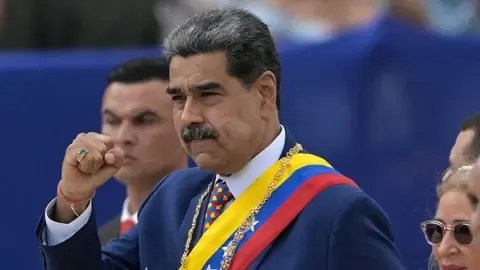
Venezuela Next on Trump Hit List for Regime-Change Operation

While it appears that the United States has finally realized that it has little leverage over Russia in the Ukraine war either to halt hostilities or alter battlefield conditions, it has, for now, begun to disengage from the contest despite the desperate pleas from Ukraine and its European backers.  President Donald Trump has said that he will no longer provide the besieged Eastern European country with aid, but will sell weapons to NATO nations who will then give them to the Volodymyr Zelensky regime.

As an aside, that there has been little criticism of Trump’s arms sales, which will be used for mass slaughter, the destruction of private property, and the enrichment of the military industrial complex, is a sad commentary on the ethical standing of the Western world.  At one time, there was an adherence to the concept of a “just war” and the protection of the lives of non-combatants and their property. These topics have, however, long since perished into the Orwellian memory hole.

Trump’s decision to abandon his demand for a ceasefire and begin shifting the burden for the war to Europe was, no doubt, influenced by the MAGA supporters who were pushing him to fulfill his campaign promise of ending the war or, at least, America’s involvement in it.  While some analysts have called the Alaska summit only a “tactical retreat” for the U.S. Empire, it was enough of a gesture to assuage MAGA that the president was going to at last put America first in foreign policy.

These hopes, however, have been dashed with Trump’s recent actions toward Latin America. 

Earlier this month, Trump reignited hostilities with Venezuela and its president, Nicolas Maduro.  It must not be forgotten that, in his first term, Trump supported efforts to overthrow Maduro in a failed coup led by then Venezuela National Assembly president Juan Guaido.  

Attorney General Pam Bondi announced that the U.S. would double the reward (now $50 million) for information that would lead to the arrest of Maduro, who the Trump administration has accused of being “one of the largest narco-traffickers in the world.”

Venezuelan Foreign Minister Yvan Gil dismissed Bondi charge, calling it “pathetic” and a “desperate distraction” from her handling of the Jeffrey Epstein case and Trump’s refusal to release the files pertaining to his former close friend’s heinous crimes according to the BBC.*

On Aug. 19, the United States escalated matters further by deploying three Navy destroyers, accompanied by 4,000 troops, off the Venezuelan coast.  Not only was the move aimed at combatting Maduro’s supposed drug ties – denied by him and Mexican President Claudia Sheinbaum – but the action appears to be another attempt at regime change. According to the Trump administration, it does not consider Maduro a legitimate president. This opinion was seconded by White House Press Secretary Karolin Leavitt:

The Maduro regime is not the legitimate government of

                                Venezuela. It is a narco-terror cartel, and Maduro, it is the

                                view of this administration, is not a legitimate president.

                                He is a fugitive head of this cartel, he has been indicted in

                                the United States for trafficking drugs into the country. **

That’s funny. When Russian President Vladimir Putin makes similar claims about the legitimacy of the Zelensky regime in Ukraine, they are dismissed by the United States and its European partners even though Zelensky has suspended democratic elections and locked up regime critics. 

If Trump believes his bellicose actions in the Caribbean, which also includes talk of attacking Mexican drug cartels, will stop the flow of illicit drugs to the United States, he is delusional.  The war on drugs in the 1980s, Lyndon Johnson’s war on poverty, the war on alcohol in the 1920s (Prohibition), and all of America’s overseas wars have made the problems they intended to solve that much worse.  The only constant from these follies has been the expansion of state power.

Drug addiction and alcohol abuse are vices that should be handled by families, churches, organizations, and,when necessary, professional medical personnel.  The government cannot fix such problems nor is it constituted to do so.  Even if Trump were to reduce the flow of narcotics, it may simply drive domestic illicit drug prices up, which will entice more sinister criminal elements into the trade.

Despite Trump’s campaign rhetoric, he is once again meddling in the affairs of another sovereign nation with threats of armed intervention if there is not regime change.  While Venezuela has taken no military action against the United States.S. nor is it likely that a conflict between the two could lead to a nuclear conflagration like in Eastern Europe, Trump’s actions demonstrate that he has no intention of pursuing an America-first foreign policy.

Unfortunately for Venezuela – and whoever is next on Trump’s list for aggression – until America cannot financially afford to police the world, the United States it will continue its hegemonic path.   

*Sean Seddon, “US Offers $50m reward for arrest of Venezuelan leader Nicolas Maduro,” BBC, 7 August 2025,  https://www.bbc.com/news/articles/cwy1wn1x521o

** Dave DeCamp, “Trump Administration Deploys Three US Navy Destroyers and 4,000 Troops Near Venezuela,” Antiwar.com, 19 August 2025.   https://news.antiwar.com/2025/08/19/trump-administration-deploys-three-us-navy-destroyers-and-4000-troops-near-venezuela/

Antonius Aquinas@antoniusaquinas

https://antoniusaquinas.com

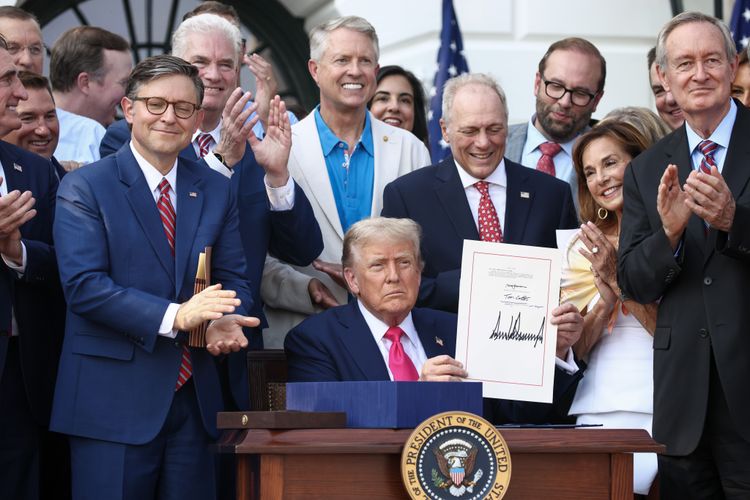
Trump’s “Big Beautiful Bill” and the Ultimate Demise of the Dollar

Despite considerable arm-twisting, President Donald Trump’s laughably misnamed “Big Beautiful Bill” (actually a Big Ugly Atrocity) barely passed both houses of Congress.  Such a monstrosity, which has been conservatively estimated to add $5 trillion to the national debt including interest over the next decade, is a slap in the face to those souls who believed Trump’s campaign rhetoric of cutting federal spending.*  This vindicates, once again, those who have correctly seen Trump for what he truly is – a big-spending liberal New York democrat.

Arguably, the most reprehensible aspect of the legislation is the $150 billion increase in “defense” outlays which will boost Uncle Sam’s military budget to a neat $1 trillion a year.  This will provide plenty of lucre to keep the military industrial complex well-oiled to continue its world-wide mass slaughter of innocents.  So much for lightweight Secretary of Defense Pete Hegseth’s initial, and now long forgotten, talk of cutting the Department’s budget by 8% per year over the next decade.

While Trump and nearly every Congressional Republican continue to spend the nation into oblivion, little attention was given to the continuing and financially ominous decline in the U.S. dollar.  The greenback has fallen more than 7% in 2025, the worst since 1973, with some analysts predicting another 10% drop by the end of the year.**

Concomitantly, the dollar’s decline has seen a historic rise in the gold price with silver reaching highs not attained since 2012.  Precious metals are signaling economic troubles ahead, especially in the currency markets.

While some have pointed to Trump’s harmful tariff policy for the dollar’s fall, the real culprit is the massive U.S. debt and interest payments, which increased even further with the passage of the Big Beautiful Bill Act.  To finance the exploding debt and interest (which has now surpassed $1 trillion per year), the government will have to borrow even more. 

This will force the Federal Reserve to print more money to service the debt putting added downward pressure on the greenback.  More dollars printed will obviously mean a fall in its purchasing power, not only domestically but in relative terms to foreign currencies.  The inverse of a decrease in the purchasing power of the dollar will be an increase in the prices of goods. 

It is a vicious circle exacerbated by Trump’s latest budget.

A larger question that U.S. policy makers will have to face if the dollar continues to slide is its current status as the world’s reserve currency.  The loss of this privileged position would be the death knell to the ability of the United States to project its financial and military power throughout the world. 

Most international transactions are settled in dollars that bolsters its demand in foreign exchange markets.  If countries settle trade in another currency or, as some have speculated, in terms of precious metals, the demand for dollars would fall.  If the supply of dollars has to increase due to continued profligate U.S. federal spending and demand for dollars internationally falls, the “price” of dollars (their purchasing power) would tank. 

Moreover, if foreign nations do not need dollars in trade, eventually the dollars they hold will make their way back to America, causing domestic prices to sharply escalate. 

Of course, the one bright spot of losing its world’s reserve currency status would mean the collapse, or at least a catastrophic pull back, in America’s vast overseas military commitments and interventions.  No longer could the U.S. maintain its mammoth military expenditures to police the world.

Massive deficits are also an impediment (although Trump apparently does not realize it) to the president’s hopes of lowering interest rates.  Even if he can get Federal Reserve Chairman Jerome Powell to cut rates, the Fed does not control long-term rates which will undoubtedly spike putting upward pressure on all rates.  This will increase borrowing costs for the government, which will likely end in a sovereign debt crisis.

At this point, there is no turning back.  The only way to save the dollar is to cut spending, which would mean less borrowing and thus less money printing. 

Trump and the Republicans with their Big Beautiful Bill have hasten the dollar’s ultimate demise and the economic collapse and social misery that will follow. 

*Committee for a Responsible Federal Budget, “Breaking Down the One Big Beautiful Bill.”  4 June 2025, ww.crfb.org/blogs/breaking-down-one-big-beautiful-bill 

**Liz Hoffman, “The US dollar is on track for its worst year in modern history.”  Semafor, 3 July 2025, https://www.semafor.com/article/07/03/2025/the-us-dollar-is-on-track-for-its-worst-year-in-modern-history

Antonius Aquinas@AntoniusAquinas

Big Spending Continues Under Trump

While DOGE (the Department of Government Efficiency) has made almost daily headlines pointing out fraud and waste in government, the real battle over federal spending is beginning to take place.  From what has been proposed, it looks like it will be business as usual in Washington.

Last week, the full House of Representatives passed the House Budget Committee’s plan (budget resolution) which specifies cuts in both taxes and spending over the next decade.  The key phrase here is “over the next decade.”

In a Feb. 13, 2025 Tax Foundation article titled “House Budget Resolution Aims to Balance Tax Cut and Spending Reduction Goals,” William McBride, explains that:

The resolution caps the deficit increase resulting from

                   tax cuts at $4.5 trillion over the next decade and requires

                   a minimum of $1.2 trillion in spending cuts.  Additionally,

                   it sets as a goal to reduce mandatory spending by $2 trillion

                   over the next decade, and, if not accomplished, the cap on

                   tax cuts would be reduced commensurately. *

The resolution calls for certain committees to implement the cuts:

  • Energy and Commerce Committee ($880 billion)
  • Education and Workforce Committee ($330 billion)
  • Agriculture Committee ($230 billion)

Programs that more than likely face budget reductions include: Medicaid, student loan relief, and the Supplemental Nutrition Program. 

Despite Defense Secretary Pete Hegseth’s call for an 8% yearly cut in defense spending over the next five years, the current House resolution would increase defense spending by $100 billion. There is an additional increase of $230 billion for border control and “deportation plans to be executed” according to Brett Samuels of the political website The Hill, in an article he penned titled “Trump Backs House GOP Reconciliation Bill Over Senate Version.”  ** 

Like Trump and most of his administration, Hegseth has sent conflicting signals on defense spending.  While in Germany, the defense secretary said: “I think the US needs to spend more than the Biden administration was willing to, who historically under-invested in the capabilities of our military.”

Hegseth bombastically added that he wants “the biggest most badass military on the planet,” as quoted by Dave DeCamp of news and commentary website Antiwar.com in a Feb 2025 analysis. *** So much for an America first foreign policy. 

The House’s estimate for spending and tax cuts are based on a real rate of growth of 2.6%.  This optimistic forecast, of course, does not account for any downturn in the economy, war, or continued uptick in price inflation.  Any of these, or some exogeneous shock to the economy would lower gross domestic product and tax revenues and jeopardize any long-term projected tax or spending cuts.

In the end, the budget resolution will increase spending, which Trump vowed to curb, as Rep. Thomas Massie (KY), who courageously voted against, succinctly summarized:

If the Republican plan passes under the rosiest

                                                assumptions, which aren’t even true, we’re gonna

                                                add $328 billion to the deficit this year, we’re gonna

                                                add $295 billion to the deficit the year after that, and

                                                $242 billion to the deficit after that. . . . ****

Trump, who enthusiastically supports the budget resolution, fails to realize that without deep and significant spending cuts, the cost of living will continue to escalate.  The president blamed the Biden Administration’s policies for the run-up in prices, when, in fact, it was Trump who began the present inflation cycle with the passage of the CARES Act in 2020, expanding the budget an unimaginable $2.2 trillion.

Without spending cuts, the burgeoning federal deficit ($2 trillion) and the interest on the national debt ($1 trillion) will need to be continually financed through borrowing.  The borrowing by the federal government is “paid for” through money printing (the real definition of inflation) by the Federal Reserve which buys U.S. debt with money “created out of thin air” which in essence is debt monetization.  The new money puts pressure on prices as it filters through the economy increasing the cost of living. 

While cuts in spending and reducing the amount of dollars in circulation will lower the cost of living, it will not come without severe economic pain.  The fall in prices will pop the bubble that stocks and other financial assets have been in which will result in widespread unemployment and business failures.  This is necessary to cleanse the malinvestment caused by the money printing and credit expansion and is necessary if America is to be put on a sound financial footing.

Of course, no politician wants to be blamed for such misery and even though Trump will not be up for re-election, he still does not want to be holding the bag when the economy implodes.  Yet, if such a scenario happens, the president should bear much of the blame for his policies ignited the present problem.

If President Trump truly wants to make America great again, cutting government spending must be undertaken no matter how painful. 

It appears, however, that he will join the long list of chief executives who have spent the nation into a horrific debt spiral which will inevitably end in economic ruin.

*William McBride, “House Budget Resolution Aims to Balance Tax Cut and Spending Reduction Goals,” Tax Foundation, 13 February 2025.  https://taxfoundation.org/blog/house-budget-resolution-tax-cuts-spending/

**Brett Samuels, “Trump backs House GOP reconciliation bill over Senate version,” The Hill, 19 February 2025.   https://thehill.com/homenews/administration/5152871-trump-endorses-house-gop-strategy/

***Dave DeCamp, “Pentagon Says Hegseth’s Order Will Redirect Spending, Not Make Actual Cuts,” Antiwar.com, 20 February 2025.

****Tyler Durden, “House Republicans Advance Trump Agenda as Final Vote Looms Tonight.” Zero Hedge, 25 February 2025,  https://www.zerohedge.com/political/house-republicans-advance-trump-agenda-final-vote-looms-tonight

Antonius Aquinas@AntoniusAquinas

Trump’s Grandiose Political Centralization Scheme Not America-First in Spirit

Colorful houses of the coastal town of Ilulissat in western Greenland.

Although Donald Trump is now in office, his statements since the election indicated he has forgotten his pledge to follow an “America first” foreign policy. This is what he promised during the recent presidential contest and what he pledged in the 2016 campaign, but failed to deliver during his first term.  While domestic issues are what a president is mostly concerned with, the most important decisions surround foreign affairs, since they often involve war.

Since his lopsided victory over the hapless Kamala Harris, Trump has made few references about reigning in the murderous U.S. Empire, but instead has talked about buying or invading Greenland, seizing the Panama Canal, and making Canada an American state.  After the resignation of Prime Minister Justin Trudeau, Trump said that “many people in Canada love being the 51st state,” according to The New York Times, Jan. 7.*

If Joe Biden or Kamala Harris said such things, the MAGA crowd would be up in arms and accuse them of moving the country in the direction of the New World Order.

Whether Trump follows through with such fanciful plans, it shows that he does not understand what lies at the heart of the social and economic problems that America and the Western world face.  Trump’s ideas would create greater political centralization, as an American-Canadian or American-Canadian-Mexican-Greenland union would create a gigantic North American state.

For anyone concerned with individual liberty, prosperity, and the No. 1 social issue that confronts the U.S. – illegal immigration – a North American superstate would be a nightmare. Gone would be the vital ability of “dissenters” to “vote with their feet” and move to less burdensome political jurisdictions.

In the United States, one can see this taking place on a daily basis as Americans move from high-tax and high regulatory states to those less onerous.  Of course, citizens cannot escape the federal government’s dictates unless one decides to expatriate. Students of the nation’s history know the often-overlooked Anti-federalists made this argument in their opposition to the Constitution which has, over time, proven to be quite prescient.

The idea that more political entities lead to greater freedom has been proven by history.  The best example of this is pre-modern Europe which was made up of a host of kingdoms, duchies, and free states with no dominant central government that could tax without impunity.  It is well accepted by historians that Europe’s rise in its standard of living was the result of its political decentralization that resulted in low levels of taxation.

A multitude of nation states allows for “competition,” where if one government becomes too tyrannical, people have an opportunity to flee to another land.  In recent U.S. history, a number of draft-aged men fled to Canada instead of being sent off to Vietnam to fight in what they considered an immoral war.  A colossal North American state would have ended such an option.

Although not explicitly discussed by Trump, a North American Union would more than likely mean the creation of a new monetary unit as was done with the euro when the European Union was formed.  Despite the warnings of some economists, price inflation in Europe escalated for countries like Germany once they relinquished their monetary autonomy. 

Currently, national currencies “float” against one another in terms of exchange rates. If one central bank inflates its currency too much, its money will lose purchasing power to less inflationary nations.  While not nearly as good as a gold standard, there is a sort of a “check and balance” on central bank monetary debasement with floating exchange rates.

A single North American monetary unit would not face the kind of limit that now exists, where the Canadian dollar, Mexican peso and U.S. dollar vie against each other.  A North American currency would be another ominous step to a one-world currency – a dream of New World Order proponents. 

While Trump’s disappointing talk about political centralization looks like a betrayal of the principles of America first principles, there may be a glimmer of hope.  In a recent Truth Social post, Trump reposted a video of Prof. Jeffery Sachs, a longtime critic of American foreign policy, criticizing Israeli Prime Minister Benjamin Netanyahu’s genocidal actions in Gaza and throughout the Middle East calling him a “deep, dark SOB.”

Since the video has been posted, Netanyahu has canceled his plans to attend Trump’s inauguration, the implication being the Israeli leader was offended by the comment.

Only time will tell if Trump will abandon his promised America-first policies or pursue a drive to a New World Order.

*David E. Sanger and Michael D. Shear, “Trump Floats Using Force to Take Greenland and the Panama Canal,”  The New York Times, 7 January 2025. 

Antonius Aquinas@antoniusaquinas

https://antoniusaquinas.com

Many Americans Say They Will Never Retire

A recent AARP poll provides further evidence of the deterioration of American living standards, especially for those approaching retirement age.  The study contradicts what most policy makers have believed to be a “soft landing” for the economy after two years of rampant inflation.

“More than one quarter of U.S. adults over the age of 59,” the survey found, “say they expect to never retire.”  One in four have no retirement savings while one third of “older adults” have credit card debt of more than $10,000 and 12% hold a balance of $20,000 or more.” The Headline of an April 25 Washington Times article by Fatima Hussein says it all: “More Than 25% of U.S. Adults Over 50 Expect Never to Retire.”*

Not surprisingly, the report conducted with the NORC Center for Public Affairs Research, points out that the lack of savings is due to the rising cost of living: “Everyday expenses and housing costs, including rent and mortgage payments, are the biggest reasons why people are unable to save for retirement.”

While AARP zeroed in on rising prices as the culprit for the financial pinch that potential retirees are feeling, it did not delve into who or what was the catalyst for the increase in living costs.  Neither has the financial press, which has always been a cheerleader for the Uniparty, been diligent in its duty about the ultimate source for soaring prices. 

While the trend of Americans working well into their retirement years has been going on for years, the situation has accelerated under both the Trump and Biden presidencies.  In concert with the Federal Reserve, the fiscal policies of the two administrations have been the primary factor for why many Americans cannot retire. 

Even before the start of the hyped Covid pandemic, the Trump administration, in just one term, was on pace to become the biggest spender in U.S. history.  The astronomical increase in government spending and money printing which took place in response to Covid are now being felt.

The Fed’s balance sheet before the Covid lockdowns in January of 2020 stood at $4.15 trillion. By the end of Trump’s presidency, it had nearly doubled to $7.3 trillion as the government doled out “stimulus checks” to non-working Americans and transferred billions to business favorites and cronies in an unimaginable grab of power and wealth. 

Under Biden, the balance sheet had risen to a little short of $9 trillion in mid-2022 and has come down, now standing at $7.4 trillion, according to American Action Forum.**  

Expanding the balance sheet means that the Fed issues more dollars it takes and buys assets (mostly government bonds). This is actually debt monetization.  The increase in the money supply is the classic – and true – definition of inflation.  Rising prices are not inflation, but its consequence.   

At first, the new money went into financial assets increasing their nominal values. However, because of the “lag effect,” the inflation the Fed created is now pushing up consumer prices.  The Fed has had to do this because of profligate government spending which must be sustained through borrowing, since tax revenues are not enough to meet expenditures. 

When asked in his current re-election campaign on what he would do to solve the rising cost of living, Trump said that he would “drill baby drill.”  Such a statement demonstrates again that the former president, like the current occupant of the office, does not understand the problem.

Increasing domestic oil production is certainly good in itself, which will create jobs and bring more oil to the market. But it will not address general price inflation which is a monetary phenomenon

Rising prices can be reversed if the Fed increases interest rates, or better yet, lets rates be set by the market.  Higher rates will entice people to save, which will take money out of circulation, thus putting downward pressure on prices.

Just as important, the government needs to cut spending and eliminate departments and programs which will mean less money printing by the Fed.  The likelihood of this taking place in a presidential election year is next to zero.      

Even if the government and the Fed took the proper steps and began to put the nation on a sound financial footing, it will take years for the damage that has been done to be rectified.

Sadly, the Uniparty has no intention of doing the right thing and as economic conditions worsen, the number of people who must work until they drop will continue to rise.

*Fatima Hussein, “More than 25% of U.S. adults over 50 expect never to retire.” The Washington Times, 25 April 2024, A7. **https://www.americanactionforum.org/insight/tracker-the-federal-reserves-balance-sheet/

What the Rising Gold Price Signals

The recent run-up in the gold price has not garnered the attention among the mainstream financial media outlets as it should.  Gold has, in part, been overshadowed by the rise in the price of bitcoin and other cryptocurrencies. 

Naturally, the financial press, which is really an arm of the government and its central bank, wants to ignore, as much as possible, references to gold as protection against the continuing increase in the price level which itself has been deliberately understated by monetary officials.  The media and government understand that precious metals are the ultimate security against runaway inflation and economic collapse.

While the increase in the gold price has reached nominal highs, it and the price of silver have not passed their all-time 1980 highs in real terms.  Adjusted for inflation, gold would have to rise to about $3590 an ounce while silver would have to surpass $50 an ounce.  Both are poised to exceed these watermarks in the not-too-distant future.

Precious metals will continue to escalate unless the Federal Reserve radically changes its interest rate policy to combat inflation as former Fed Chairman Paul Volcker once did.  Volcker raised interest rates to double-digit levels which caused gold prices to fall.  While Volcker could get away with such actions (because, at the time, the U.S. was still a creditor nation), current Chair Jerome Powell cannot because of the enormity of public and private debt.  Double-digit interest rates would collapse the economy and plunge millions of Americans into bankruptcy.

The rising price of gold is anticipating some of the promised policy actions of the Fed.  Since the end of last year, the central bank has indicated that it would be cutting interest rates.  In addition, Powell is considering ending the Fed’s “Quantitative Tightening” (QT) program.  Both are highly inflationary. 

While commentators have focused on gold’s spectacular price rise, there is an underlying issue that is also taking place.  The record setting gold price is signaling that the present fiat monetary order, which is based on the dollar as the world’s reserve currency, is coming to a financially unpleasant end. 

Ever since 1971, when the Nixon Administration closed the “gold window,” refusing to redeem gold for dollars held by foreign central banks, the world has been on a “dollar standard” where bank reserves are held in Greenbacks.  If the Fed continues to print dollars to sustain government spending at this rate, the dollar will continue to lose purchasing power and foreigners will no longer want to hold them.  Foreign central banks will then turn to gold.  In fact, central banks are already increasing their positions in gold which has been a catalyst that has fueled the latest rally.

Not surprisingly, the Fed has not purchased much gold (or is not admitting publicly that it has) since it would be a bad look for the issuer of the world’s reserve currency to be abandoning its own currency for gold.

Besides the severe financial implications if the dollar is dethroned, there will be dramatic geopolitical repercussions from the loss of its hegemony.  Just like the British pound was replaced as the dominant world currency after England insanely exhausted itself in fighting WWII and ending its empire, America will face a similar future when the dollar becomes just another money.  Many will see it as a “blessing” if and when the U.S. Empire comes to an end.

While it would appear logical and morally sound to replace the present crumbling monetary order with one based on gold and silver, a far worse paradigm than even the present one is, no doubt, being planned.  The new system will be one of central bank digital currency (CBDC) which would give governments and bankers the power to monitor and control all aspects of economic and social life. 

Some states have passed legislation to counter CBDC, such as Florida in 2023 under Governor Ron DeSantis who said: “The Biden administration’s efforts to inject a Centralized Bank Digital Currency is about surveillance and control.  Today’s announcement will protect Florida consumers and businesses from the reckless adoption of a ‘centralized digital dollar’ which will stifle and promote government-sanctioned surveillance. . . .”*

While the press and policy makers have ignored the surge in precious metal prices, it should be a warning to everyone that difficult economic times are still yet to come with the potential of a new draconian monetary order to be installed on the horizon.  Observant individuals should heed gold’s signals and take appropriate measures to safeguard their futures.

*https://www.flgov.com/2023/03/20/governor-ron-desantis-announces-legislation-to-protect-floridians-from-a-federally-controlled-central-bank-digital-currency-and-surveillance-state/

Antonius Aquinas@AntoniusAquinas

https://antoniusaquinas.com

The U.S. Is Spending $1 Trillion Every 100 Days On The Deficit

While it made some headlines in the financial press, neither policy makers nor the two presumptive presidential nominees have paid much attention to the fact that the U.S. is adding a mind-boggling $1 trillion to the national debt every 100 days.  This amounts to around $3.6 trillion annually. 

As law makers remain willfully ignorant of the financial elephant in the room, it is most likely that the only way that the debt will be addressed is through a monetary crisis which will involve the status of the dollar as the world’s reserve currency.  Such a scenario would then force authorities to take action.

As if there needed to be more evidence of how impervious Congress and the Biden Administration are to the burgeoning debt spiral, the House and Senate passed two stop-gap funding packages to avoid a government shut down on March 22, 2024.  One Senator called it “a pork fest of epic proportions.”*

Despite the ominous prognostications of a dollar collapse by financial doomsayers, the Greenback has remained the best of all competing currencies.  Yet, this time could be different, since interest rates – which have been artificially suppressed by the Federal Reserve (Fed) – have risen, making servicing of the national debt more expensive as Moody’s Investors Service noted: “In the context of higher interest rates, without effective fiscal policy measures to reduce government spending or increase revenues Moody’s expects that the US’ fiscal deficits will remain very large, significantly weakening debt affordability.”** 

While “King Dollar” has continued its financial hegemony, the running of a staggering national debt – which now stands at over $34 trillion – has had baneful repercussions for the average American.  The funding of the debt has led to a resurgence in 1970s-style stagflation with a decline in productive job growth such as manufacturing and near double-digit price inflation.  This, of course, has had a deleterious effect on the middle and lower classes’ standards of living since rising prices disproportionately effect these groups harder than the more affluent.

Of course, the simplest approach (although politically unpalatable) to the problem would be to dramatically cut government spending by eliminating agencies and programs.  With the Uniparty in charge, however, there is virtually no chance of budget cuts, especially in an election year.  Whatever happened to the “deficit hawks” and those calling for a balance budget amendment to the Constitution?

The funding of the debt is the primary factor for the rise in consumer and producer prices.  Since federal spending is beyond what the government receives in revenues, it must borrow through the issuance of debt/bonds to make up for the shortfall. 

The principal buyer of government debt has been the Fed, which pays for the bonds by the creation of money, “out of thin air.”  The printing of money (now done through the stroke of a computer key) bids up prices in the market.  Federal Reserve officials have innocuously called this scam “Quantitative Easing” (QE), which is in realty a monetization of the debt. 

Since the Fed has begun hiking interest rates, it has been doing “Quantitative Tightening” (QT) where it ostensibly has not been buying U.S. debt, but selling it.  This would lead to a contraction of the money supply and a fall in prices. The central bank has not been aggressive enough in its tightening nor has it raised interest rates enough to have any real effect on soaring prices. 

It is highly doubtful that the U.S. will escape the fate of other republics who have pursued reckless fiscal and monetary policies.  It is almost a mathematical certainty that the nation will default on its debt by either hyperinflating the currency or discounting bonds with massive haircuts to their premiums. 

The most likely path is hyperinflation; then the dollar will once again fulfill Voltaire’s dictum that all “paper money eventually returns to its intrinsic value – zero.”  While there will be massive social misery from a dollar collapse, the one bright spot from its demise is that it will mean an end of the murderous U.S. Empire.

*Tyler Durden, “’A Pork Fest of Epic Proportions:’ Congress Passes Spending Package to Avert Shutdown.” Zero Hedge 8 March 2024.  https://www.zerohedge.com/markets/pork-fest-epic-proportions-congress-passes-spending-package-avert-shutdown

**Quoted in Michelle Fox, “The U.S. national debt is rising by $1 trillion about every 100 days,” cnbc.com   https://www.cnbc.com/2024/03/01/the-us-national-debt-is-rising-by-1-trillion-about-every-100-days.html   Updated, 4 March 2024.

Antonius Aquinas@AntoniusAquinas

https://antoniusaquinas.com

The Hypocrisy of the Sam Bankman-Fried Conviction

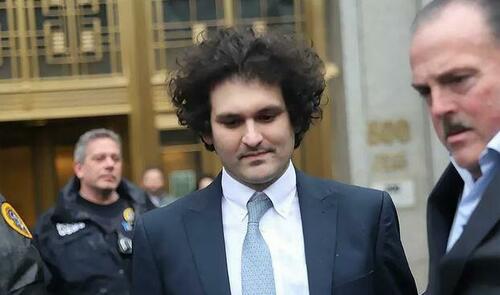
Sam Bankman-Fried (SBF), the founder of FTX and Alameda Research hedge fund has been found guilty on all seven counts related to financial fraud and money laundering in a lower Manhattan court room.  The trial took a lot less time than expected as did the jury’s deliberation of the case which speaks to the overwhelming evidence against the onetime financial guru of entertainers, crypto enthusiasts, and politicians.  SBF could face up to 100 years behind bars.

Gary Gensler, chairman of the Securities and Exchange Commission, said that “Sam Bankman-Fried built a house of cards on a foundation of deception while telling investors that it was one of the safest buildings in crypto.”*  Manhattan U.S. Attorney Damian Williams concurred, calling Bankman-Fried’s actions “one of the biggest financial frauds in American history.”**

SBF’s conviction is particularly fitting since he had marketed himself as a new-style capitalist who was more interested in philanthropy and giving away his wealth, instead of enriching himself.  That so many were taken in by this charlatan, especially a number of supposedly savvy investors, demonstrates again that greed remains a significant part of the human condition. 

While SBF will hopefully receive his just rewards for his wrongdoings, there is another fraud that has been taking place in the financial world for quite some time which dwarfs exponentially the scam of the one-time “crypto-king.” Unlike SBF, however, this entity continues to exist and faces no prosecution, but instead is often praised for its operations.

The institution, of course, is the Federal Reserve and, for that matter, all central banks.  Central banks do what FTX did but on a colossal scale.  While SBF’s crimes were limited to those who foolishly invested with him, the Fed’s customers are all those who hold dollars and have little option to not use them unless they want to revert to barter and become desperately poor.  Like what SBF did to his investors, the Fed has defrauded (although surreptitiously) its “customers” by robbing them of their purchasing power through monetary debasement.  The loss of purchasing power by the public has been redistributed to the Fed, the political class, and financial elites. 

The Federal Reserve

While Fed officials, the government, academia, and the sycophantic financial press may try and obfuscate the matter, the fact remains that the Federal Reserve has the ability to create money out of thin air and without limit.  It is counterfeiting writ large.  No criminal, be it SBF, Bernie Madoff, or the Mafia could ever dream of such a scenario! 

The Fed’s creation of money through credit expansion is certainly more subtler than the swindling which SBF engaged in or what took place in earlier times from “coin clipping,” but the criminality of the action is the same.  Under Western jurisprudence, however, central banking is now enshrined in law as a legitimate part of financial life.

As SBF wrapped himself in an aura of a benevolent and charitable new-age businessman, the Fed hides behind its criminality by presenting itself as a necessary and indispensable factor for the nation’s economic well-being.  Without the Fed and its dual mandate of “price stability” and full employment, the economy would collapse. 

Yet, this is a ruse.  Before the advent of central banking, economic life went about quite nicely.  It was only when central banks appeared that the dreaded boom and bust cycle became more frequent and severe.  Moreover, in the pre-central bank era, the world was on a metallic monetary standard which protected peoples’ purchasing power.

The Fed was created by the major U.S. banks and top politicos at the time to allow banks to counterfeit without facing the consequences of their actions.  Stable prices and low unemployment are secondary functions of the Fed and mostly spoken about for public relations.  Protection of the system, especially the solvency of the Big Banks and now funding the national government through debt monetization, remains the prime responsibility of the Fed. 

This, of course, is not to exonerate SBF.  Why is it though that the laws which convicted the rogue crypto financier are not applied to America’s central bank?  When sovereigns of the past debased the money supply most acknowledged its immorality and pointed out who benefited.  In this supposed enlightened age where “equal justice before the law” is a ruling mandate of the legal system, its application apparently does not apply to the monetary authorities of the world.

Capitalism, at its core, is a moral argument where respect for property rights, the freedom to exchange, honest money, and the liberty to become an entrepreneur are the foundations which the system rests.  Those who legitimately satisfy consumer tastes and demand are rightly rewarded.  Naturally, in doing so, entrepreneurs enrich themselves but they do so by providing for the needs of their customers and in the process create jobs and incomes for those they employ, all of which is done on a voluntary basis. 

Central banking is the essential instrument of “crony capitalism” which is the antithesis of free enterprise.  Crony capitalism is a new version of mercantilism which was condemned by the likes of Adam Smith and was one of the factors why the American Revolution was fought.  It has since come back with a vengeance.

Besides the immorality of central banking, the Fed’s manipulation of the money supply has deleterious effects on economic life. Inflation hurts the poor and the working class disproportionately while the Fed’s control of interest rates and credit is the reason for the dreaded business cycle.

The present age has prided itself in its efforts to attain justice in regard to race relations, the environment, economic equality, and now gender recognition.  Yet, the immorality of central banking remains and while Sam Bankman-Fried may be incarcerated, social justice warriors (as well as conservatives) willfully ignore the counterfeiting elephant in the room.  Until central banking is outlawed, a truly just social order is an impossibility.

*https://www.zerohedge.com/political/sam-bankman-fried-found

**https://nymag.com/intelligencer/2022/12/sam-bankman-fried-has-been-arrested.html

Antonius Aquinas@AntoniusAquinas

https://antoniusaquinas.com

What Tucker Carlson and the Pro-Life Movement Miss about Abortion

In a recent talk to the Center for Christian Virtue, Tucker Carlson railed against abortion asserting that it is “no benefit to society” and “it erode[s] its very foundation.”*  The former Fox News anchor called the battle over infanticide not a “political debate,” but a “spiritual battle.”**  The speech comes as the issue of abortion has heated up in the Republican presidential campaign.

Carlson is certainly correct in his assessment that the fight over abortion is a spiritual struggle, but he, like most of the pro-life movement, does not understand the larger tragedy of abortion.  The failure of the pro-life movement to stress this fundamental aspect, and to see abortion in the light of eternity, is one of the reasons why the evil is still a legalized part of the so-called civilized world.

While the killing of the unborn is a crime, a greater injustice of that heinous offense is committed.  Most Christians, including presumably Tucker Carlson (who was brought up Episcopalian) and the Center for Christian Virtue, would agree that one must be baptized to have a chance at salvation.  Abortion denies that opportunity.  Unbaptized infants neither go to heaven or hell, but to the “limbo of the children” where they do not suffer the pains of hell, but neither can they receive the beatific vision.

Abortion is not only the killing of the unborn, which is heinous in its own right, but it denies one from entering heaven.  If this aspect had been emphasized from the start, it may have mobilized even greater public and judicial support to outlaw the abominable practice.

Tucker Carlson’s Christian priorities are also skewed as he states:

The point of life is to have children and to watch

them have grandchildren.  Nothing will bring you

joy like that will.  Nothing comes close.  Would

trade your job for your children?  Would you trade                                                

anything for your children?  Of course not.***

The point of life is to save one’s soul and, as the Divine Savior taught, this is done by loving God with “thy whole heart, and with thy whole soul, and with thy whole mind” and loving “thy neighbor as thyself.”

Christ is very clear about those who put either parents or children above Him:

He that loveth father or mother more than

me, is not worthy of me; and he that loveth

son or daughter more than me, is not worthy                                                

of me.  [Matthew 10: 37]

Of course, children are precious gifts from God who add enjoyment and fulfillment to one’s life for those who can have them.  Children, however, are sinners and are in need of nurturing and instruction in how to live a moral life.  Sadly, despite the efforts and best intentions of parents, some children turn out badly. 

The fact that abortion is now a part of the political discourse demonstrates just how far the natural authority figures and institutions of society have failed in fulfilling their roles as moral guideposts.  Yet, this was bound to happen with the increased power of the state in all aspects of society, usurping the role that the family (and its extension – uncles, aunts, grandparents), churches, ministers, arbitrators, employers, philanthropists and scholars once held.  Where at one time ethical matters were discussed and decided outside of the state apparatus, now nearly every personal decision is subjected to government interference which has become the supreme arbitrator of what is moral and what is not.

That society’s non-governmental authority elements have little clout is also a factor in why most young people do not have much of a moral compass in how to conduct their lives and are susceptible to support the most debauched aspects of society. 

The left has long recognized this and has used the state to push through their agenda on all sorts of social and economic issues.  Using the levers of the state, a small, determined minority can impose its will on an unorganized majority.  This is another argument as to why pro-lifers should be for radical political de-centralization and the restoration of natural authority in society.    

Ultimately, the eradication of legalized abortion will not come via politics.  Instead of political wrangling, what should be made clear to the pro-abortion crowd is the real eternal consequences of their actions where the Divine Judge, who is not subject to legislative interference or some perverted, phony “right to choose” nonsense, will deliver perfect justice.

*https://www.zerohedge.com/political/watch-tucker-carlson-spits-fire-anti-abortion-speech

**https://www.breitbart.com/politics/2023/09/26/tucker-carlson-abortion-not-political-debate-spiritual-battle/

***Ibid.

Antonius Aquinas@AntoniusAquinas

https://antoniusaquinas.com