Category Archives: America

Venezuela Next on Trump Hit List for Regime-Change Operation

While it appears that the United States has finally realized that it has little leverage over Russia in the Ukraine war either to halt hostilities or alter battlefield conditions, it has, for now, begun to disengage from the contest despite the desperate pleas from Ukraine and its European backers.  President Donald Trump has said that he will no longer provide the besieged Eastern European country with aid, but will sell weapons to NATO nations who will then give them to the Volodymyr Zelensky regime.

As an aside, that there has been little criticism of Trump’s arms sales, which will be used for mass slaughter, the destruction of private property, and the enrichment of the military industrial complex, is a sad commentary on the ethical standing of the Western world.  At one time, there was an adherence to the concept of a “just war” and the protection of the lives of non-combatants and their property. These topics have, however, long since perished into the Orwellian memory hole.

Trump’s decision to abandon his demand for a ceasefire and begin shifting the burden for the war to Europe was, no doubt, influenced by the MAGA supporters who were pushing him to fulfill his campaign promise of ending the war or, at least, America’s involvement in it.  While some analysts have called the Alaska summit only a “tactical retreat” for the U.S. Empire, it was enough of a gesture to assuage MAGA that the president was going to at last put America first in foreign policy.

These hopes, however, have been dashed with Trump’s recent actions toward Latin America. 

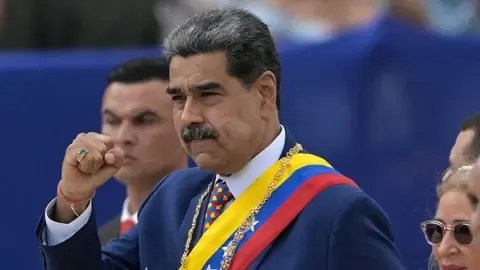
Earlier this month, Trump reignited hostilities with Venezuela and its president, Nicolas Maduro.  It must not be forgotten that, in his first term, Trump supported efforts to overthrow Maduro in a failed coup led by then Venezuela National Assembly president Juan Guaido.  

Attorney General Pam Bondi announced that the U.S. would double the reward (now $50 million) for information that would lead to the arrest of Maduro, who the Trump administration has accused of being “one of the largest narco-traffickers in the world.”

Venezuelan Foreign Minister Yvan Gil dismissed Bondi charge, calling it “pathetic” and a “desperate distraction” from her handling of the Jeffrey Epstein case and Trump’s refusal to release the files pertaining to his former close friend’s heinous crimes according to the BBC.*

On Aug. 19, the United States escalated matters further by deploying three Navy destroyers, accompanied by 4,000 troops, off the Venezuelan coast.  Not only was the move aimed at combatting Maduro’s supposed drug ties – denied by him and Mexican President Claudia Sheinbaum – but the action appears to be another attempt at regime change. According to the Trump administration, it does not consider Maduro a legitimate president. This opinion was seconded by White House Press Secretary Karolin Leavitt:

The Maduro regime is not the legitimate government of

                                Venezuela. It is a narco-terror cartel, and Maduro, it is the

                                view of this administration, is not a legitimate president.

                                He is a fugitive head of this cartel, he has been indicted in

                                the United States for trafficking drugs into the country. **

That’s funny. When Russian President Vladimir Putin makes similar claims about the legitimacy of the Zelensky regime in Ukraine, they are dismissed by the United States and its European partners even though Zelensky has suspended democratic elections and locked up regime critics. 

If Trump believes his bellicose actions in the Caribbean, which also includes talk of attacking Mexican drug cartels, will stop the flow of illicit drugs to the United States, he is delusional.  The war on drugs in the 1980s, Lyndon Johnson’s war on poverty, the war on alcohol in the 1920s (Prohibition), and all of America’s overseas wars have made the problems they intended to solve that much worse.  The only constant from these follies has been the expansion of state power.

Drug addiction and alcohol abuse are vices that should be handled by families, churches, organizations, and,when necessary, professional medical personnel.  The government cannot fix such problems nor is it constituted to do so.  Even if Trump were to reduce the flow of narcotics, it may simply drive domestic illicit drug prices up, which will entice more sinister criminal elements into the trade.

Despite Trump’s campaign rhetoric, he is once again meddling in the affairs of another sovereign nation with threats of armed intervention if there is not regime change.  While Venezuela has taken no military action against the United States.S. nor is it likely that a conflict between the two could lead to a nuclear conflagration like in Eastern Europe, Trump’s actions demonstrate that he has no intention of pursuing an America-first foreign policy.

Unfortunately for Venezuela – and whoever is next on Trump’s list for aggression – until America cannot financially afford to police the world, the United States it will continue its hegemonic path.   

*Sean Seddon, “US Offers $50m reward for arrest of Venezuelan leader Nicolas Maduro,” BBC, 7 August 2025,  https://www.bbc.com/news/articles/cwy1wn1x521o

** Dave DeCamp, “Trump Administration Deploys Three US Navy Destroyers and 4,000 Troops Near Venezuela,” Antiwar.com, 19 August 2025.   https://news.antiwar.com/2025/08/19/trump-administration-deploys-three-us-navy-destroyers-and-4000-troops-near-venezuela/

Antonius Aquinas@antoniusaquinas

https://antoniusaquinas.com

Trump’s Grandiose Political Centralization Scheme Not America-First in Spirit

Colorful houses of the coastal town of Ilulissat in western Greenland.

Although Donald Trump is now in office, his statements since the election indicated he has forgotten his pledge to follow an “America first” foreign policy. This is what he promised during the recent presidential contest and what he pledged in the 2016 campaign, but failed to deliver during his first term.  While domestic issues are what a president is mostly concerned with, the most important decisions surround foreign affairs, since they often involve war.

Since his lopsided victory over the hapless Kamala Harris, Trump has made few references about reigning in the murderous U.S. Empire, but instead has talked about buying or invading Greenland, seizing the Panama Canal, and making Canada an American state.  After the resignation of Prime Minister Justin Trudeau, Trump said that “many people in Canada love being the 51st state,” according to The New York Times, Jan. 7.*

If Joe Biden or Kamala Harris said such things, the MAGA crowd would be up in arms and accuse them of moving the country in the direction of the New World Order.

Whether Trump follows through with such fanciful plans, it shows that he does not understand what lies at the heart of the social and economic problems that America and the Western world face.  Trump’s ideas would create greater political centralization, as an American-Canadian or American-Canadian-Mexican-Greenland union would create a gigantic North American state.

For anyone concerned with individual liberty, prosperity, and the No. 1 social issue that confronts the U.S. – illegal immigration – a North American superstate would be a nightmare. Gone would be the vital ability of “dissenters” to “vote with their feet” and move to less burdensome political jurisdictions.

In the United States, one can see this taking place on a daily basis as Americans move from high-tax and high regulatory states to those less onerous.  Of course, citizens cannot escape the federal government’s dictates unless one decides to expatriate. Students of the nation’s history know the often-overlooked Anti-federalists made this argument in their opposition to the Constitution which has, over time, proven to be quite prescient.

The idea that more political entities lead to greater freedom has been proven by history.  The best example of this is pre-modern Europe which was made up of a host of kingdoms, duchies, and free states with no dominant central government that could tax without impunity.  It is well accepted by historians that Europe’s rise in its standard of living was the result of its political decentralization that resulted in low levels of taxation.

A multitude of nation states allows for “competition,” where if one government becomes too tyrannical, people have an opportunity to flee to another land.  In recent U.S. history, a number of draft-aged men fled to Canada instead of being sent off to Vietnam to fight in what they considered an immoral war.  A colossal North American state would have ended such an option.

Although not explicitly discussed by Trump, a North American Union would more than likely mean the creation of a new monetary unit as was done with the euro when the European Union was formed.  Despite the warnings of some economists, price inflation in Europe escalated for countries like Germany once they relinquished their monetary autonomy. 

Currently, national currencies “float” against one another in terms of exchange rates. If one central bank inflates its currency too much, its money will lose purchasing power to less inflationary nations.  While not nearly as good as a gold standard, there is a sort of a “check and balance” on central bank monetary debasement with floating exchange rates.

A single North American monetary unit would not face the kind of limit that now exists, where the Canadian dollar, Mexican peso and U.S. dollar vie against each other.  A North American currency would be another ominous step to a one-world currency – a dream of New World Order proponents. 

While Trump’s disappointing talk about political centralization looks like a betrayal of the principles of America first principles, there may be a glimmer of hope.  In a recent Truth Social post, Trump reposted a video of Prof. Jeffery Sachs, a longtime critic of American foreign policy, criticizing Israeli Prime Minister Benjamin Netanyahu’s genocidal actions in Gaza and throughout the Middle East calling him a “deep, dark SOB.”

Since the video has been posted, Netanyahu has canceled his plans to attend Trump’s inauguration, the implication being the Israeli leader was offended by the comment.

Only time will tell if Trump will abandon his promised America-first policies or pursue a drive to a New World Order.

*David E. Sanger and Michael D. Shear, “Trump Floats Using Force to Take Greenland and the Panama Canal,”  The New York Times, 7 January 2025. 

Antonius Aquinas@antoniusaquinas

https://antoniusaquinas.com

Economic Collapse May Be the Only Way to Prevent World War III

The tensions between the West and Russia over the Ukraine have escalated over the past few months with an almost daily occurrence of provocations and belligerent talk mostly from members of NATO.  In response, Russia sent a naval contingent to the Caribbean in a show of force.  Some of the Western provocations include:

  • Polish President Andrzej Duda’s willingness to place U.S. nuclear weapons on Polish soil;
  • German Defense Minister Boris Pistorius’ s call for reinstitution of a draft;
  • A hand-delivered check by Biden to Volodymyr Zelensky as part of the $95 billion U.S. “defense” package for Ukraine
  • A request by Zelensky for Westerners to train troops on Ukrainian soil; and
  • US and NATO okaying Ukraine to fire long-range American weapons as much as 12 miles into Russian territory

It is apparent that, until Russian President Vladimir Putin capitulates to Western demands in regard to Ukraine, NATO will continue to push the envelop.  In hindsight, analysts such as Paul Craig Roberts have, from the start, urged Putin to swiftly finish off Ukraine militarily and replace the Zelensky regime with one favorable to Russia.  A protracted struggle, Roberts warned, would give the West more time to supplement Ukraine: “The conflict dragged on, because having declared the intervention limited, the Kremlin left Kiev to continue the war, thus playing into Western hands as the West gradually widened the war.” *

Unfortunately for Russia, Paul Craig Roberts’s prognostication is now coming to fruition. 

The counter argument to a more aggressive Russia is that Putin realizes that the West is run by a pack of sociopaths who would have no qualms launching WWIII, which would include the use of nuclear weapons, or ignite a major military conflagration in the area.  The Russian president sees that the West holds a decisive military advantage over Russia even if it allied with China.  The U.S. alone spends more than the combined expenditures of the top nine militaries in the world.

The United States has thus the ability and means to operate and intervene in almost any sector of the world.  It is able to do so because it has had, for the longest time, an economy which was able to not only produce goods for the domestic market and also for its foreign adventures.  It takes wealth to be able to arm, transport, deploy, and maintain men in distant lands.

Because of America’s relatively free economy, it could produce a seemingly endless supply of military hardware for itself, but also to buy off client states and fund proxy wars.  In contrast, the Soviet Union could never export communism in any significant way after World War II because it lacked the means to do so.  Its economy was a basket case that could barely feed its citizens. 

While the U.S. may have the military capability to be the world’s policeman, its actions in the Ukraine are ultimately controlled by ideology.  And, for the longest time, U.S. foreign policy has been one of interventionism and war with the ultimate goal of the establishment of a one-world state.  Its proxy war in Ukraine is designed to cripple Russia, which stands as a roadblock to this long-desired goal.

Since it is apparent that the principles guiding U.S. foreign policy are not going to change anytime soon, the nation will continue on its bellicose course until it no longer has the means to do so.  This would mean a financial crisis, most likely in the form of a dollar collapse, which would ground the economy to a halt. 

In such a scenario, the United States would be following the course that Great Britain took after World War II, when its empire could no longer be sustained since the country insanely exhausted itself in the conduct of fighting two world wars. 

A similar, earlier historical example was the Western Roman empire, which, through currency debasement, heavy taxation and government largesse, ruined its economy and then could no longer maintain its empire.

 The ideology of Great Britain and Rome did not change, however, they simply no longer had the means to sustain and expand their empires.

Despite massive deficits, record-setting inflation, and a recent bank crisis in March, 2023, a financial crisis does not appear to be on the horizon.  Although things can change quickly, for the foreseeable future, the U.S. empire is in no danger from internal collapse.

While an economic collapse would mean misery for millions of Americans, it would be, in a sense, retribution for the nation’s murderous and costly foreign policy, which has brought, and still is bringing, untold death and destruction to millions of people.  

*Paul Craig Roberts, “Normalizing War with Russia,” PaulCraigRoberts.org, 6 June 2016, https://www.paulcraigroberts.org/2024/06/06/normalizing-war-with-russia/

U.S. Fertility Rates Collapse

The destructive demographic effects of the leftist social engineering schemes of the past century are now being felt in the latest federal data on the precipitous decline in U.S. birth rates.  A recent report from the Centers for Disease Control shows that the fertility rate among U.S. women has fallen to 1.62 births per woman in 2023, which is the lowest recorded rate since the government began keeping such statistics in the 1930s.

Buried in the media reports is the drop off in white women’s fertility rates, which fell some 3% from last year and stand less than the national average.  Asian women and white women have equal reproductive capacities.  The fertility rate is an estimate of the number of babies a woman would normally have in her lifetime.  A rate of 2.1 births per woman is needed for a generation to replace itself.

While this demographic trend has been in motion for quite some time, the explanation for the fall in reproduction by the news media and think tanks devoted to the subject have largely missed the mark.

In its coverage of the story, The Wall Street Journal’s Jennifer Calfas and Anthony DeBarros cited such factors as “women establishing fulfilling careers,” and that they have more access to contraception.*  The most fertile child-bearing group – young women – are putting off motherhood because they are uncertain about the future and are “spending more of their income on homeownership, student debt and child care.” 

The reasons that The Journal and other commentators give to explain the decline in birth rates are the consequences of what took place in America and the Western world decades ago.  Leftists had always wanted to break down and corrupt the traditional family.  A splintered and dysfunctional family structure would be less likely to act as bulwark against its agenda. 

One of the ways to accomplish this was to get women out of the household and into the labor market, as working and career women would have fewer opportunities to have children. 

The feminist movement was more than just the attainment of “equal rights” for women.  Its main objective was to lead women out of the home and away from their traditional roles as mothers and homemakers.  The record drop in birth rates demonstrates how well this plan has been accomplished. 

Besides the disruptive impact on family life and its size, working women are also an indication (and a much better one than government statistics) that living standards have fallen over the generations despite what the financial press has maintained about the economy.  Some 50 to 60 years ago most women did not work, one income could sustain a family and even larger families at that. 

Now, due to the dramatic increase in the cost of living – mostly due to the Federal Reserve’s inflationary monetary policies, D.C.’s unbridled lust of spending, and massive corporate bailouts and subsidies – real incomes have fallen.  For most couples, it takes two full-time jobs to sustain a household which today is a lot smaller than earlier generations. 

While the financial argument has merit, the most important factor has been the establishment’s relentless push to justify and make appealing the idea of working women.  This arrangement has led to countless conflicts between the sexes in and out of the workplace.

Of course, this is not to say that women should be prohibited from the labor market or do so on a part-time, informal basis.  Some, out of tragic circumstances, need to work or some may not be cut out for motherhood, but this should be the exception to the norm.

While anti-immigration voices have rightly focused on the cultural and political altering impact of mass illegal immigration, there has been less emphasis on the fundamental change of women’s role in society.  Such neglect is probably due to a reluctance to take a moral position and appear chauvinistic or misogynistic.  A healthy birth-rate model could offset the influx of unwanted immigrants. 

Recently, Elon Musk wrote that “Any nation with a birth rate below replacement will eventually cease to exist.”  When confused New World Order types like Musk recognize the seriousness of population collapse, it is time to worry.  Yet, Musk and others do not understand the essence of the problem.

Without a reordering of society to its natural state and restoring the family as a fruitful and nurturing institution for child rearing, a demographic nightmare is in store for America and the Western world.

*Jennifer Calfas & Anthony DeBarros, “Fertility Rate Falls to a Record Low Amid Social Shifts,” The Wall Street Journal, 25 April 2024, pp. A1-A2.

Antonius Aquinas@AntoniusAquinas

https://antoniusaquinas.com

What Tucker Carlson and the Pro-Life Movement Miss about Abortion

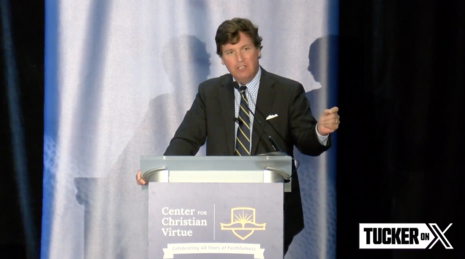
In a recent talk to the Center for Christian Virtue, Tucker Carlson railed against abortion asserting that it is “no benefit to society” and “it erode[s] its very foundation.”*  The former Fox News anchor called the battle over infanticide not a “political debate,” but a “spiritual battle.”**  The speech comes as the issue of abortion has heated up in the Republican presidential campaign.

Carlson is certainly correct in his assessment that the fight over abortion is a spiritual struggle, but he, like most of the pro-life movement, does not understand the larger tragedy of abortion.  The failure of the pro-life movement to stress this fundamental aspect, and to see abortion in the light of eternity, is one of the reasons why the evil is still a legalized part of the so-called civilized world.

While the killing of the unborn is a crime, a greater injustice of that heinous offense is committed.  Most Christians, including presumably Tucker Carlson (who was brought up Episcopalian) and the Center for Christian Virtue, would agree that one must be baptized to have a chance at salvation.  Abortion denies that opportunity.  Unbaptized infants neither go to heaven or hell, but to the “limbo of the children” where they do not suffer the pains of hell, but neither can they receive the beatific vision.

Abortion is not only the killing of the unborn, which is heinous in its own right, but it denies one from entering heaven.  If this aspect had been emphasized from the start, it may have mobilized even greater public and judicial support to outlaw the abominable practice.

Tucker Carlson’s Christian priorities are also skewed as he states:

The point of life is to have children and to watch

them have grandchildren.  Nothing will bring you

joy like that will.  Nothing comes close.  Would

trade your job for your children?  Would you trade                                                

anything for your children?  Of course not.***

The point of life is to save one’s soul and, as the Divine Savior taught, this is done by loving God with “thy whole heart, and with thy whole soul, and with thy whole mind” and loving “thy neighbor as thyself.”

Christ is very clear about those who put either parents or children above Him:

He that loveth father or mother more than

me, is not worthy of me; and he that loveth

son or daughter more than me, is not worthy                                                

of me.  [Matthew 10: 37]

Of course, children are precious gifts from God who add enjoyment and fulfillment to one’s life for those who can have them.  Children, however, are sinners and are in need of nurturing and instruction in how to live a moral life.  Sadly, despite the efforts and best intentions of parents, some children turn out badly. 

The fact that abortion is now a part of the political discourse demonstrates just how far the natural authority figures and institutions of society have failed in fulfilling their roles as moral guideposts.  Yet, this was bound to happen with the increased power of the state in all aspects of society, usurping the role that the family (and its extension – uncles, aunts, grandparents), churches, ministers, arbitrators, employers, philanthropists and scholars once held.  Where at one time ethical matters were discussed and decided outside of the state apparatus, now nearly every personal decision is subjected to government interference which has become the supreme arbitrator of what is moral and what is not.

That society’s non-governmental authority elements have little clout is also a factor in why most young people do not have much of a moral compass in how to conduct their lives and are susceptible to support the most debauched aspects of society. 

The left has long recognized this and has used the state to push through their agenda on all sorts of social and economic issues.  Using the levers of the state, a small, determined minority can impose its will on an unorganized majority.  This is another argument as to why pro-lifers should be for radical political de-centralization and the restoration of natural authority in society.    

Ultimately, the eradication of legalized abortion will not come via politics.  Instead of political wrangling, what should be made clear to the pro-abortion crowd is the real eternal consequences of their actions where the Divine Judge, who is not subject to legislative interference or some perverted, phony “right to choose” nonsense, will deliver perfect justice.

*https://www.zerohedge.com/political/watch-tucker-carlson-spits-fire-anti-abortion-speech

**https://www.breitbart.com/politics/2023/09/26/tucker-carlson-abortion-not-political-debate-spiritual-battle/

***Ibid.

Antonius Aquinas@AntoniusAquinas

https://antoniusaquinas.com

President Trump’s Role in the Ukraine War

With his usual braggadocio, former President Donald Trump has promised that if returned to the White House he would end the Ukraine conflict within hours and claims, as many of his supporters do, that the war would never have taken place had he been in office.  Like most of his campaign promises during his 2016 presidential run – drain the swamp, pull troops out of Afghanistan, build a wall – very few were accomplished, despite the fact that the former president had a Republican House and Senate at the start of his first term.

Listening to Trump’s often incoherent statements on the Ukrainian imbroglio shows that the ex-chief executive has learned little from his four years in the Oval Office.  While talk of ending wars in a few hours may garner popular support, translating them into actual results is a far different and, to say the least, difficult matter, as Trump should now realize after his fruitless years as president.

Trump had a chance to de-escalate tensions in the Ukraine that had been building especially after the Western-inspired coup of February, 2014 which replaced the democratically-elected government of Viktor Yanukovych.  Yet, the former president did nothing to remedy the situation and, in fact, worsened matters by providing military hardware to the Ukraine, which the Obama Administration had denied.

Demonstrating a lack of understanding of the region’s geo-political realities, Trump decided to provide the Ukraine with military equipment.  In December, 2017 the U.S. shipped, among other weaponry, Javelin anti-tank missile systems, with the first sale completed in March of the following year to the sum of $47 million.  Reportedly, the former president was convinced by his advisors that the military aid would be “good for U.S. business.” 

If one considers the military industrial complex a vibrant part of the U.S. economy and not a parasitical drain that redistributes scarce resources away from the production of useful consumer goods into the creation of destabilizing and murderous weapons of war, then – “yes” – military spending is good for business.  For those, like Trump, who support such an idea are apparently unfamiliar with Brigadier General Smedley D. Butler who rightly called “defense spending” a racket:

I spent 33 years in the Marines, most of my time being a high-class muscle man for big business, for Wall Street and the bankers.  In short, I was a racketeer for Capitalism.*

After the provocative action of supplying the Ukraine with military hardware, the Trump Administration inflamed relations further by pulling out of the Intermediate-Range Nuclear Forces Treaty (INF) which was agreed to by President Ronald Reagan and Soviet leader Mikhail Gorbachev in 1987. The landmark treaty banned missiles with range between 500 and 5,500 km (310-3,400 miles).**

The U.S. accused Russia of non-compliance to the terms of the treaty, a charge that the Russians and many military analysts denied.  This, of course, led to a greater level of distrust between the two nations and went against candidate Trump’s aims of lessening tensions between the two powers.

Trump, as with the pro-war Western media, is ignorant of the historical context that played into Vladimir Putin’s decision to invade the Ukraine.  It is a well-established fact that the U.S. and Western powers gave assurances to Russia as far back as when the Berlin Wall came down that NATO would not expand eastward.  That promise has been repeatedly broken as NATO now includes 31 nations with Sweden set to come on board in 2024.***

Making matters worse, the Biden Administration, the war mongers in Congress, and the U.S.’s NATO lapdogs have escalated matters with tremendous financial and military assistance, which has done little to stop the Russians, but has resulted in the needless slaughter of thousands and the wholesale destruction of Ukrainian territory.  The introduction of cluster bombs into the fray and the promise of F-16 fighter-jets capable of carrying nuclear war heads has heightened the possibility of a general conflagration. 

 None of the declared Republican presidential contenders have critiqued the former president’s reckless Ukrainian policy.  Some of the candidates (Chris Christie, Nikki Haley) have instead insanely called for greater support of the Zelensky regime!    

The American involvement in the Ukrainian War has nothing to do with its national security, but with the interests of the U.S. Empire.  The tragedy of the Trump Presidency is that things were supposed to be different.  Instead of non-intervention, the Administration armed Ukraine, stationed troops in Syria, assassinated an Iranian general on a Middle East peace mission, and committed a host of other head scratching acts which went against candidate Trump’s pledge of an “America First” foreign policy that propelled him to victory in 2016.

To think that things will be different in a second go-around is clearly delusional, as the former president is now campaigning with never-ending war proponent Senator Lindsey Graham.   

*See War is a Racket, Port Townsend, WA.: Feral House, 2003; 1935.

**“INF Nuclear Treaty: US Pulls Out of Cold War-Era Pact With Russia,” BBC, 2 August 2019.   https://www.bbc.com/news/world-us-canada-49198565

***Patrick Wintour, The Guardian, 22 January 2022 ttps://www.theguardian.com/world/2022/jan/12/russias-belief-in-nato-betrayal-and-why-it-matters-today

Antonius Aquinas@AntoniusAquinas

https://antoniusaquinas.com

“Don’t Buy Government Bonds”

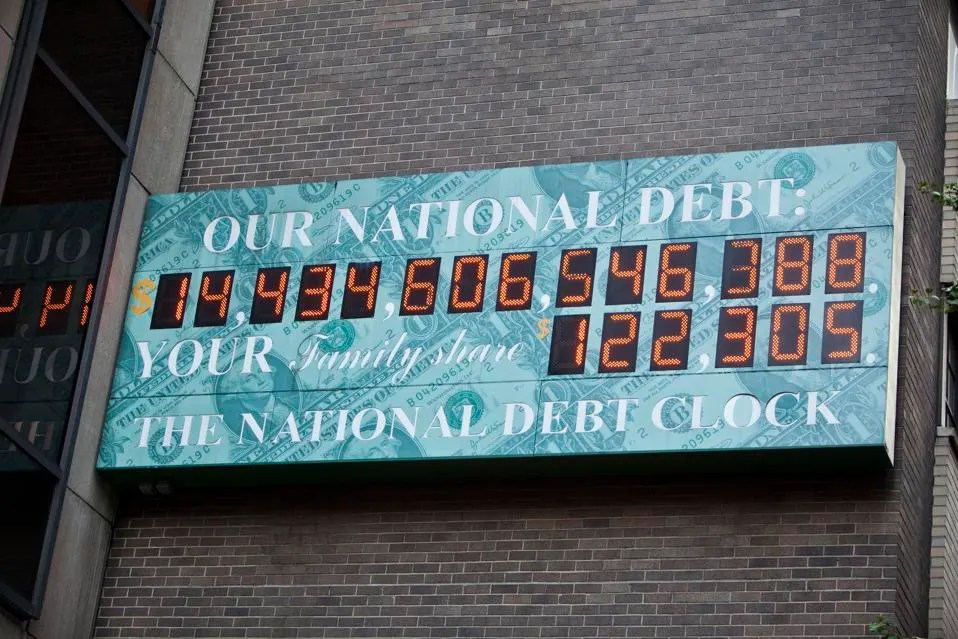
As another farcical “debt-ceiling raising” saga unfolds, conducted by the two indistinguishable political parties hell-bent on driving America into economic ruin, it would be instructive to look at how some earlier conservative/libertarian thinkers viewed public debt.  Unlike the present generation – with the notable exception of Ron Paul – these intellectuals asked fundamental questions about such matters as debt, taxation, central banking, and foreign policy.

One of the leading lights of what was known as the “Old Right” of the 1950’s, which opposed the Cold-War globalism of the likes of William Buckley and domestically sought to overturn the New Deal, was Frank Chodorov (1887-1966).  In his books and essays, Chodorov challenged the pillars which social democracy rested and sought to return America to small government, free trade, and “isolationism.” 

In one of his provocative essays, Chodorov pervasively argued that those who purchase public debt are complicit in the enhancement of state power.  Unlike many present-day economists who only see the baneful economic effects of profligate government borrowing, he makes a moral case against debt financing.*

He points out that public borrowing burdens future generations for the benefit of the present.  Despite reasons often given for the necessity of borrowing – war, natural disaster, infrastructure, etc., – Chodorov contends that the practice of shifting the cost to later generations, whatever the reason, is unjust:

This is exactly what you do when you
cooperate with the State’s borrowing
program. You are loading on your children
and your children’s children an obligation to
pay for something they had no voice in, and
for which they may not care at all. Your
‘investment for posterity’ may earn you
nothing but the curses of posterity.

Chodorov understood, as most commentators do not today, that a gold-backed currency restrained State largesse: “When money was redeemable in gold, the inherent profligacy of government was somewhat retrained; for, if the citizen lost faith in his money, or his bond, he could demand gold in exchange, and since the government did not have enough gold on hand to meet the demand, it had to curtail its spending proclivity accordingly.”

It was Franklin Delano Roosevelt’s despicable and criminal act of taking the U.S. off the gold standard domestically that led to the expansion of the public debt as Chodorov describes: “. . . Mr. Roosevelt removed this shackle and thus opened the flood gates.  The only limit to the inclination of every politician to spend money, in order to acquire power, is the refusal of the public to lend its money to the government. . . . the government can then resort to printing of money, to make money out of nothing. . . .” 

Not realized at the time, but the ability of the American government to expand its revenue base fit nicely into FDR’s later nefarious foreign policy objectives. 

Chodorov’s viewpoint on public debt can also easily be applied to FDR’s decision to eradicate the gold standard through which the U.S. currency could be redeemed for precious metals.  FDR’s act, however, was a “violation of contract” with American citizens since the U.S. government defaulted on its obligations.

In Orwellian fashion, the verbiage used with most government operations is often misused to legitimize State functions.  “Investment” is one such term that has been corrupted in relations to spending and debt.

In promoting their spending schemes, politicians will often use the term investment, “investment in education,” “investment in infrastructure,” etc.  This is deliberate, since it tries to equate government spending with a vital component of the market process.

In a market economy, investment means the lending of savings, which is used to expand and/or start an enterprise.  In return, the lender receives a stock or a bond.  If the business is successful, the lender’s investment will receive a return – dividends from a stock or interest from a bond.  Business investment is, therefore, a necessary aspect of capitalism which results in economic growth and increased living standards.

As Chodorov incisively points out, however, government investment is the antithesis of what takes place in the marketplace:  

The State, however, does not put your money into production.  The State spends it – that is all the State is capable of doing – and your savings disappear.  The interest you get comes out of the tax fund, to which you contribute your share, and your share is increased by the cost of servicing your bond.

Chodorov’s solution to deficit financing was not to buy government bonds.  While this would certainly be a step in the right direction, a more radical approach is needed since the problem has now become so immense. 

Simply put: there should be a prohibition on government borrowing of any kind.  State revenues should only come through tax receipts and fees paid by those in the present.  This would completely eliminate the “moral hazard” of debt financing and drastically reduce the size and scope of government over society.

For those who seek to put an end to the current debt-ceiling charade and rectify the immoral practice of burdening future generations by the irresponsibility of the present, the works of Frank Chodorov are essential.

* “Don’t Buy Government Bonds,” The Mises Institute, 13 January 2011. https://cdn.mises.org/Out%20of%20Step_4.pdf

Antonius Aquinas@AntoniusAquinas

https://antoniusaquinas.com

The Convention of States Project: A Bad Idea

Similar to Patrick Buchanan’s campaigns, Newt Gingrich’s “Contract with America,” the Tea Party, and to some extent Donald Trump’s presidency, the Convention of States Project* will not solve the crises that America faces.  It will, undoubtedly, like most of the previous reform and populist movements be sabotaged by the ruling class if it ever gets close to accomplishing its goals.

The Project’s rhetoric is “old-style” conservative/populist-speak which seeks to “[propose] amendments that impose fiscal restraint on the federal government, limit the power and jurisdiction of the federal government, and limit the terms of office for its officials and for members of Congress.”** Some of the proposed amendments include:

  • Congressional term limits
  • Requiring a two-thirds vote of the House and Senate to increase the public debt
  • Restoring the Commerce Clause to its original intent and scope
  • Repeal of the 16th Amendment, which gave us the income tax
  • Giving states, by a three-fifths vote, the power to negate any federal law, regulation or executive order giving Congress an easy means of overriding regulation

So far, 19 state legislatures have called for a constitutional convention, 34 states are needed for a convention to be called and, for an amendment to be passed, it must be approved by three quarters of state legislatures. 

The state legislatures who have signed on have realized that the federal government has become omnipotent and the individual states are now merely appendages to Washington.  “The states,” said South Carolina state representative Bill Taylor, “have sort of lost their voice, and all we can do now is beg from the cheap seats and say, ‘Hey, don’t do that.’”***

After the totalitarian and draconian efforts of the U.S. government and those around the world the past two years in response to the “pandemic,” Mr. Taylor’s sentiment is, to say the least, an understatement!

The fundamental problem with efforts such as the Convention of States Project is that they do not understand the nature of the crises that both America and most of the world face.  For America, its current malaise can be traced shortly after its independence with the adoption of the Constitution itself. 

While it has long been touted as a great document of freedom and liberty, it is anything but.  The “founding fathers” knowingly created a powerful central government and decreased the sovereignty of the individual state governments which had existed under the Articles of Confederation. 

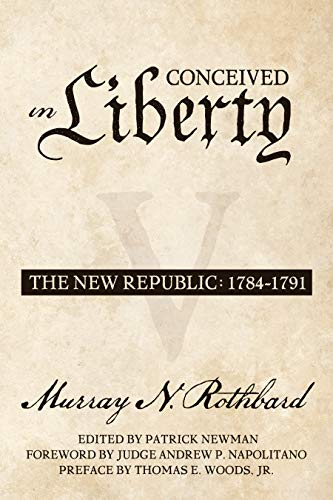
In the words of Murry Rothbard, the Constitution was a coup that, for the most part, was the antithesis of the spirit and drive of the American Revolution which was a movement against political centralization and empire:

It was a bloodless coup d’etat against an unresisting

Confederation Congress. . . . .  The Federalists, by use

of propaganda, chicanery, fraud, malapportionment of

delegates, blackmail threats of secession and even

coercive laws, had managed to sustain enough delegates

to defy the wishes of the majority of the American people

and create a new Constitution.****

Worse than the power grab was the establishment of an omnipotent state as Rothbard incisively continues:

The drive [for ratification] was managed by a

corps of brilliant members and representatives

of the financial and landed oligarchy.  These

wealthy merchants and large landowners were

joined by the urban artisans of the large cities in

their drive to create a strong overriding central

government – a supreme government with its

own absolute power to tax, regulate commerce,

and raise armies.*****

410jXD-zO+L


The celebrated “separation of powers,” and “checks and balances” within the federal system and even the Bill of Rights, so often lauded by conservative and populist commentators, have proven from the very start to be ineffectual in stopping the expansion of state power. 

The Constitution itself declares that it is the ultimate authority as Article VI states:

This Constitution and the laws of the United States which

shall be made in pursuance thereof, and all treaties made,

or which shall be made, under the authority of the United States,

shall be the supreme law of the land. . . . [Italics mine.]

The massive and now unresolvable social, economic and political troubles both in the U.S. and around the world stems from a concentration of political power that is inherent in the nature of constitutional government.  This power is augmented and sustained by a system of central banking which provides the nation state with seemingly unlimited financial power to implement its various social engineering schemes, conduct continuous warfare, and has the ability to crush any opposition to its hegemony. 

The solution, which is all too obvious, but not attainable in the current ideological atmosphere dominated by statist thinking, is political decentralization.

The smaller political alignments under decentralization would probably coalesce around peoples with similar economic, social and religious affiliations and status and those with similar ethnic and racial backgrounds.  Such a system would be truly diverse and undoubtedly lower social tensions which derive from the central state’s forced integration polices. 

Once political decentralization became a reality, the natural and mutually beneficial relationships and interactions between peoples would emerge.  The immense advantage of free trade – the widening of the division of labor and specialization – would be the norm between societies since smaller countries could not afford to restrict trade since doing so would lead to autarky and the resultant fall in standards of living to primitive levels. 

Likewise, a universal monetary standard, most likely based on gold and silver, would arise among differing communities since a multitude of currencies would lead to monetary chaos and render economic calculation an impossibility.  Since no central state could impose its currency, the only honest and sound money – gold/silver – would be quickly adopted by all.

The mass invasion of the U.S. taking place under the negligence and encouragement of the Biden Administration could also be thwarted through political decentralization.  Areas where the lives and property of people are threatened by invaders have more of an incentive to effectively deal with unwanted groups than bureaucrats living often times thousands of miles away. 

Each jurisdiction would make its own policies on who or how many it wanted in its territory.  Moreover, each community could expel undesirables without interference from those who are not property owners or members of such communities.

While those behind the Convention of States Project and the state legislatures which have called for a constitutional convention may be well meaning, they will ultimately fail.  Such efforts are a wrongheaded approach to address the myriad of problems that plague the U.S. and, for that matter, the entire world.

Instead of attempts to amend the Constitution or though the electoral process by finding the “right candidate,” the very viable and historically proven alternative of de-centralization through secession is the only pathway to ultimate success.  Until the break-up of the nation state is accomplished, America and the world’s future will be considerably bleak.

*https://conventionofstates.com/

**https://starkrealities.substack.com/p/activists-more-than-halfway-to-forcing

***Ibid

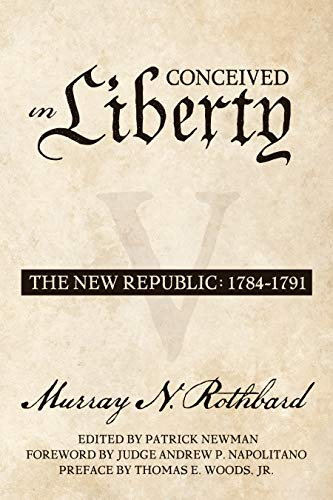
**** Murray N. Rothbard, Conceived in Liberty. Vol. 5, The New Republic, 1784-1791, ed., Patrick Newman.  Auburn, AL.: Mises Institute, 2019, p. 306.

*****Ibid.

Antonius Aquinas@AntoniusAquinas

https://antoniusaquinas.com


Trump’s Inflation

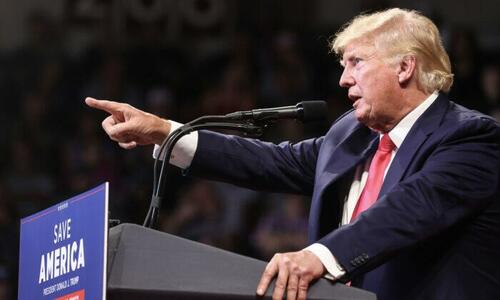
Former President Donald Trump attends a rally in support of Arizona GOP candidates, Prescott, Ariz., on July 22, 2022. (Mario Tama/Getty Images)

Once again, former president Donald Trump criticized the Biden Administration for the record consumer price increases that Americans are now paying.  His remarks followed up on his July 4th speech in Wyoming where he lamented about the state of the nation: “I know it’s not looking good for our Country right now, with a major War raging out of control in Europe, the Highest Inflation in memory, the worst 6 month Stock Market in History, the highest energy prices ever.”* 

In his most recent campaign rally for GOP hopeful Kari Lake, Trump lambasted President Biden for creating the “worst inflation in 47 years”** and for his “war on American energy” which Trump believes has contributed to the record hike in fuel prices.

The former president boasted that had he been re-elected “none of these terrible events would have happened.”  He reassured his audience “not to worry” and that “we will make America great again.” 

As with all of his post-presidential rallies, Trump’s criticism of the Biden regime comes with touting his own accomplishments as chief executive.  Most of these claims are so outrageous they damage or totally negate his critique of Biden’s policies and make Trump sound like a fool.

Take, for instance, his rally in Arizona for Kari Lake, where he had the audacity to say that under his watch the country “had the greatest economy in the history of the world with no inflation.” [!]  Such nonsense needs no comment.

Like his boasts about the economy, the former president deftly left out his Administration’s role in the drastic rise in prices which Americans are currently suffering from. 

First, however, the meaning of “inflation” should be explained.

Inflation, properly defined, as it was understood until the present era, meant an expansion of the money supply.  “Deflation,” its opposite is a decrease in the money supply.  The rise or fall in prices – usually a rise in producer and consumer prices – is a consequence of the expansion or contraction of the money supply.  Once understood, the rampant rise in prices in America and throughout the world has been the result of the increase in the money supply not only by the Federal Reserve, but all central banks.

Another important tenet of monetary theory long since forgotten has been the notion of a “lagging indicator.”  Between the expansion of the money supply – inflation – and the resultant increase in prices, there is often a lag which could take months or years to appear. 

The increase in consumer and producer prices is due to the dramatic explosion of money and credit which took place during the Trump Administration not only in response to the scamdemic, but in the years leading up to it.  In fact, the plandemic was a convenient excuse to inject massive liquidity into a system that began to hemorrhage in September, 2019.  In the early months of 2020, the markets began to implode before the unnecessary lockdowns as the air began to come out of the financial bubble.  This has been ignored by the financial press and Trump himself.

Prior to the covid hysteria, Trump had repeatedly lobbied for “cheap” money, calling for a renewal of quantitative easing, reduction in interest rates, and he even spoke about “negative” rates.  The former president threatened to fire Jerome Powell, whom he had picked to head the Federal Reserve, for not reducing interest rates far enough.  Trump complained that President Obama benefited from the Fed’s accommodative monetary policy and wanted similar treatment so as to keep the financial bubble going.

Trump’s fiscal policy was also highly inflationary as he ran record deficits long before covid.  His tax cuts and failure to cut government spending led to greater government borrowing which the Fed was forced to monetize.  Trump was on pace, well before the 2020 lockdowns, to spend more money in four years than Obama spent in his two terms.  By 2019, the deficit had grown to $1 trillion dollars, up $205 billion, 26 percent from 2018.***  Again, all before covid had begun.   

It was the Trump Administration’s wrongheaded response to the corona virus which is largely responsible for the rising prices of today.  If the lockdowns were necessary (which a growing number of officials now admit they were not), the proper policy would have been to reduce the money supply (and government spending in general) since the lockdowns reduced production meaning less goods and employment.  The massive increase in the Fed’s balance sheet from $4 trillion to some $9 trillion meant more money “chasing fewer goods” causing the prices of the available goods to increase – some dramatically.

What was needed was a reduction in consumer spending since there was less goods being produced with the lockdowns.  Less demand would have offset the reduction in supply and would have kept prices from spiraling.

Instead, Trump – as did his successor – following the doctrines of Lord Keynes, attempted to maintain aggregate demand at pre-covid levels and sent out stimulus checks even to those still employed.  While the money given out to American workers pales in comparison to the massive transfer of wealth to politically-favorite corporations, big business, and the expansion of the government itself, the propping up of aggregate demand led to supply chain shortages.   

Trump is not alone in his ignorance of economics.  His handlers, economic advisors, and the vast majority of his loyal supporters do not understand what took place under his administration.  The current financial mess can be laid at his – and the Federal Reserve’s – feet.  To be fair, his predecessor, Barrack Obama, is also liable.    

The “inflation,” and now recession, which the country is suffering through cannot be fully attributed to the Biden Administration although it too has added to the crisis with more profligate spending. 

The remedy for the current mess is not the re-election of a very flawed former president who does not understand the problem at hand and throughout his term was constantly outfoxed by the Swap which he was elected to drain.  The solution is a return to sound money, the abolition of central banking, and the allowance for the necessary cleansing of the financial bubble. Until a presidential contender speaks in these terms, America’s financial woes will continue.

*https://www.zerohedge.com/political/heres-what-trump-says-inflation-would-be-if-he-were-still-president

**https://www.zerohedge.com/political/trump-blasts-biden-over-soaring-prices-says-true-inflation-rate-much-much-higher-91

***https://www.washingtonpost.com/business/2019/10/25/us-deficit-hit-billion-marking-nearly-percent-increase-during-trump-era/

Antonius Aquinas@AntoniusAquinas

https://antoniusaquinas.com

America’s Trade Deficit: An Enormous Concern

Another milestone (or more accurately millstone) was recently passed by the U.S. economy as the January trade deficit surged to an all-time record high of $107.6 billion, up some $26 billion from December’s $80.7 billion imbalance.*

Like the gigantic federal budget deficit, the trade imbalance is no longer talked about by the financial press.  There has been little criticism of President Biden on either matter nor are Administration officials questioned about how things can be reversed.  In fact, some commentators bizarrely contend that trade deficits show how robust an economy actually is!     

The trade deficit was supposed to be alleviated by former President Trump who vowed throughout the 2016 campaign that he would rectify the situation and repeatedly ridiculed U.S. trade negotiators for their lack of financial acumen.  He touted that his “friendship” with world leaders, most notably Chinese President Xi Jinping, would result in favorable trade deals for the country. 

Trade hawks got on board with Trump’s economic nationalism believing that he would not only fix imbalances, but create an American industrial renaissance.  Optimism ran high after his unexpected win in 2016. 

As president, after a couple of contentious years of on-again, off-again negotiations a first phase of an agreement with China was signed in early 2018.  During the negotiations, he boasted:

When a country (USA) is losing many billions of dollars

on trade with virtually every country it does business with,

trade wars are good and easy to win.**

In actuality, nothing significant was agreed upon with China despite the Trump Administration bragging that it was the first phase of a more comprehensive deal to come.  Despite all of the hoopla, the trade imbalance continued to grow and no deal was ever finalized. 

Besides the initial agreement with China, the next biggest trade policy act was the scrapping of NAFTA and its replacement with a new treaty, “The U.S.-Mexico-Canada Agreement” (USMCA).  The new agreement was little different than the original treaty.

Thus, by the time he left office in 2020, the U.S.’s trade gap ($68.2 billion) was greater than during his predecessor, Barrack Obama’s term, who Trump lambasted for his ruinous trade policy.***

Trump wisely spoke little about trade during his unsuccessful 2020 re-election bid and, surprisingly, his opponents, despite the president’s miserable failure, steered clear of the issue.  Of course, the Democrats were limited in what they could do with an obvious feeble, senile, and vile candidate at the top of their ticket.

Like the Democrats, Trump’s trade-hawk cheerleaders have remained reticent about the escalating trade numbers and like the former president they too, are now discredited when it comes to trade.  If America could not overcome its trade gap with an economic nationalist as president for four years, then there must be a problem with their thinking.      

The reason why Trump failed – as will Biden – is that he, his negotiators, and the trade hawks who supported him are ignorant of basic economics. The burgeoning trade deficits are not the result of bad trade deals or that of ineffective tariff policies, but are the result of a deteriorating U.S. economy which is no longer one of production, but of consumption and debt.  A growing economy creates trade surpluses not deficits; it produces more than it consume.

Because of decades of anti-capitalistic economic legislation – confiscatory taxation, regulatory burdens, inflationary monetary policy, “crowding out” budget deficits, unemployment subsidies, minimum wage laws, and an overemphasis by the Establishment on higher education – the U.S. is no longer an industrial power and not a conducive environment for economic growth.    

Because it possesses the world’s reserve currency, the U.S. has been able to offset its trade imbalances by importing goods in exchange for dollars.  Even with this advantage, however, trade deficits have continued to grow.  It appears that even its status as the possessor of the world’s reserve currency may be coming to an end as the dollar’s preeminence will fall with the surge in price inflation.  This will have a devastating effect not only for the domestic economy but its foreign trade as well as the country will not be able to export dollars for goods in the future. 

The burgeoning trade deficit is a far more accurate indicator of the health of an economy than GDP, unemployment figures, or the government’s “official” rate of price inflation.  All these statistics are so manipulated that they do not come close to showing what is actually happening in the real world.  The trade deficit is a more reflective gauge of an economy’s productive capacity.    

That Trump posted the largest trade deficit in history also explodes his claim that under his watch, the U.S. had the greatest economy ever!  How he calculated and supported such nonsense (which was not challenged by the financial press) is hard to maintain with trade deficits in the stratosphere.

When America’s economy was at its zenith, it was a creditor nation with trade surpluses and producing goods which were sold the world over.  It had a high savings rate, a low inflationary environment, little public debt, and respect for private property, particularly the right for entrepreneurs to hire and fire whom they pleased.  All socio-economic groups prospered from the free market and free trade, not just the 1%. 

The trade deficit can be turned around, but not through bureaucratic state orchestrated deals which favor big business and multi-national corporations at the expense of American consumers.  The proper trade policy is no policy at all, except the freeing of the economy from government intervention.     

*https://www.reuters.com/business/us-goods-trade-deficit-hits-record-high-january-2022-02-28/

**https://www.reuters.com/article/us-usa-trade-trump/trump-tweets-trade-wars-are-good-and-easy-to-win-idUSKCN1GE1E9

***https://www.cnbc.com/2021/03/05/us-trade-deficit-january-2021.html

Antonius Aquinas@AntoniusAquinas

https://antoniusaquinas.com